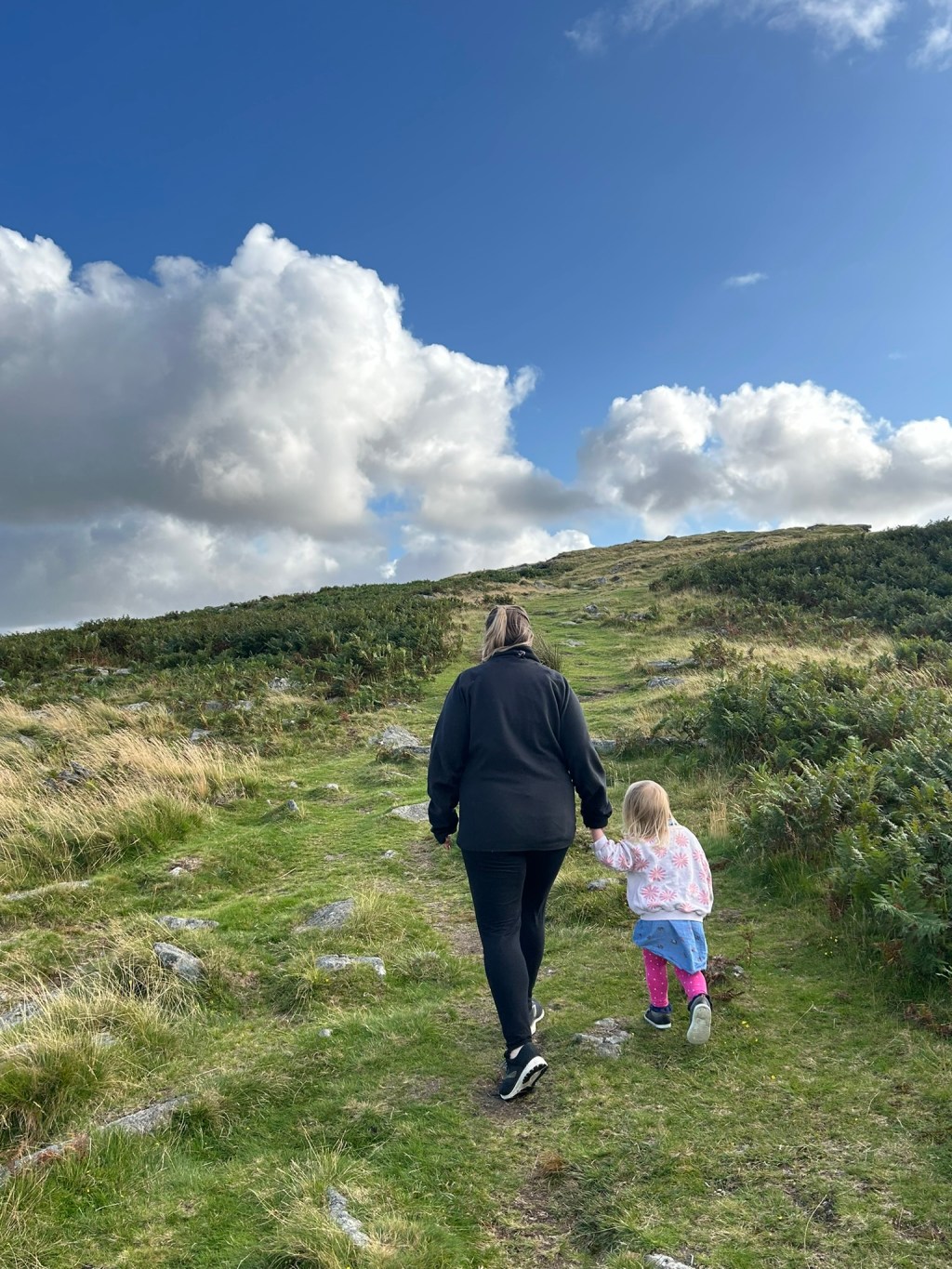
George asked me to write my thoughts on hiking whilst pregnant. As it’s my first post on the site (guided walks and everything that comes with them is definitely more his thing then mine) I have also written a little section about me, which can be found through the post “The Girl from the Country“.
I’ll be upfront here, much as I love to complain, both of my pregnancies (so far) have been relatively easy. I feel nauseated and tired, and in the third trimester I did get pelvic girdle pain, but compared to horror stories out there, I’ve been pretty lucky. I’m going to share my experiences of hiking whilst pregnant but will caveat it by saying that pregnancy is a different beast for everyone, and what works for me, might not be right for you.
Hiking Whilst Pregnant – My Experience
I found out I was pregnant as we (finally) came out of the Covid lockdown in March 2021. I’d been walking around London and the general vicinity of the Emirates Stadium as my exercise during covid (see post on The Parkland Walk for an idea of the routes), and combing this with an exercise bike, so I’d been feeling pretty fit.
The day I found out I was pregnant was when I suddenly couldn’t do as much on the bike, I felt like I couldn’t push as hard and got breathless really quickly. I was surprised that the symptoms hit so soon. This was my first trimester – my energy levels were down, I got breathless more easily and I got tired more easily. I could still manage casual walks around London, chatting to a friend, but (as she was pregnant at the same time) we both slowed down a bit so we could keep chatting (this is in fact the NHS exercising while pregnant advice).
We moved to Devon when I was 20 weeks pregnant, happily in my symptom free second trimester. Symptoms had mostly settled by the time we moved, and I was happily on the bike again a few times a week. I started doing some gentle walks to explore the local area and really enjoyed them. We walked around Rowtor, I tried swimming at Cullever steps (very cold). It was delightful. The halcyon days of the second trimester didn’t last long though.
As time moved on, I became bigger, heavier and slower. By the third trimester I was really struggling. Hills were especially hard and I remember trying to walk up the hill from Tintagel Castle and being asked if I needed to get the car up (I stubbornly kept going). My pelvic girdle pain kicked in, walking anything further than a few metres was getting painful, but my physio said that keeping moving was important. I couldn’t really manage the tors and moors by this point. I walked around a local golf course with a neighbour and explored towards Saxongate but gave up well before I got there. I was grateful for the regular benches on the granite way. Swimming was my saviour, walking had become more of a chore, which, after moving to a beautiful place, I was very disappointed by.
By the time our daughter was born I was excited at the prospect of moving more. On her first Christmas, she came up Rowtor (she was 3 weeks old) and we haven’t looked back.
Pregnancy number 2
I’m writing this from what should be (but aren’t) the halcyon days of the second trimester. Pregnancy with a toddler is a different beast altogether. I went into this pregnancy again pretty fit, and with over half of the ‘All the Tors Challenge’ completed, much of it with a child on one of our backs. In fact, I announced the pregnancy on a delightful day when baby 1 was at nursery and we had a rare chance for a longer and more interesting hike. I didn’t feel the immediate change this time, possibly because most of my exercise was walking rather than high intensity exercise. I was really hoping to keep up the longer hikes (12ish km probably an average hike pre-pregnancy), but this was not to be. Exhaustion and breathlessness reared their ugly heads, along with a massive dose of morning sickness.
I know the importance of maintaining fitness through pregnancy, and that keeping active early on reaps benefits later in both the pregnancy and labour, but it is hard! Look, I’ll admit that I am inherently quite a lazy person, but it doesn’t normally take much to convince me that a walk and pub lunch is a good idea. This was very different; I needed cajoling just to do a short walk around Haldon Forest. Everything was made worse when I got a viral infection, it lasted weeks, I was even more breathless, needed to crack out the old salbutamol inhaler (I have the mildest of asthma, and haven’t used one in years) and I was getting even less sleep because I was coughing. I was moaning constantly, was pretty miserable and was not much fun to be around. All this to say, if this is you during pregnancy, then solidarity sister! It is hard work.
I tried to stay active. My medical background gives me an awareness of the benefits of exercise during pregnancy (see below) in reducing the risks of gestational diabetes, pre-eclampsia and c-section births. Even with this knowledge, and that of the general health benefits of exercise for cardiovascular and mental health, I struggled to make it a priority when exhausted, nauseated and grumpy.
I’m well into my second trimester now, feeling a bit more energetic and desperate to get back onto the moors, I’m really hoping to maintain my activity levels to try and avoid the pelvic girdle pain that was so awful last time. Having an active toddler helps, she wants to be up and running a lot, having an HML as a husband helps too.
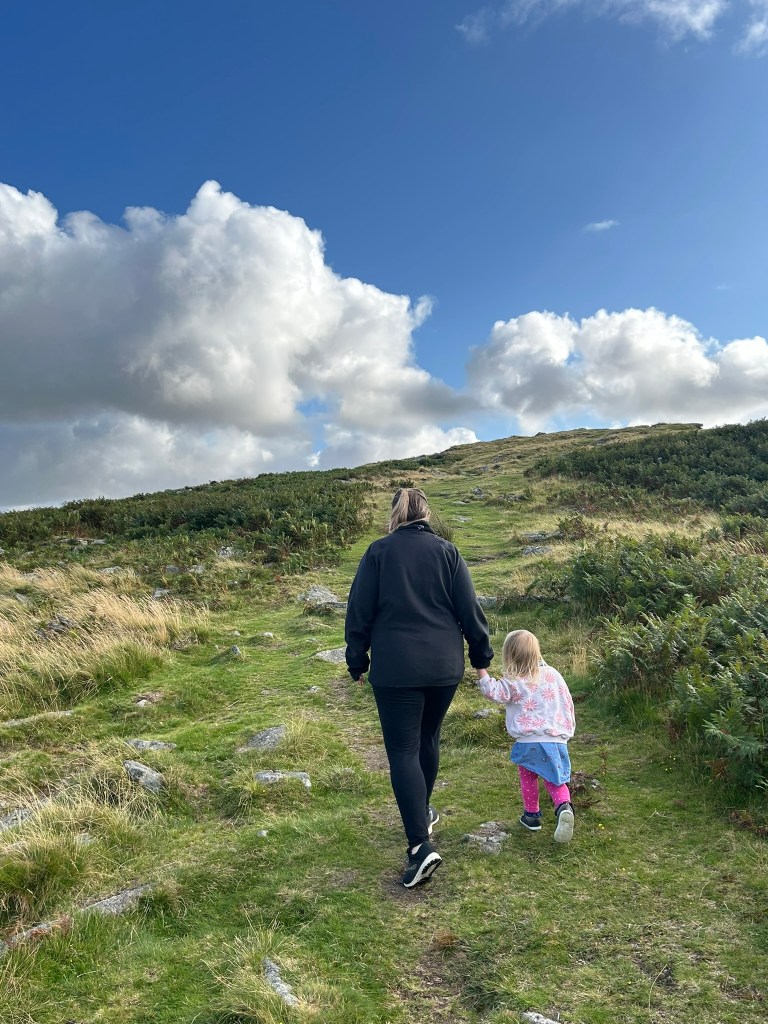
Hiking while Pregnant – The Benefits
If you already love hiking, I don’t have to tell you of the many benefits to body and mind that it offers, these don’t change while pregnant. As you might be able to tell by my experiences above, my mood isn’t great while pregnant, getting out and moving can make a huge impact on this (there is recent research that exercise is as good for treating depression as medication or therapy).
It also has benefits that are specific to pregnancy:
- Reduced risk of gestational diabetes
- Reduced risk of pre-eclampsia.
- Shortens labour and reduces risk of instrumental or caesarean delivery.
- Reduced risk of blood clots (deep vein thrombosis).
- Reduces pelvic girdle pain.
- Reduces low back pain.
- Reduces risk of urinary incontinence (hiking exercises your pelvic floor).
Hiking whilst Pregnant – How I made it work
Government advice on exercising during pregnancy is to maintain your current level of activity. If, like me, your main activity is hiking then there are some sensible changes to make. I’ve included things here that have worked for me, and some general tips.
There were ways I managed and mitigated my symptoms in both pregnancies. In the first trimester I made walks shorter to manage tiredness if I needed to, this meant either planning a shorter route, or having escape points at earlier stages. While I had my horrific infection, we did flatter walks to combat breathlessness (a highlight was the Taw Marsh Walk) and will do this later into pregnancy too. For me, having regular snacks was my approach to nausea (as well as anti-sickness medication), and I always made sure I had something in my pocket – I found cereal bars were great for this, as well as prawn cocktail crisps. Alongside snacks, we packed plenty of water, knowing how important hydration is during pregnancy.
Having a walk planned the night before, and bags packed made me feel prepared, and meant less energy used in the morning to just get out and do it. Also going early in the morning meant that, if we were doing a bigger hike, I used what energy I had on this. Admittedly this can mean feeling more tired later in the day, but equally a day of fresh air and exercise does wonders at making you feel more alert, and helping you sleep better. It’s a balancing act. Embrace the days you feel good and adjust for the days you don’t. My mantra is ‘a walk will always make me feel better’, even if that walk is 10 minutes long!
For the second trimester second time around, these all still applied! I would say this is the time to think about what you can wear. Most outdoor gear doesn’t come in pregnancy sizes, my waterproof no longer does up, and my waterproof trousers are not going to get over the bump. There are some great maternity activewear brands out there, with leggings and wicking tops that can be used through pregnancy and often beyond. My sports bras didn’t fit, but I found a crop top style low-intensity sports bra that worked well as it had space for changing breast sizes and wasn’t too tight. I mostly wore George’s spare waterproof jacket last time around, which fit throughout pregnancy. Compression socks can be great in later trimesters if you’re on your feet for long periods to combat the swelling, and I wore a pregnancy band to support my bump when walking in the third trimester. I’ve had to adjust my rucksack straps to wear it lower on the hips rather than the waist as the bump has got bigger.
As I got bigger my centre of gravity changed, and I was a lot less coordinated, be aware of this and consider the terrain you’re walking on (although I managed to trip over on a clear, flat path, so no guarantees). Wearing good sturdy boots with ankle support was essential. When doing longer or hillier walks I found walking poles really helped, not only giving me a full body workout, but taking the pressure off my legs and keeping me more stable. If you’re located somewhere steeper than Dartmoor, it’s worth considering how likely you are to fall, and might be sensible to avoid any strenuous scrambles or climbing or adjust to make sure you are doing these in the safest way possible.
Hiking whilst pregnant has lots of health benefits, both in the long term and specifically for pregnancy outcomes and can also be great fun. It needs a bit of thought, preparation and adjustments to make sure you’re having a good time without doing to much or risking injuring yourself or baby. Send us an email at moorlandramblings@gmail.com if you have any questions, or if you want a guided walk while pregnant or with small children. We are happy to share our experience and knowledge.


Leave a Reply