
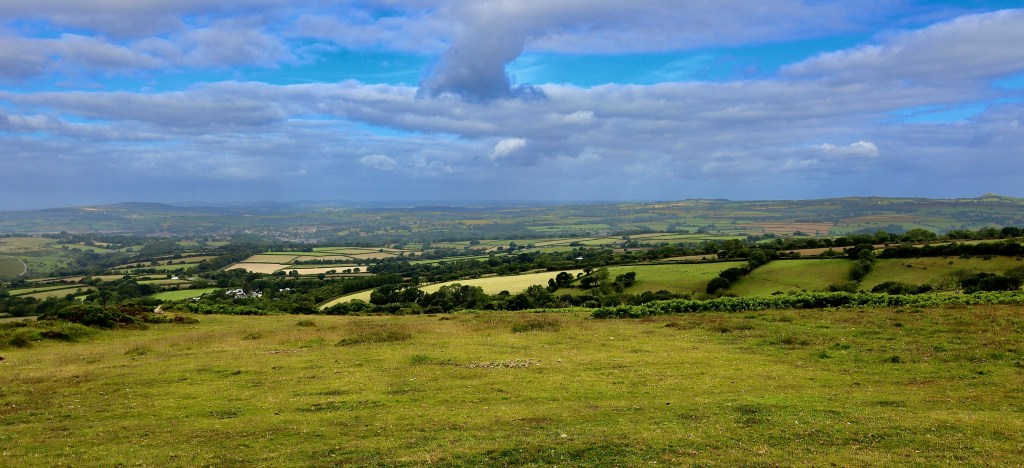
There are some walks that you go back to time and time again. They bring familiarity, ease and comfort and are always there when needed. This walk, for me, is one of those. The walk starts out from the car park on Pork Hill, found in the shadows below Cox Tor, often with a great ice cream van in residence, and offers a view that travels over Plymouth, Tavistock and Whitchurch parish, bookended by Brentor church and the river Tamar.
Windy Post Cross
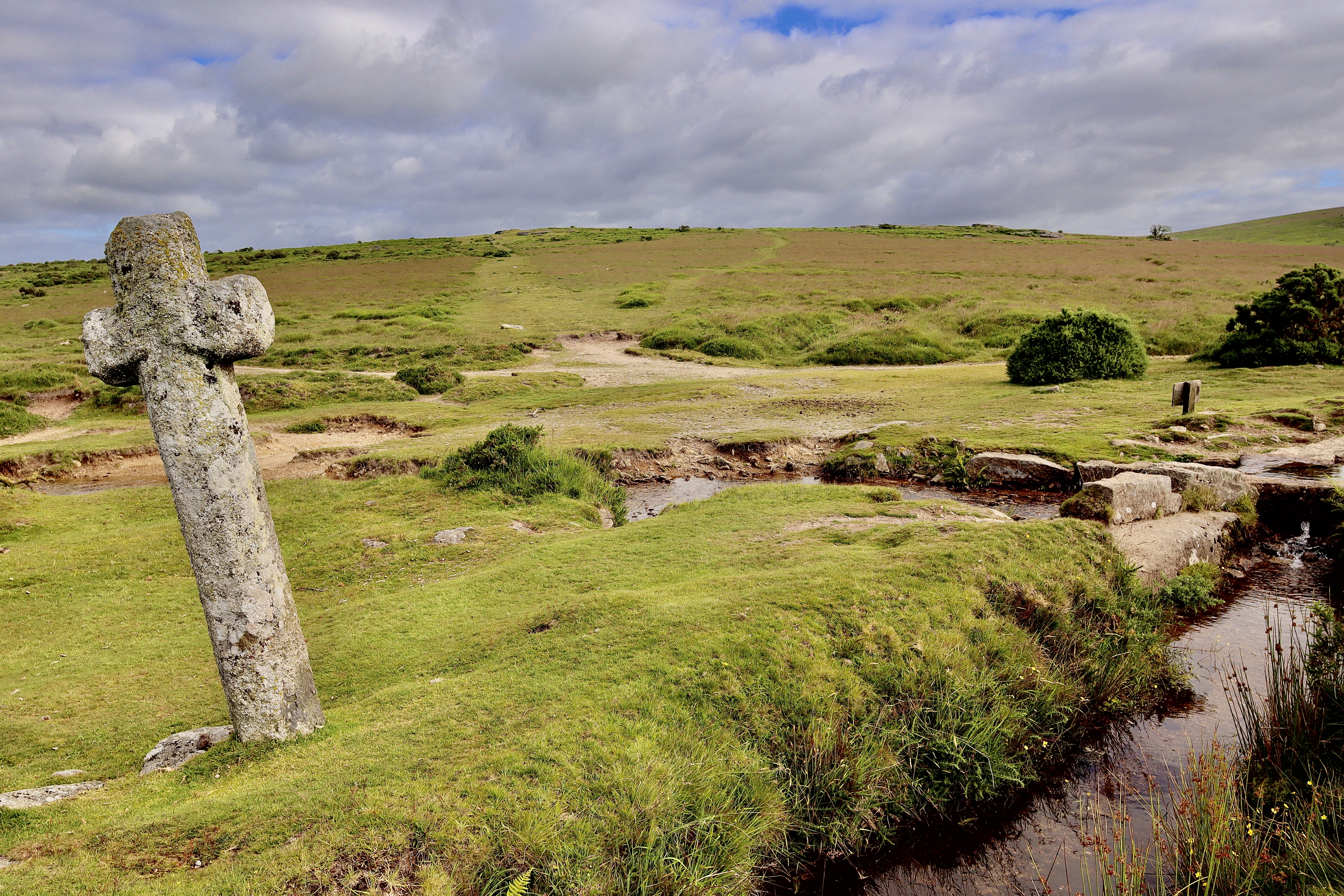
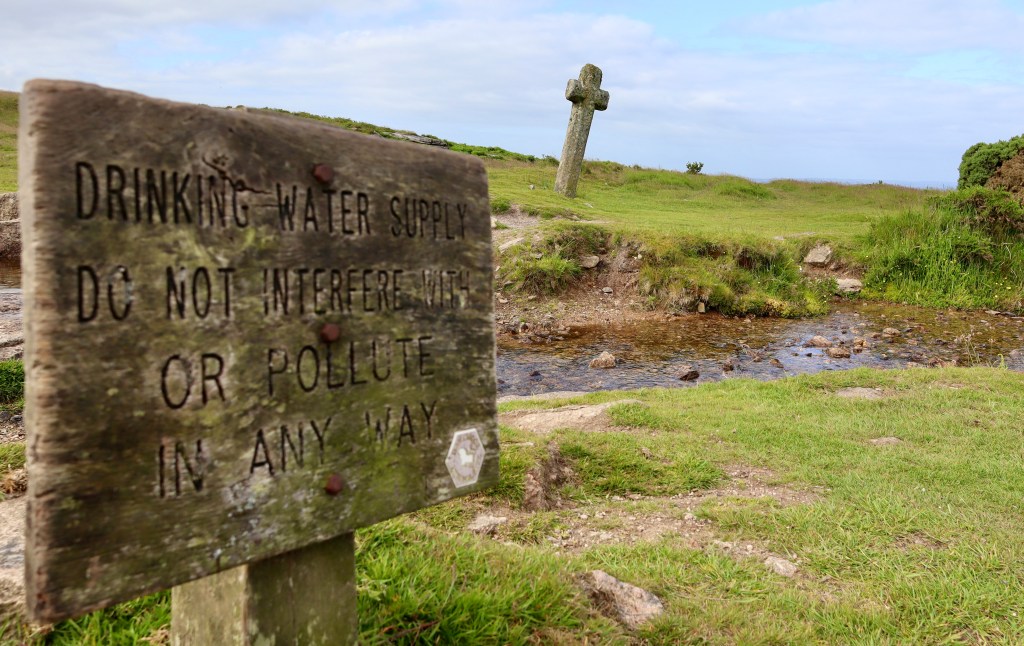
Taking the grassy path, which in places has been worn to the granite below, found at the western edge of Whitchurch common and Barn Hill, I head southwards, were the multi-faceted stacks and columns of Pew Tor, standing atop a lusciously green knoll come into view. Before reaching Pew Tor however, there are a few more points of interest our path takes us to. Staying in the path as it winds its way, following the flow of the gentle undulations of the ground to the southeast, we come to a river. This point is marked by a cross, quite possibly the most photographed one on Dartmoor, the Windy Post Cross.
Rugged, ancient and standing alone next to the Grimstone and Sortridge leat, the Windy Post Cross (AKA the Beckamoor Cross) has stood since the 16th century. The Windy Post Cross, which tilts alarmingly to the west (likely a result of livestock using it as a rubbing post), stands at a point where numerous Dartmoor trails meet, acting as a way point on the Tavistock to Ashburton trans-moor track, which was an early medieval route which connected Buckfast and Tavistock abbeys.
Bullseye Stone
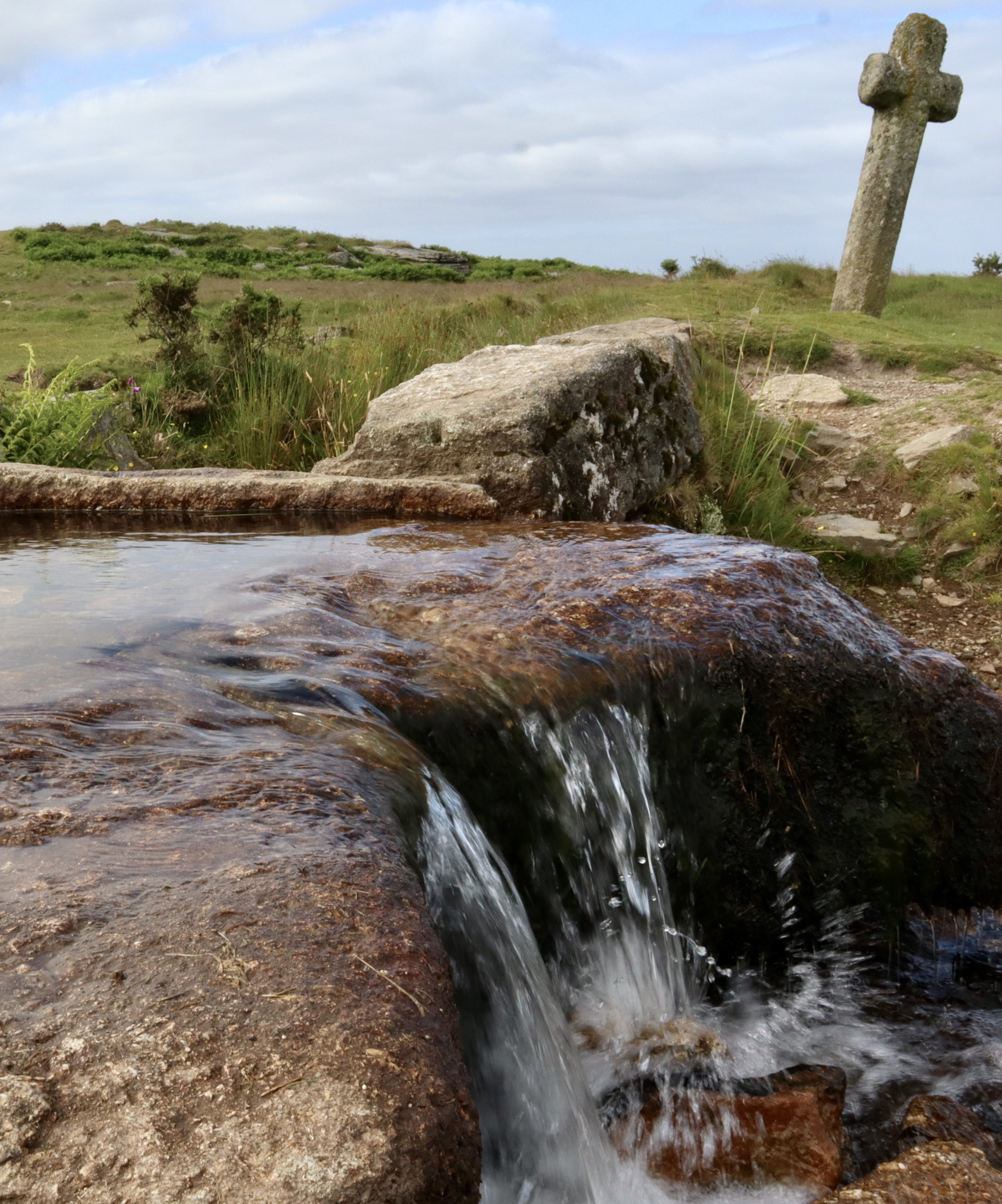
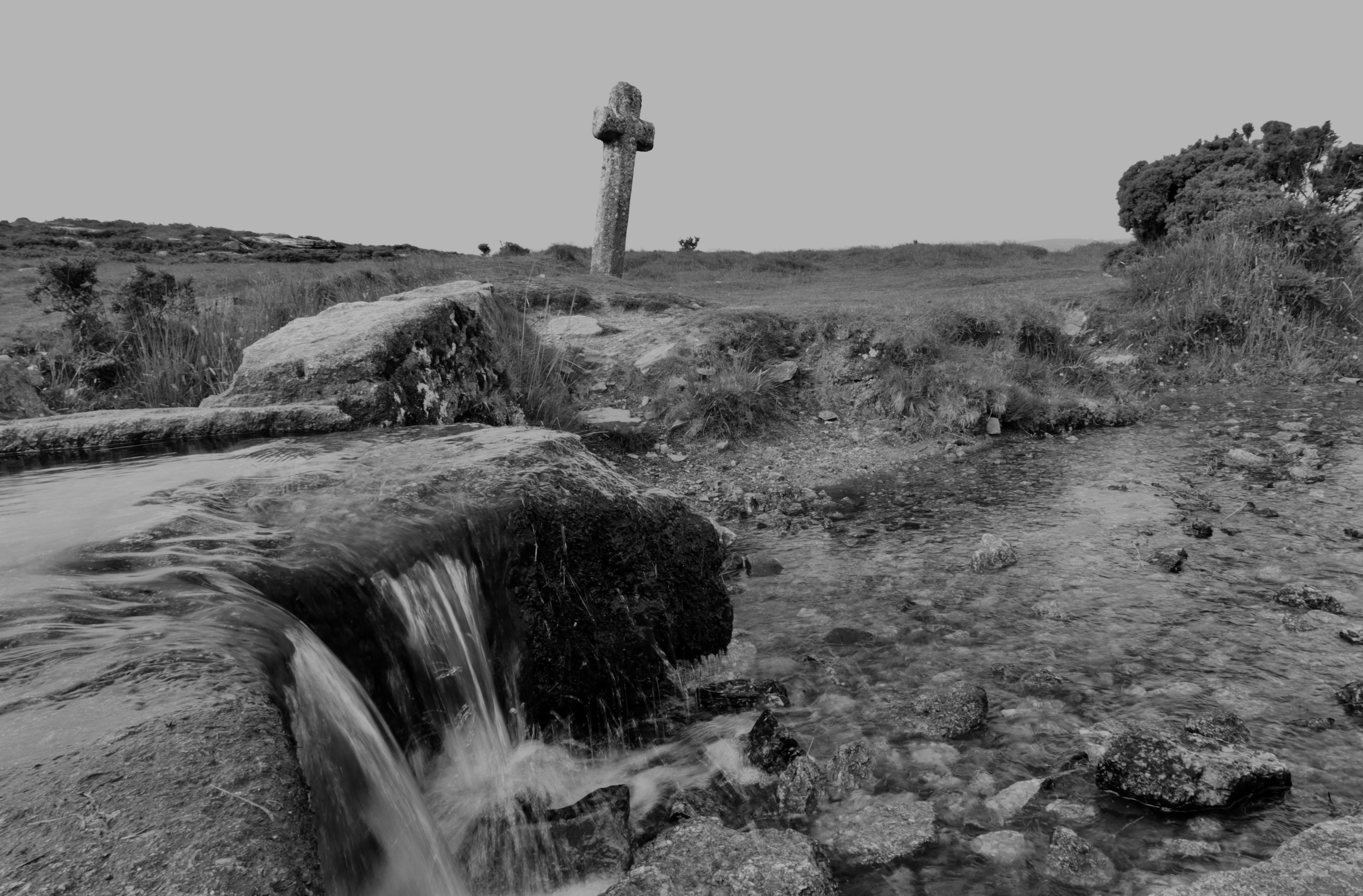
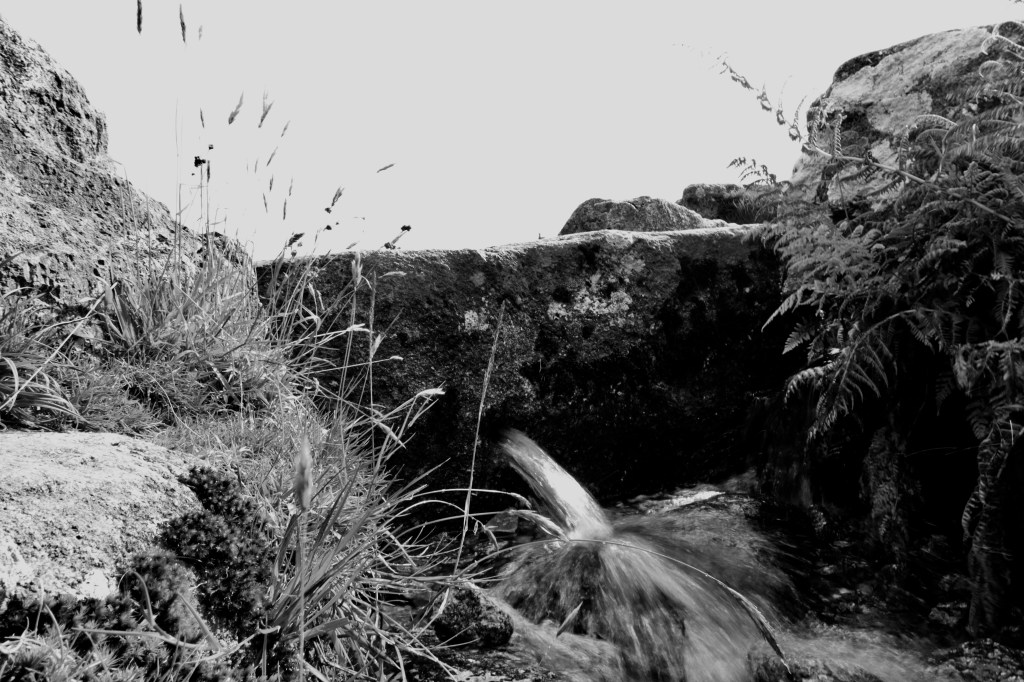
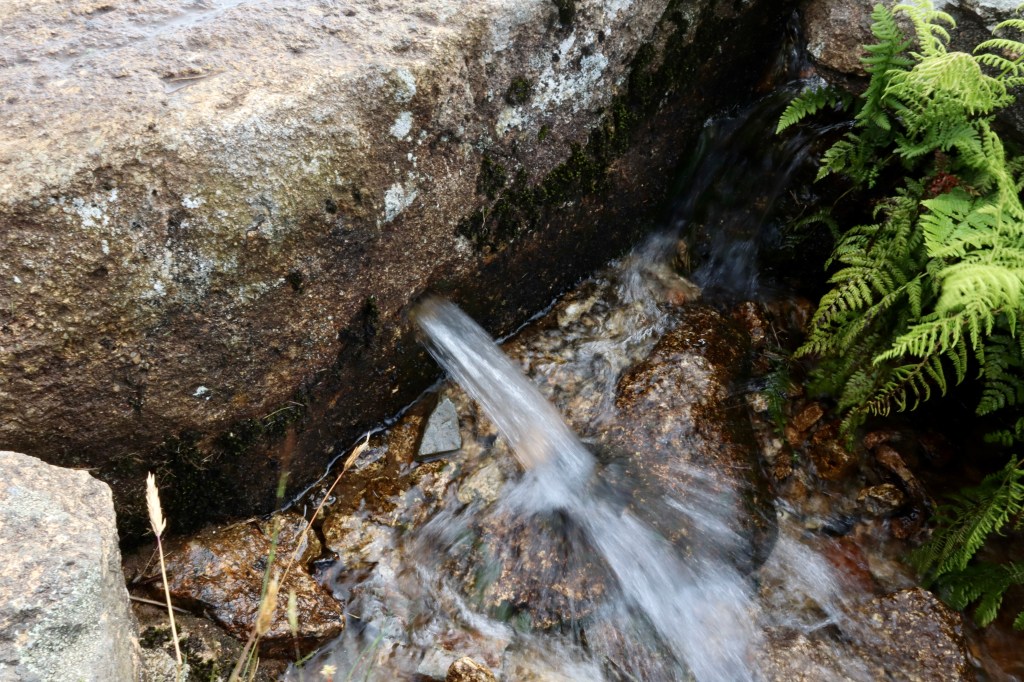
The site of the Windy Post Cross also denotes the site of a small and ingenious little feature often overlooked for its pious neighbour, a Bullseye Stone.
Bullseyes Stones are found within the network of least that are common across Dartmoor and serve as a simple, yet ingenious way of controlling water flow. A leat is an artificial watercourse that transports water to various locations, most commonly a water mill (as an aside, as a demonstration of incredible engineering the least of Dartmoor would need some beating). Least were also responsible for supplying local farms and houses with drinking water, with smaller branches coming off the main leat. The easiest and cheapest way to manage the amount of water coming off a leat to the farm or house, was to obstruct is with a huge slab of the ever-abundant granite, with a hole bored through the middle through which water could flow. When water wasn’t needed, the hole could simple be blocked up. These slabs of granite with a hole in the middle are Bullseye Stones.
Feather Tor
Having briefly paused to add my own contender to the many photographs of the Windy Post Cross that have come before, I carry on along the edge of the leat to a footbridge which gives me easy and simple passage over. From here I head to Feather Tor, accompanied by the melody of the skylarks and the throaty, buzzing chirping of a wheatear.
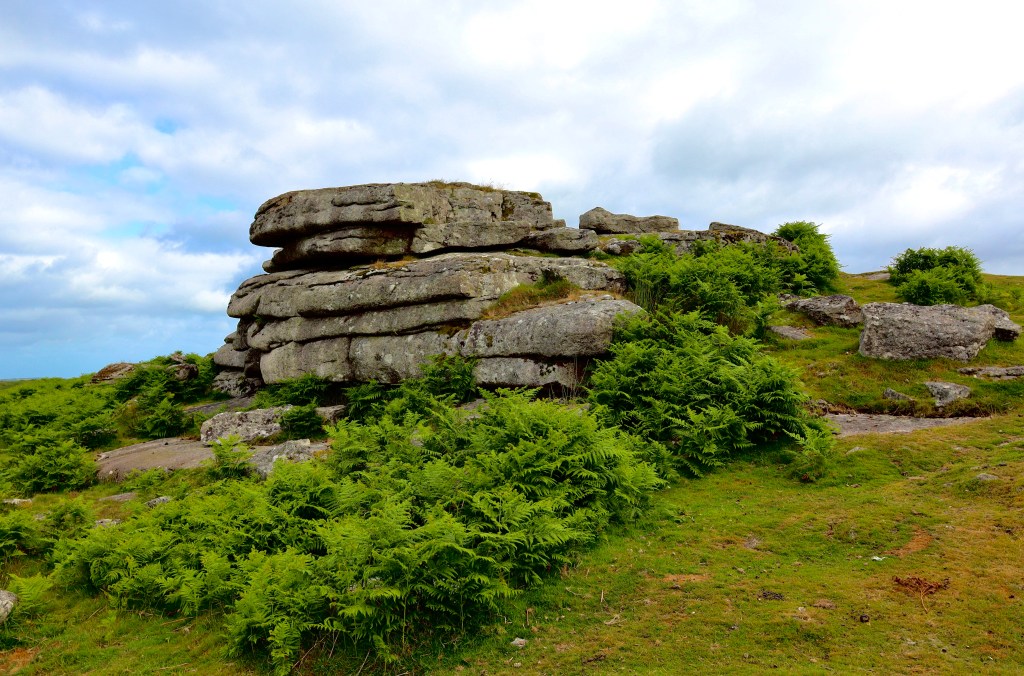
Feather Tor is fairly ambiguous, especially when approaching from the north as our route has us do. Our approach is along flat ground, in contrast to many tors, but this because Feather Tor is a good example of an “emergent” tor, where not all of the granite has fully emerged from the surface. When seen from our northerly approach, it is difficult to gauge the true size of Feather Tor but coming off its top and round to the southern edge, the exposed granite offers a ledge of about 8 feet to the ground below. From its southern edges it offers a bit more majesty but in honest, the role of Feather Tor is really to perform as the warmup act to its southern neighbour, our next stop, Pew Tor.
Pew Tor
Following the path south from Feather Tor, Pew Tor dominates the horizon and offers little choice but to visit.
Pew Tor stands as the champion of Whitchurch Common, acting as the competitor to those that stand opposite it, Cox Tor and Great Staple. Pew Tor is made up of numerous huge, layered towers of granite which when viewed from the middle, creates the sense of being in a stadium, with the granite outcrops providing shelter form the prevailing winds. Pew Tor’s granite is noted for being a particular grain, that of microgranite which was highly sought after by quarrymen and as such, local stone masons were known to steal the rock from Pew Tor and its surrounding clitter. AS such, a number of markers (x13 in total) were erected around Pew Tor, to inform local stonecutters that stone could not be taken within the boundary.
Having ascended the northern flank of Pew Tor, entering into the granite columns, it’s difficult not to feel small. Not just because of the size of the stacks around, but more so because of the openness that Pew Tor sits in. It stands almost alone, giving panoramic views of the surrounding moorland, farmland and off to the Tamar. It’s the perfect spot to fire up the stove and be up a morning coffee (although I will admit it was a bit windy).
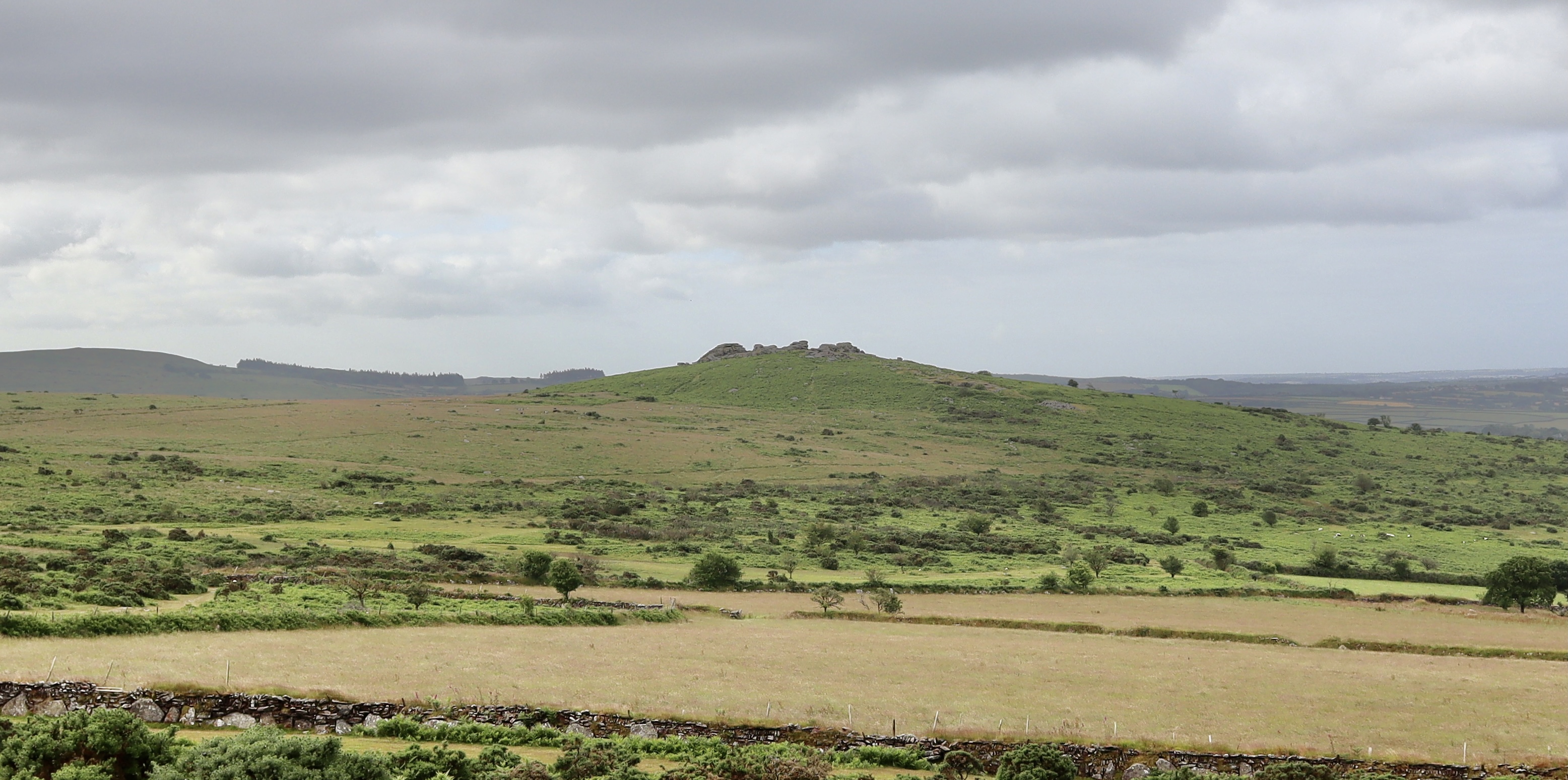
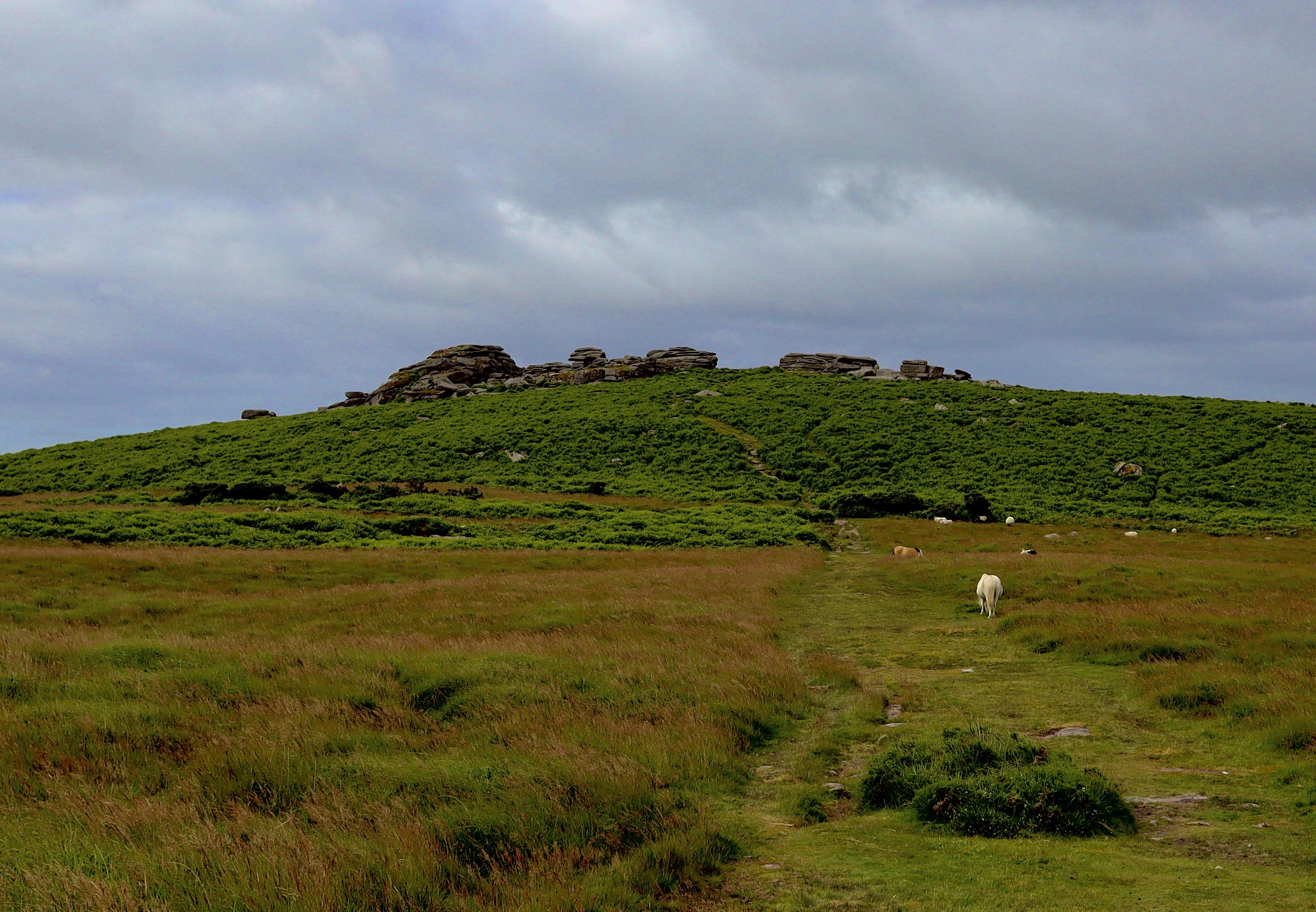
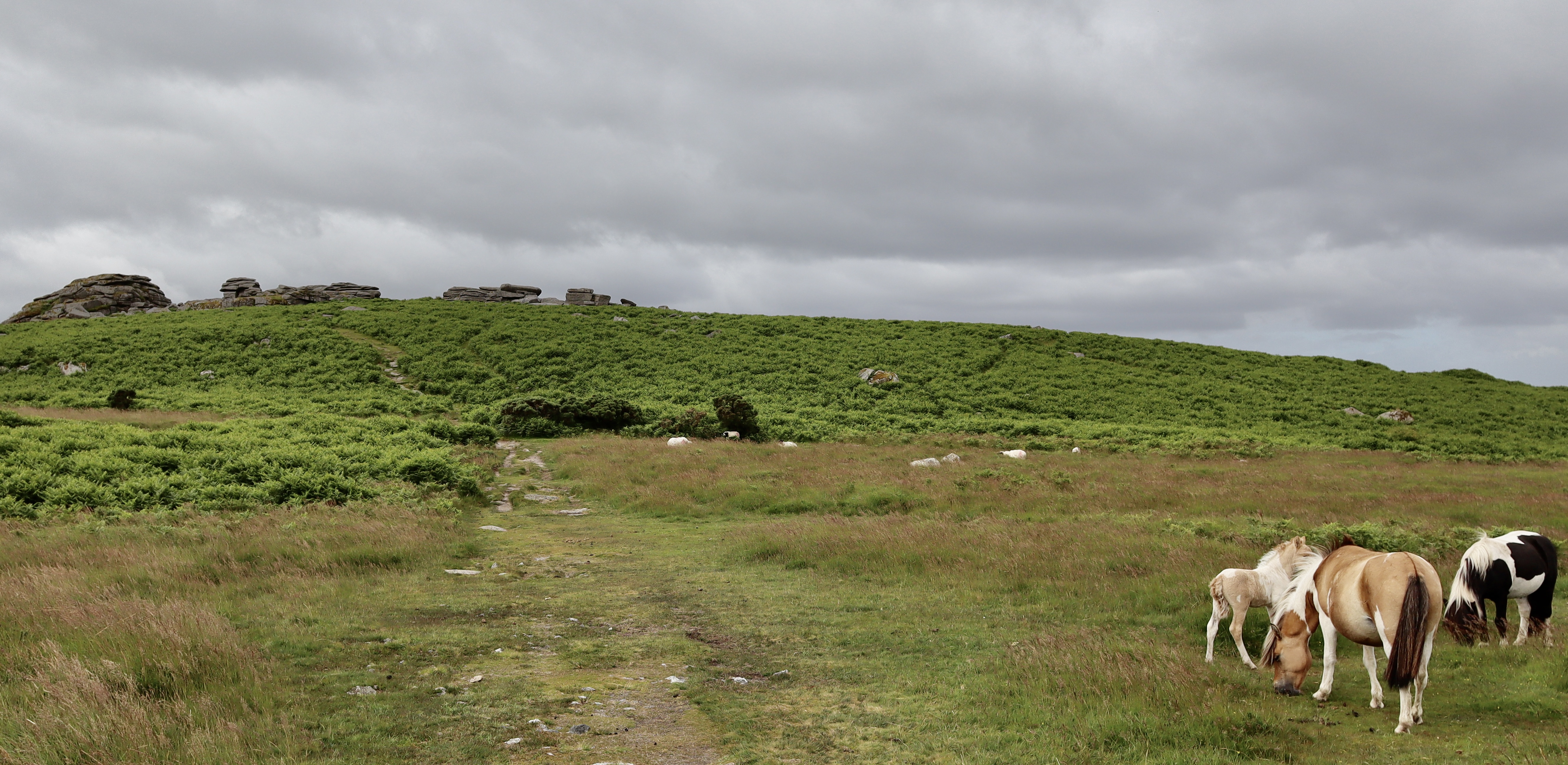
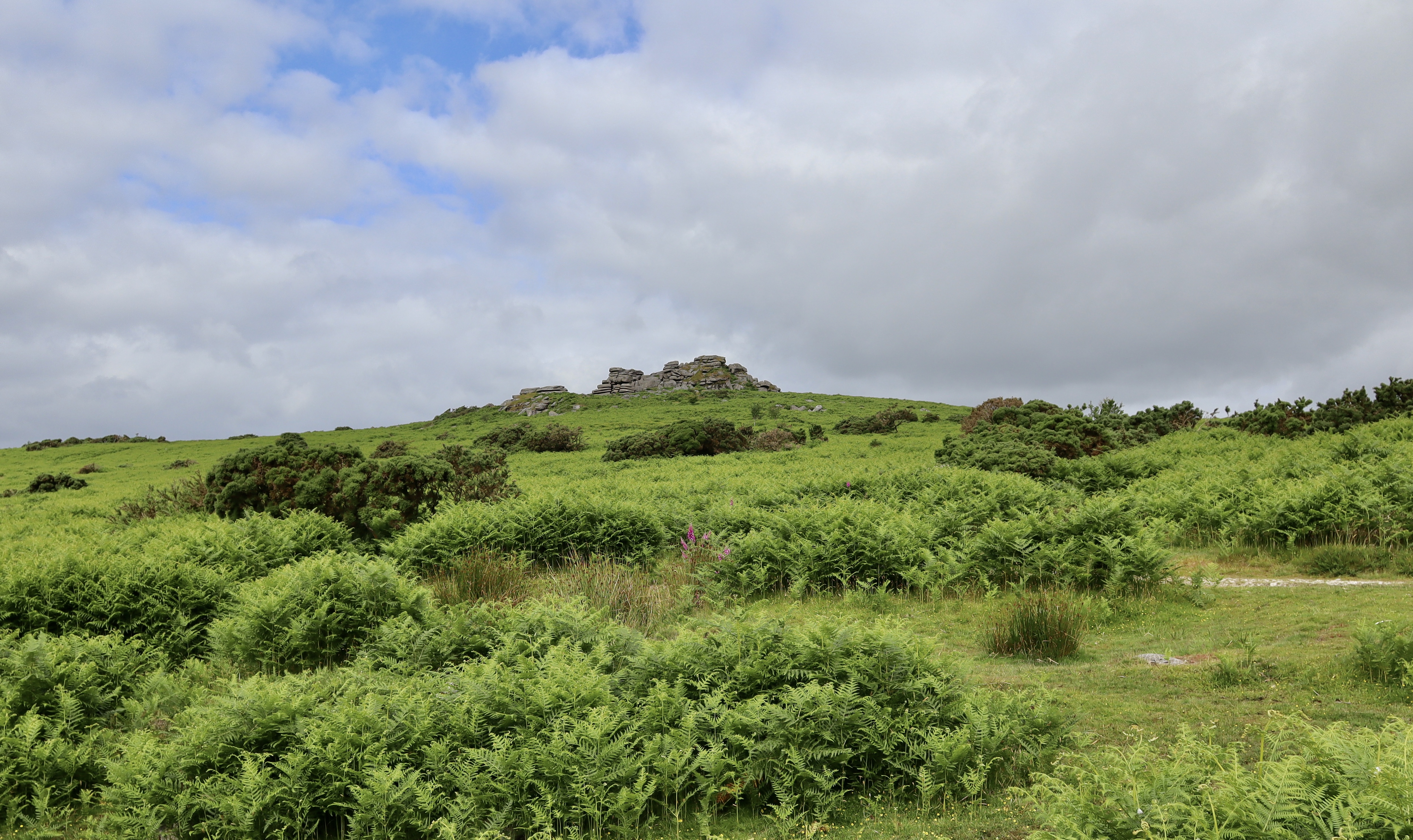
Heading off the southern flank, I head southwest, towards Pewtor Cottage, with Sharpitor standing int distance. Sticking on this bearing, I eventually come to a path that runs alongside the boundary fence to a field system. From here, I turn northwards and then follow the path and handrail the fence for about 2km, until it brings me to thee crossing of the B3357. The path offers sweeping views over king tor, Ingra tor, Leeden Tor, Sharpitor and the fun offered out by Walkhampton common, all underscored by the sweeping valley beneath crowded with oak, beech and birch trees.
Vixen Tor
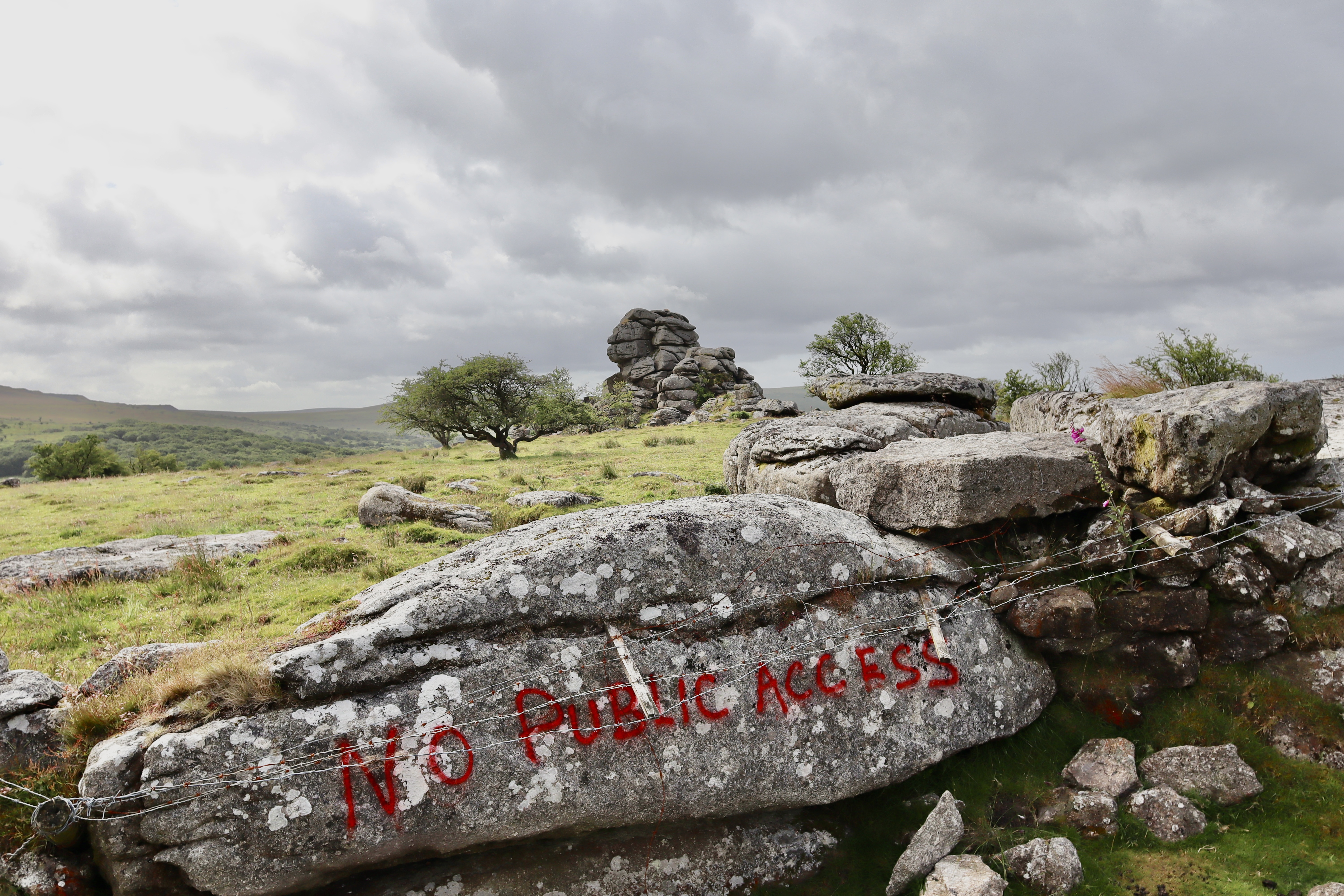
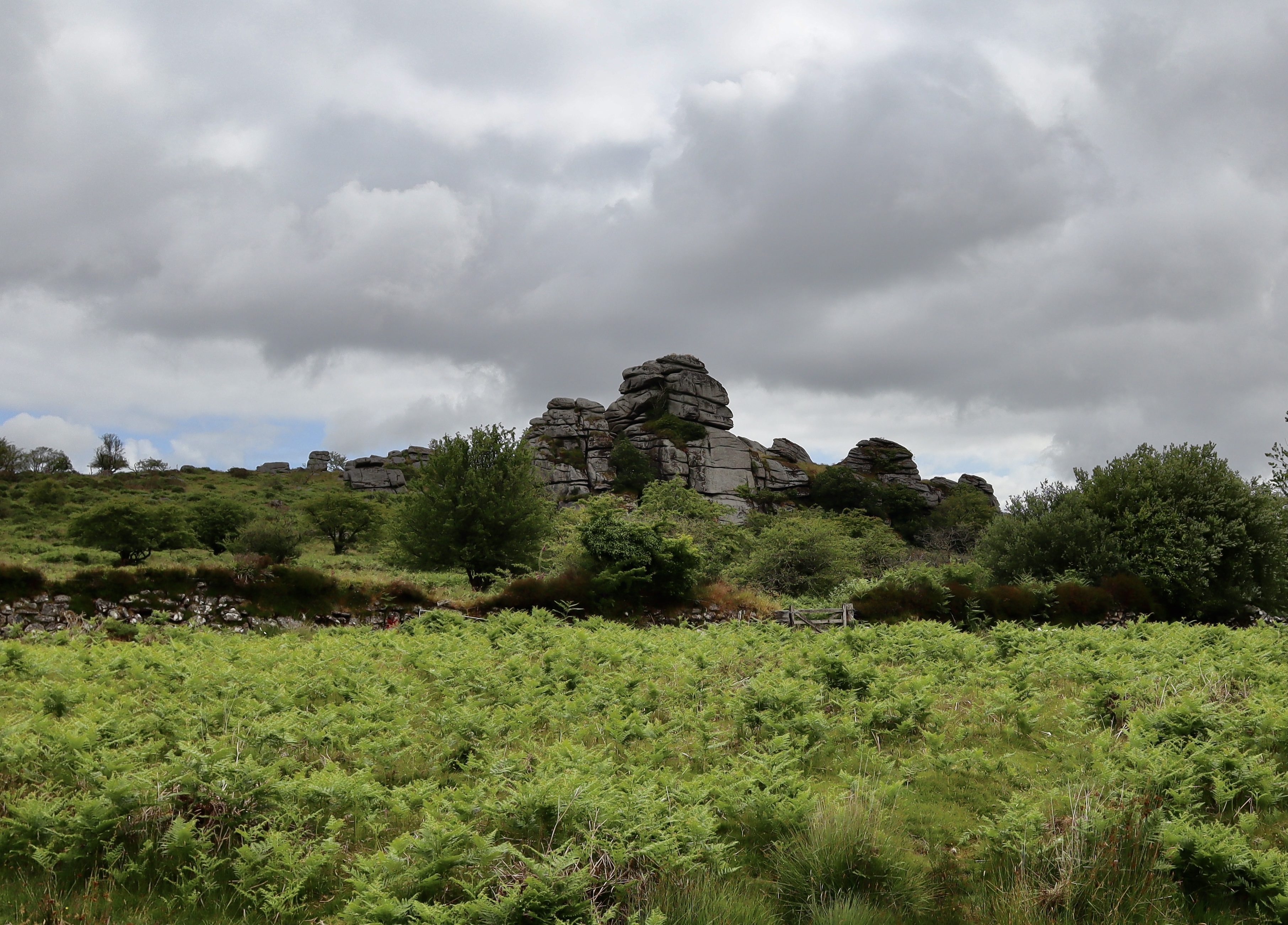
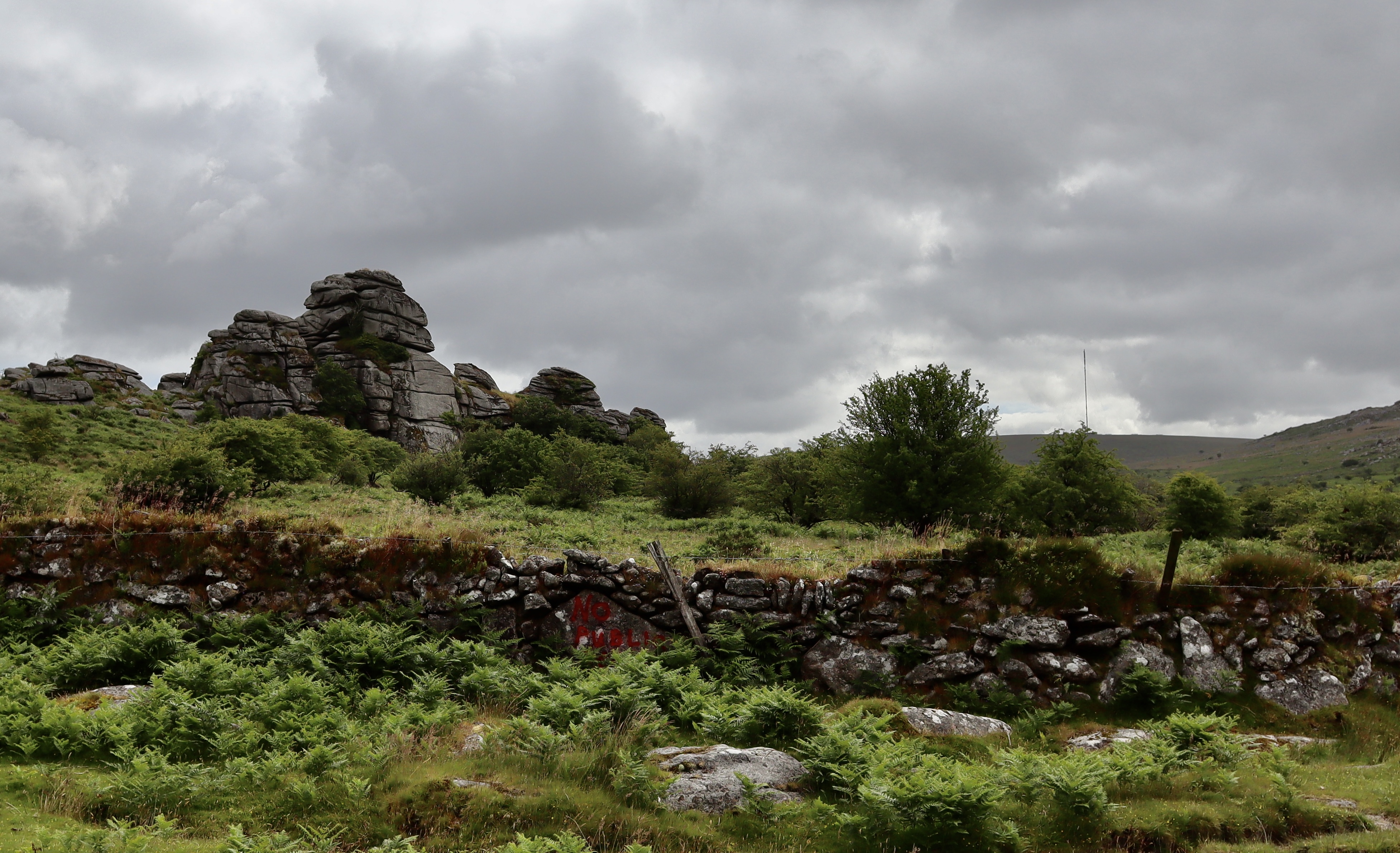
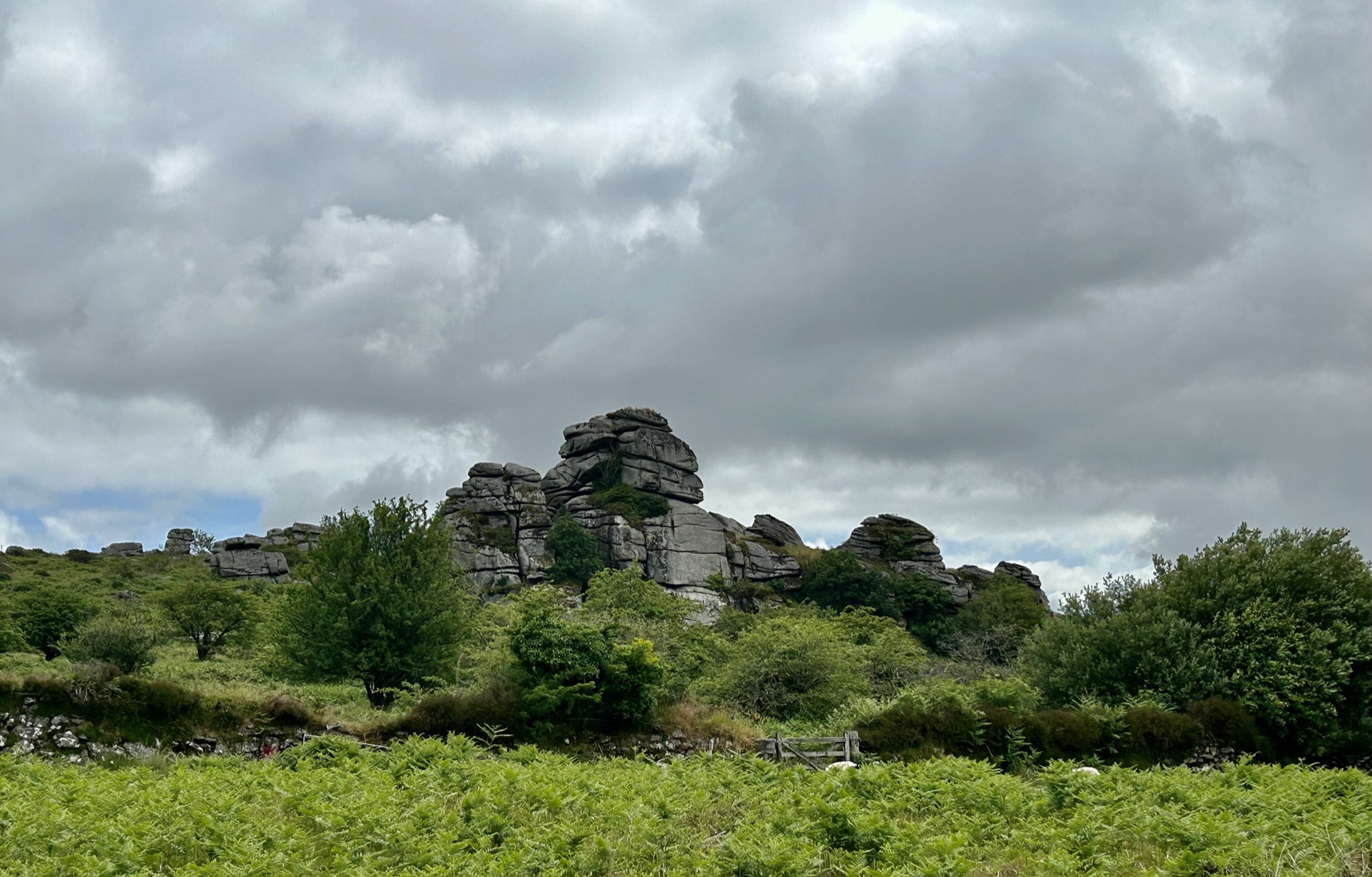
As you take this route round, you pass the magnificent Vixen Tor. Infuriatingly, Vixen Tor has been closed off to the public by the landowner since 2003 with the Countryside Right of Way (CROW) Act of 2001 making no difference. Since a change of ownership (I hate writing those words about a Tor) in 2003, Vixen Tor has been inaccessible to the public. Since this point of time, there has been an ongoing, emotive and ultimately unsuccessful battle to gain access. In 2009, a glimmer of hope was offered as Devon County Council recommended x2 rights of way across the land, but again. The landowner fought back and in 2011, presented evidence to a court that the rights of way had not been used often enough. The court ruling went in favour of the landowner and once again, Vixen Tor was denied to the public and became the Forbidden Tor.
Vixen Tor is an imposing, huge outcrop of rock. It’s layered granite, sheer faces and unsymmetrical build, surrounded by trees and vegetation make it feel more akin to something conjured from Rudyard Kipling’s imagination then a Tor on Dartmoor. Adding in the forbidden nature of accessing it means I think it is one of the most stunning features on the moors and a jewel in Dartmoor’s crown. Vixen Tor, as with some many features conjures up feeling of mystery, intrigue and mischief and as such, is associated with the folklore of the witch Vixana which can be found in my post here.
Heading Home
Crossing the road, ordinarily I would head up to Great Staple Tor. I don’t today however, as the day before this walk I’d done a lengthy and hilly run through the moors and clearly hadn’t stretched out my hamstring properly after. Not wanting to tear the muscle that I can feel tightening with each step, especially as I have a weekend planned in the Welsh mountains, I decide against the steady but steep incline to Great Staple Tor and instead turn westwards, following the Grimstone and Sortridge leat back to the car park (and a stretching routine) knowing that Great Staple Tor, Cox Tour and the others that make up the northern accompaniment of Pork Hill will be there for another day.
| Difficulty | Distance | Navigation Required? |
| Easy | 7km | No |
| Grid Reference | Safety | Footwear |
| Start and Finish – SX 530 751 | Leat Crossing General Dartmoor Considerations | B0 upwards |



 Moorland Ramblings
Leave a reply to Moorland Ramblings Cancel reply