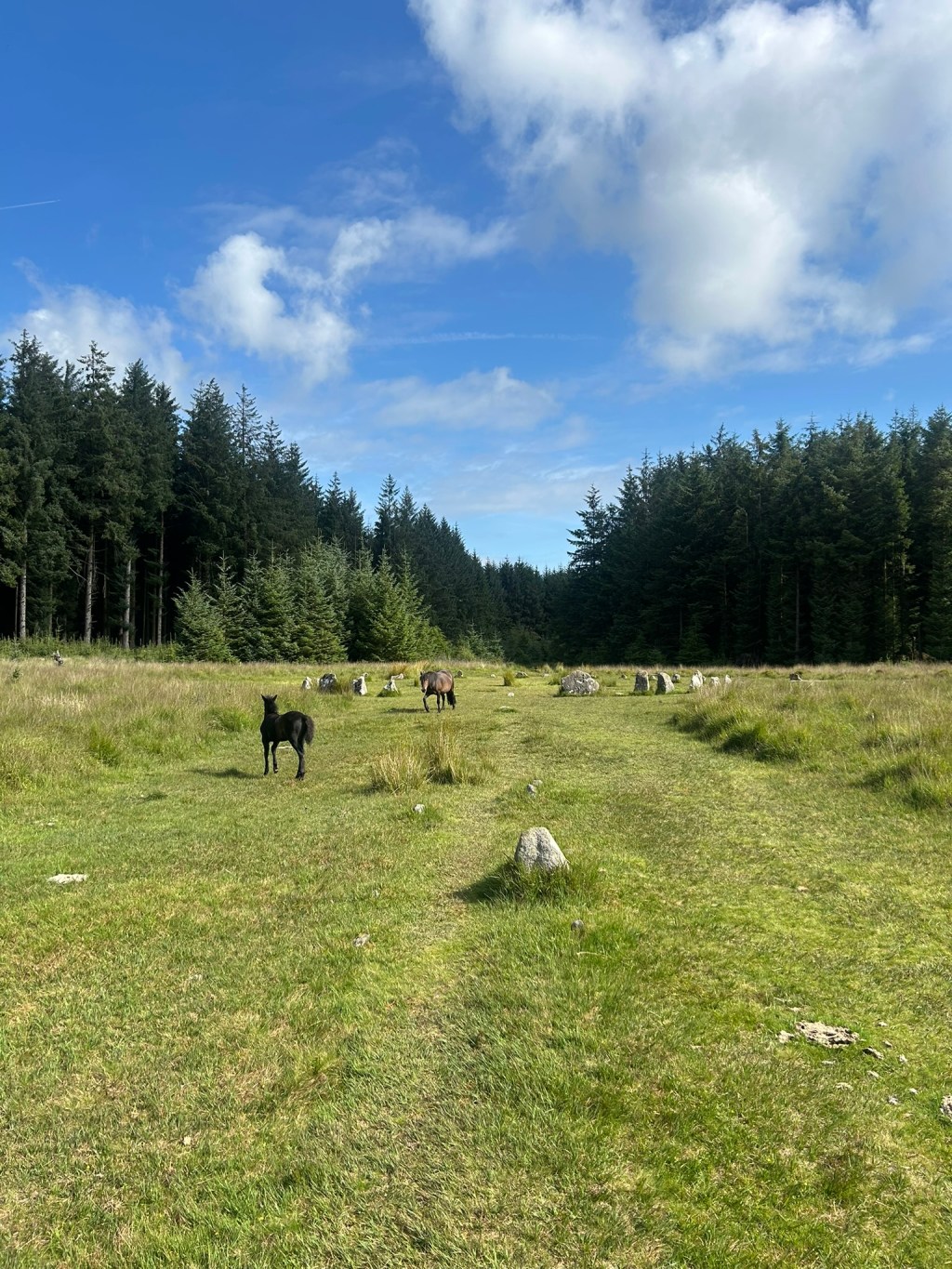
Dartmoor is a land steeped in mystery, where the wind blows through heather-clad hills and granite tors rise like the bones of the earth. Among its most fascinating treasures are the ancient stone circles and rows, standing as enduring monuments to people who walked these moors thousands of years ago. Scattered across the landscape, they range from small, weathered rings to large ceremonial sites. Dating back to the late Neolithic and early Bronze Age, these circles are thought to have served ritual, ceremonial, or even astronomical purposes. While much remains a mystery, they connect us to a time when the moor was a sacred, living landscape. The allure of these ancient sites, coupled with the quiet beauty of Dartmoor, makes visiting a stone circle a constant temptation, and always worth the journey
Dartmoor boasts around 18 stone circles, one of the highest concentrations in the UK, and as recent discoveries at Taw Marsh demonstrate, this number is growing. Each has its own character. Some are perfectly preserved, others just a few stones half-buried in peat after a fall from their once grand position. They are often accompanied by stone rows, standing stones, and burial cairns, the physical remnants of prehistoric life and belief. Many have inspired local legends, often involving tales of punishment, transformation, or supernatural gatherings under the moonlight.
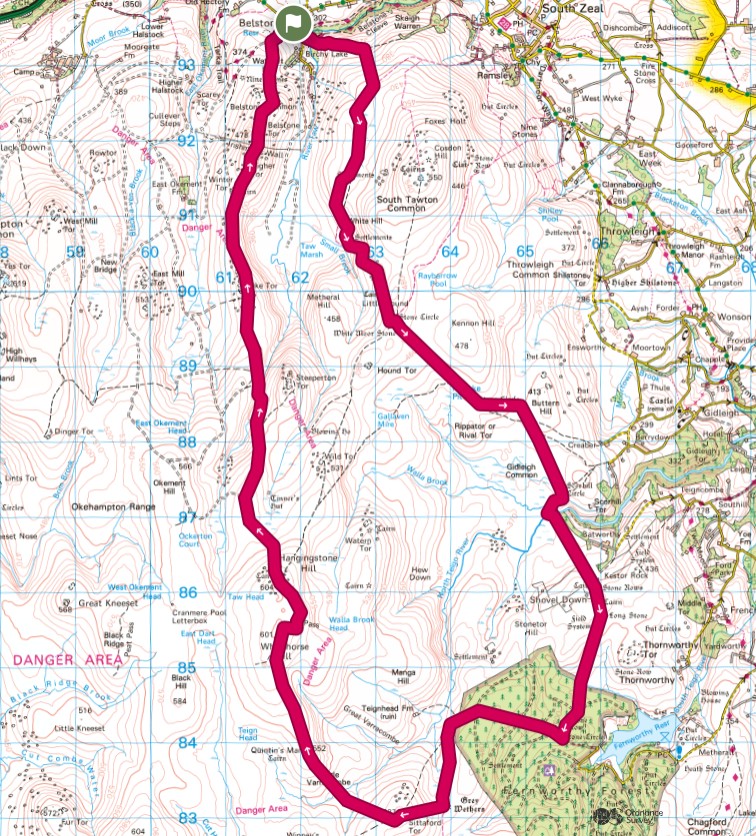
The Stone Circle Round is a 30km circular hike that starts and ends in the charming village of Belstone, taking in no fewer than seven stone circles plus a wealth of other ancient features. It’s an immersive journey through both Dartmoor’s history and its raw, rugged beauty.
Belstone Village
The walk begins in Belstone, a quintessential Dartmoor village with granite cottages, a welcoming pub (which offers a great end point), and panoramic views over the moor. Belstone sits on the edge of the military training area, so caution is needed when walking on the surrounding moorland. The sound of the River Taw nearby sets the tone for a day in the wild.
White Hill Settlement
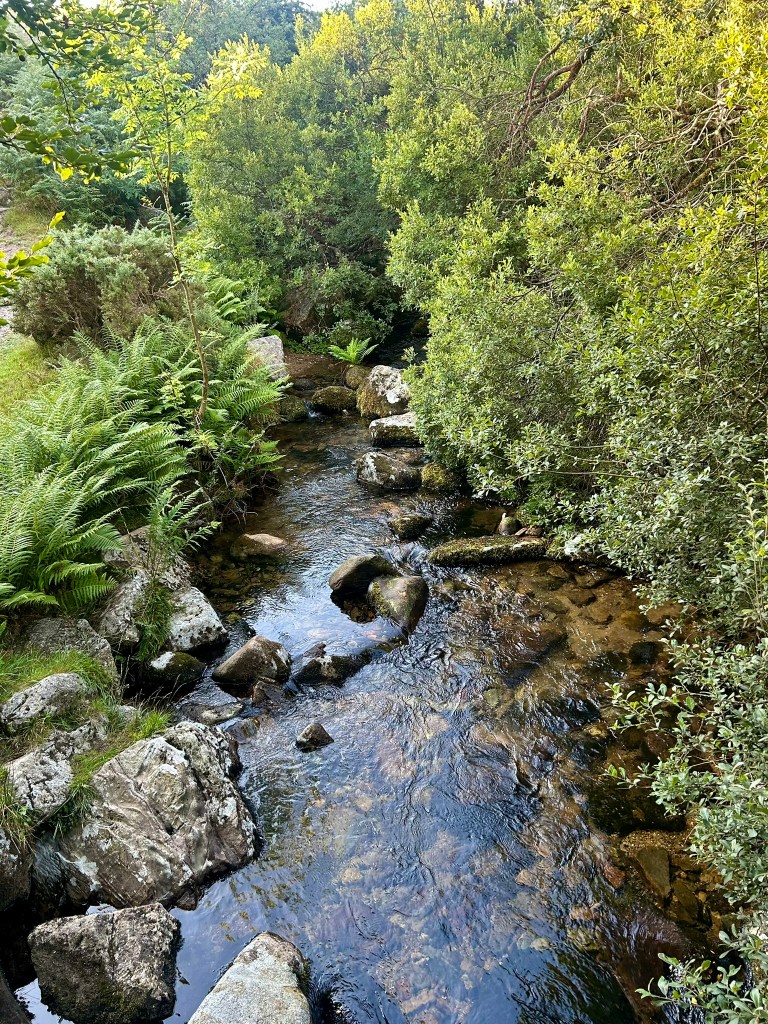
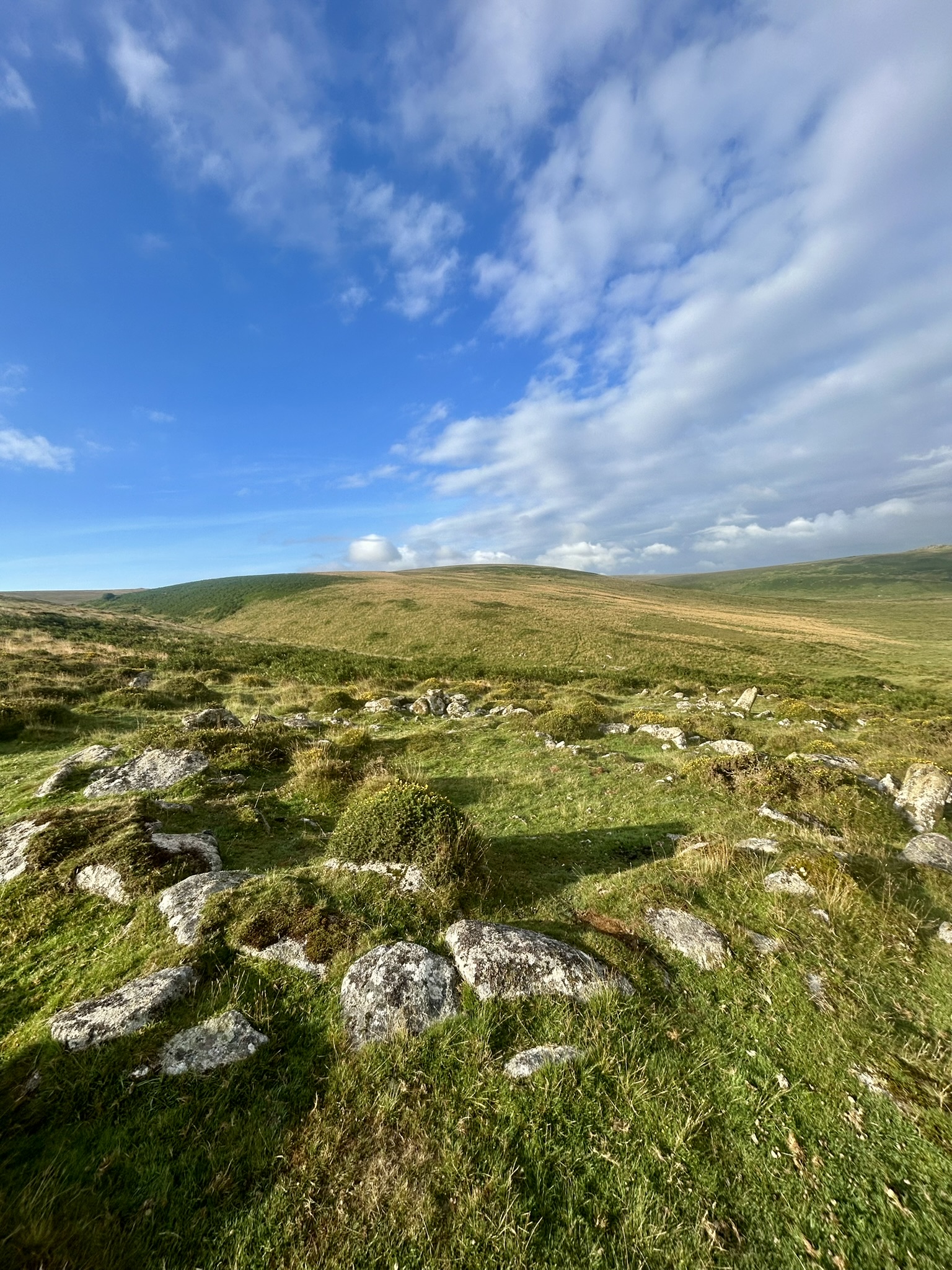
Leaving Belstone, the route skirts the slopes of Cosdon Hill, keeping its bulk to our left. Soon we reach White Hill, marked on maps as the site of a prehistoric settlement. On my visit, ferns and gorse hid any visible trace of the stone circle, but the outlines of hut circles peeked through, a poignant reminder that people lived, farmed, and worshipped here thousands of years ago.
White Moor Stone Circle
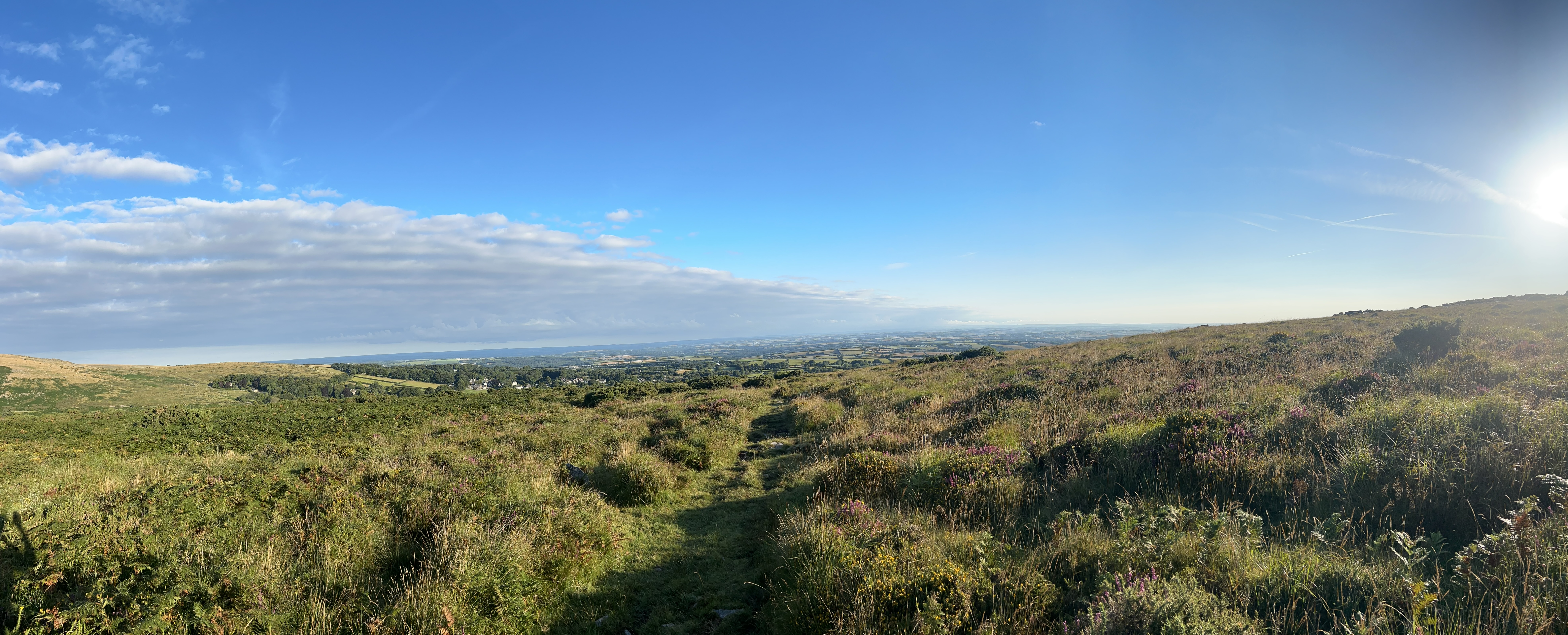
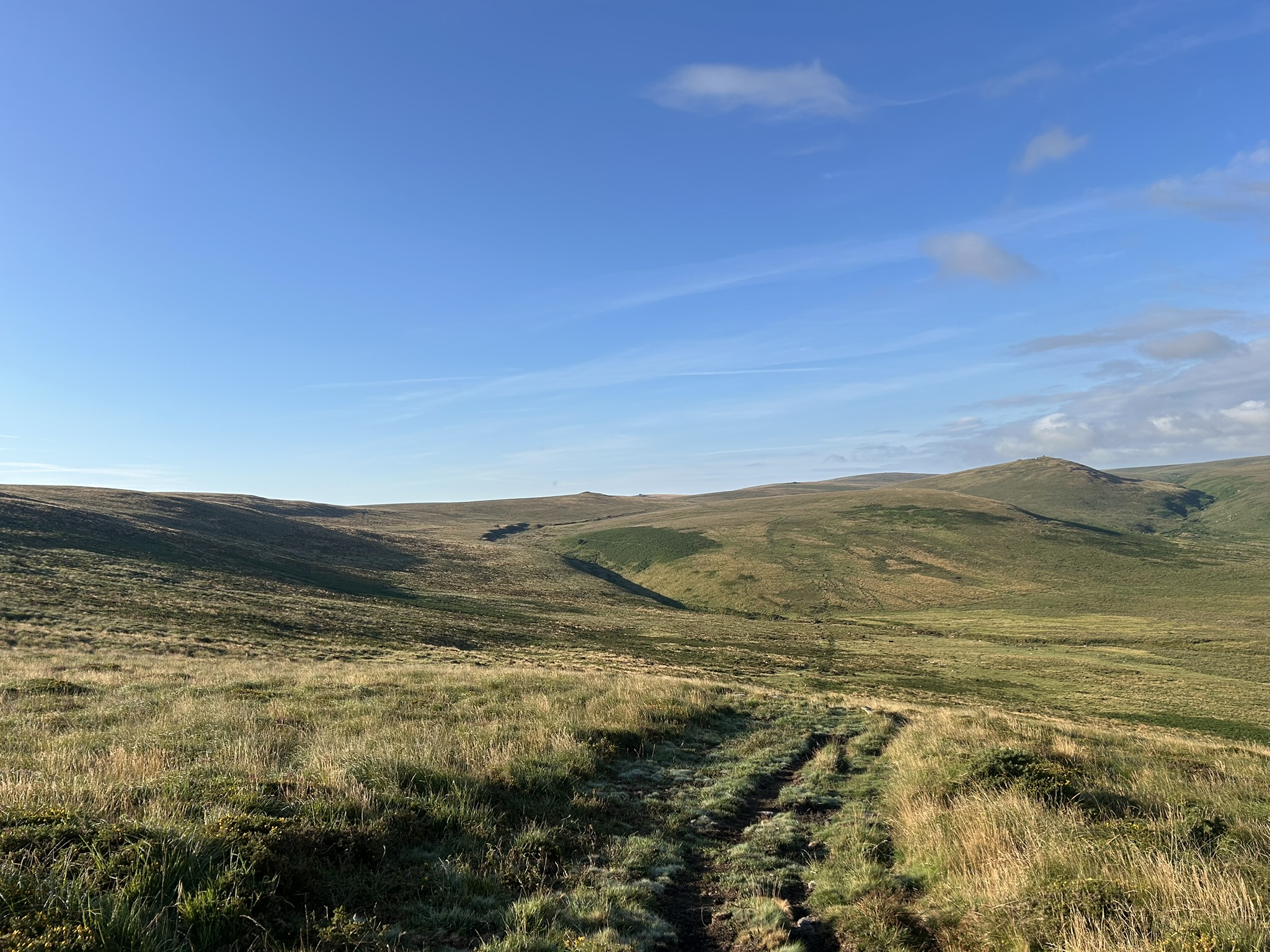
Continuing southeast, past Little Hound Tor, the path opens to the White Moor Circle. This ring of stones, modest in scale but rich in atmosphere, sits exposed to the wind, with views that stretch far across the moor. It is thought that gatherings at Stone Circles may have aligned with seasonal changes, which is apt as the weather quickly changes from clear blue skies with sunshine, to grey overcast skies and a gently growing wind.
Along with its cousin at Brisworthy and the Grey Wethers (see below), the White Moor Stone Circle has been restored. While this touch of modern intervention may soften a little of its mystery, it takes nothing away from the sweeping views or the powerful sense of place that this site offers, standing amidst the vast, open moor.
Buttern Hill Stone Circle
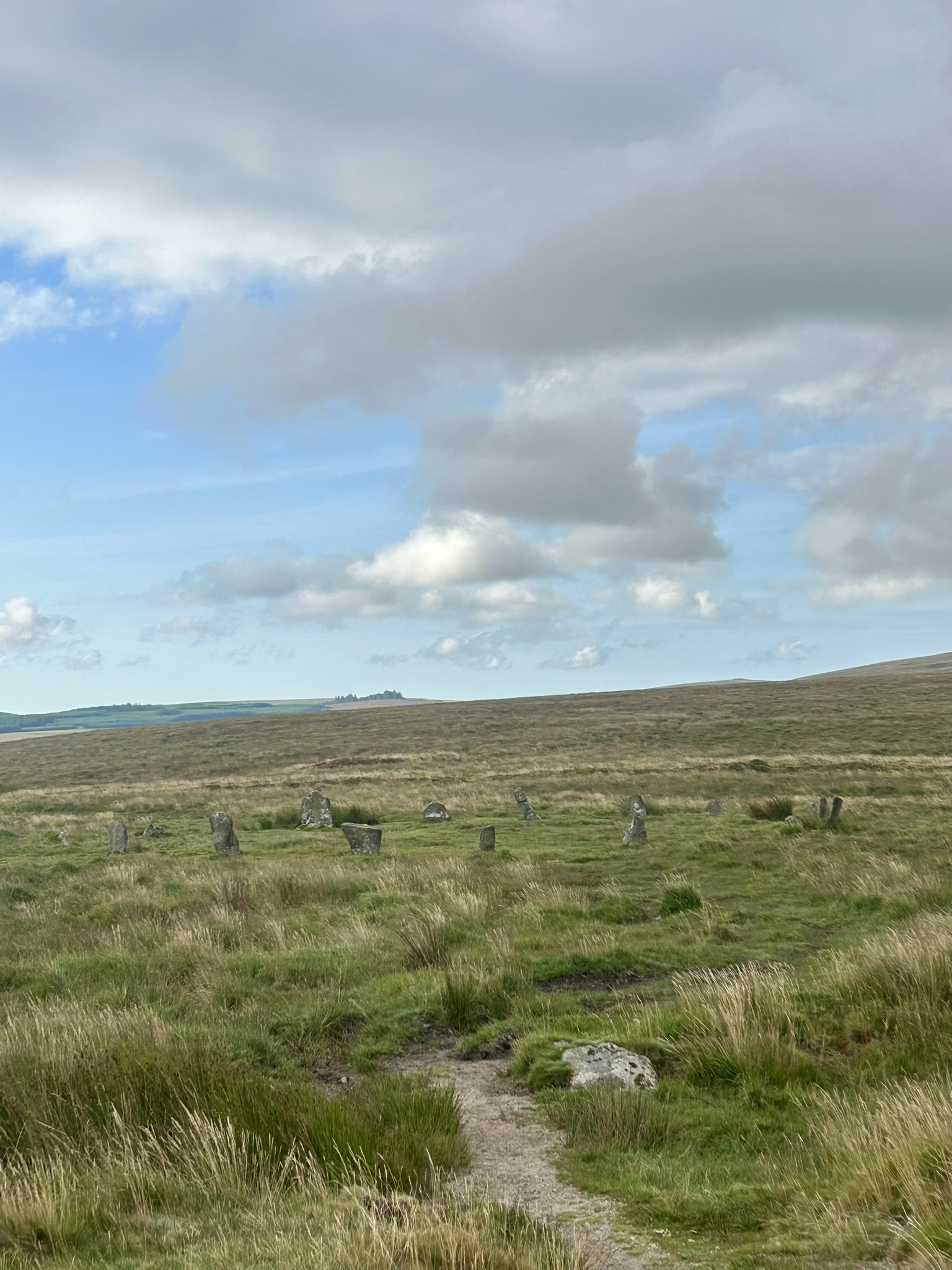
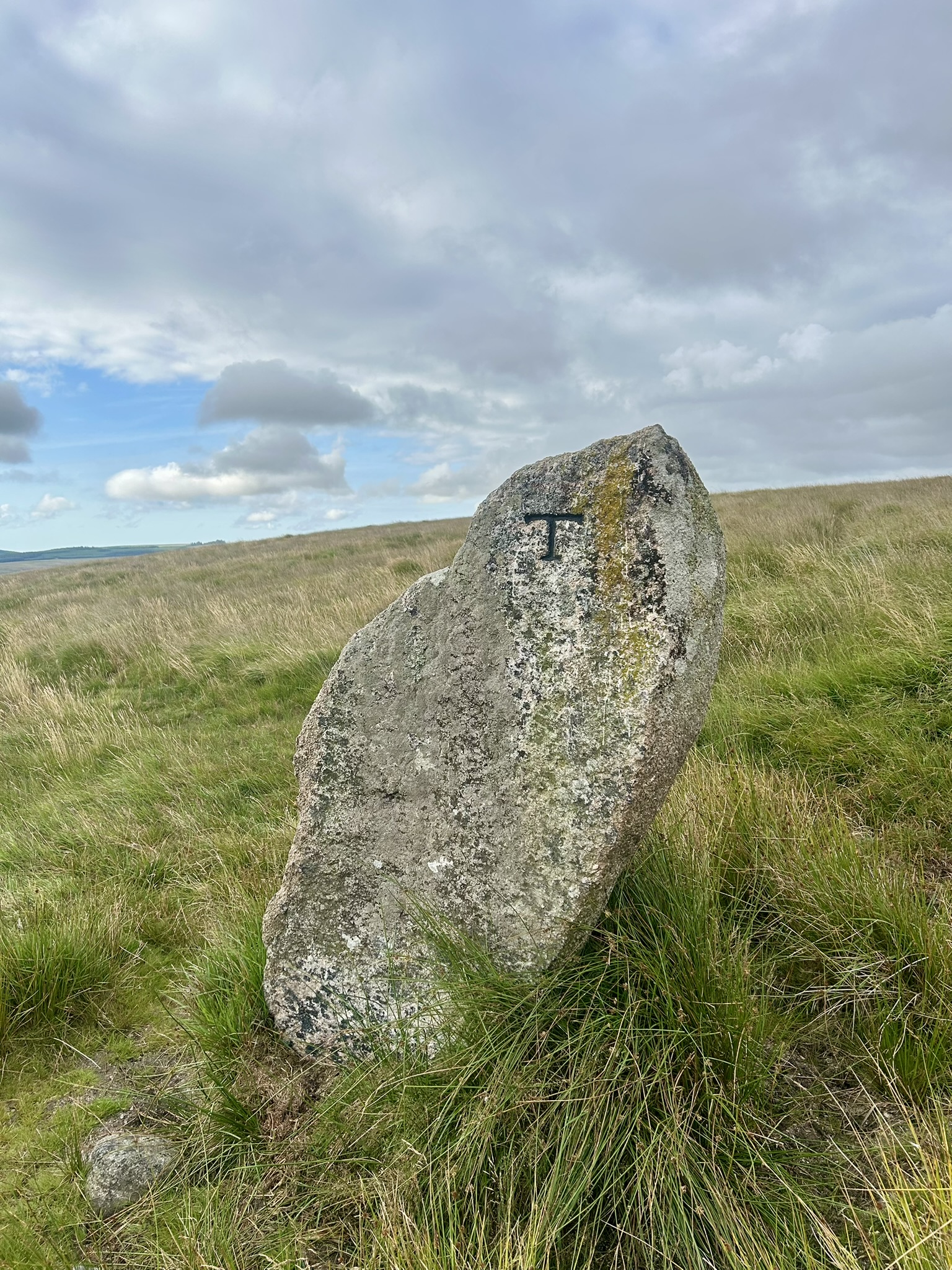
From White Moor, the path runs southeast through open moorland. A short detour leads to the Buttern Hill Circle, a slightly uneven ring where some stones lean as if weary from centuries of weather. Its isolation adds to its charm, nestled in the valley between Buttern and Kennon Hills, it feels like a place stumbled upon rather than sought out.
Scorhill Stone Circle & Shovel Down
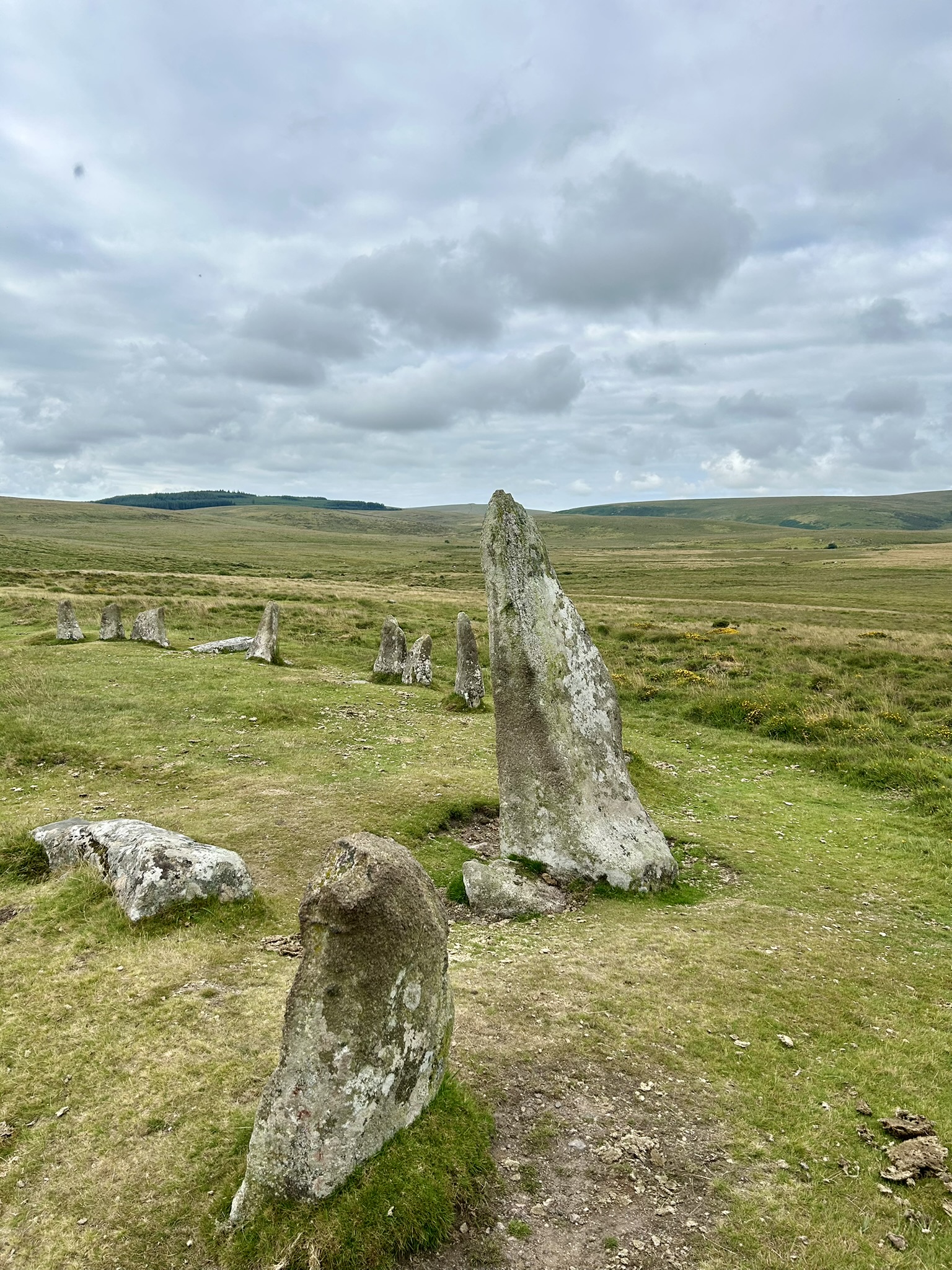
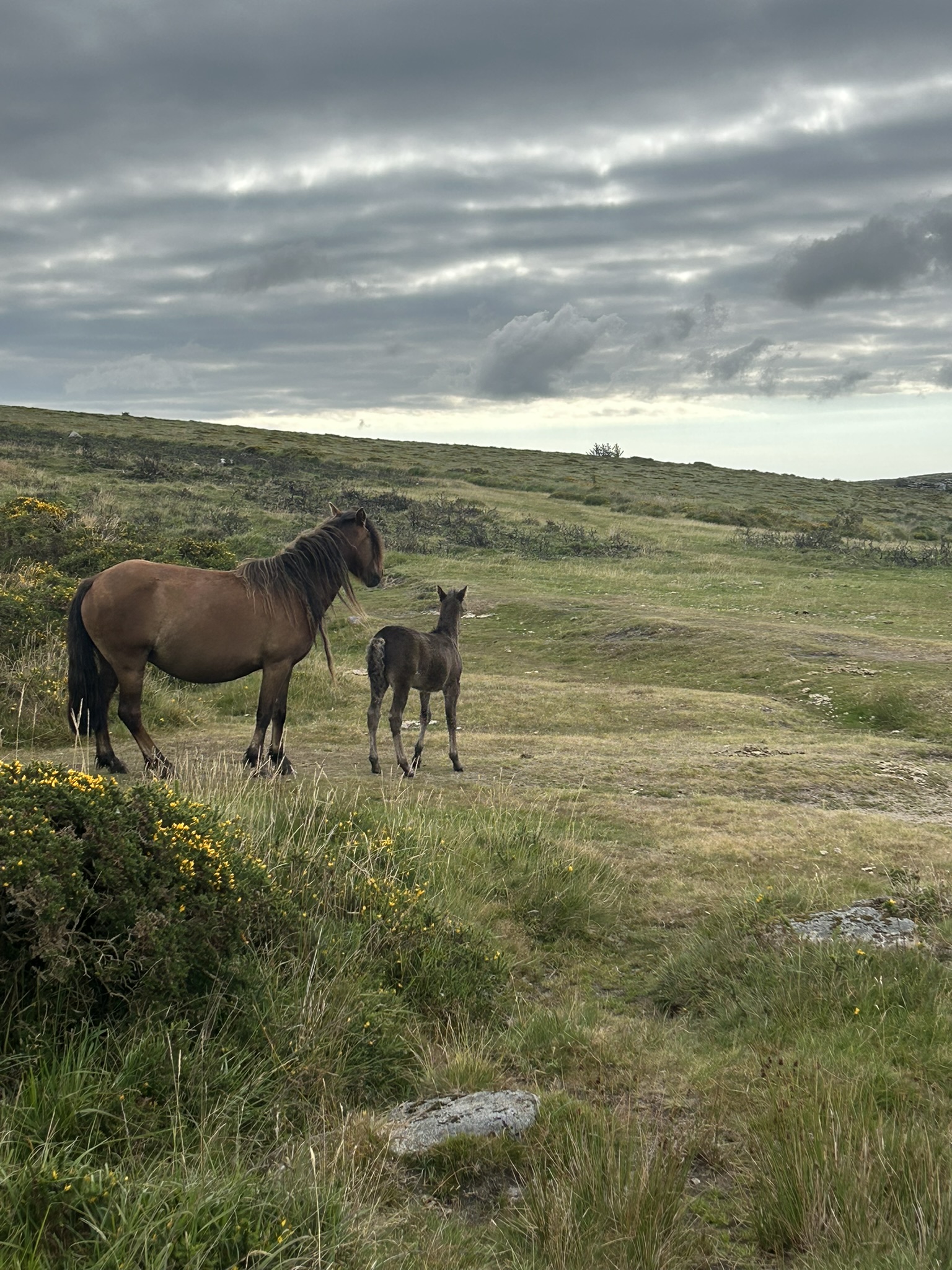
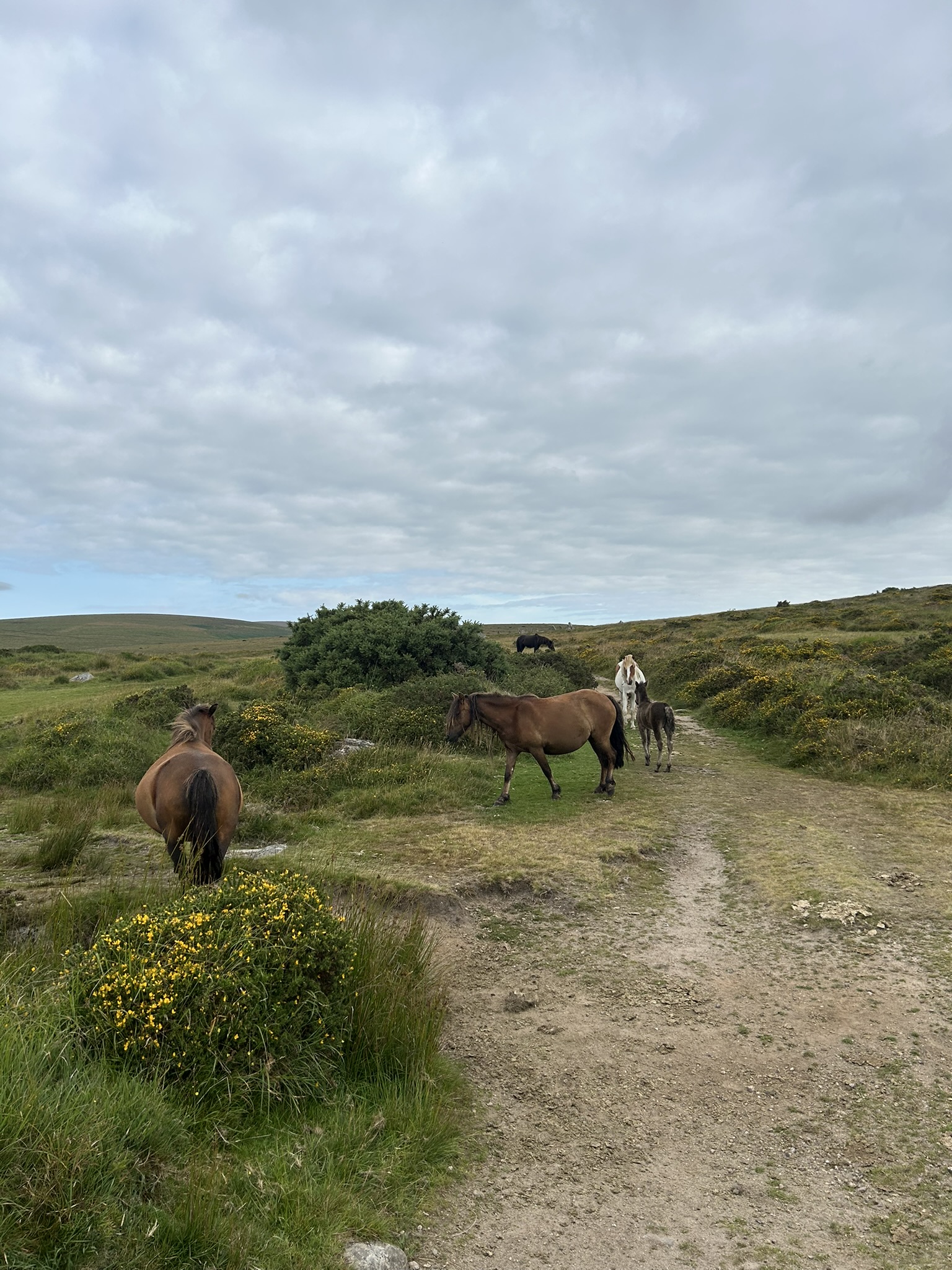
Next comes Scorhill Circle, perhaps Dartmoor’s most celebrated. With many of its tall uprights still standing, it exudes an air of solemn grandeur. It’s easy to see why this spot was chosen by a pair of wild campers, sharing their chosen night time location with a herd of grazing Dartmoor ponies.
Scorhill stone circle is thought to date from the late Neolithic to early Bronze Age (roughly 2000–1500 BCE). Originally, it may have had around 70 stones, but today about 34 survive, with several still standing at over 2 metres tall. The ring measures roughly 27 metres in diameter, making it one of the largest on Dartmoor.
Unlike some circles that have been re-erected or heavily restored, Scorhill stone circle remains largely untouched, which adds to its wild, authentic feel. The stones are weathered, leaning, and uneven, giving the site a raw, timeless quality. Standing here, you can easily imagine gatherings, ceremonies, or astronomical observations taking place thousands of years ago. Folklore only adds another layer to its charm, with a tale of horses refusing to pass through the circle, sensing something uncanny, although I have to say my observations on this day prove that tale to be false.
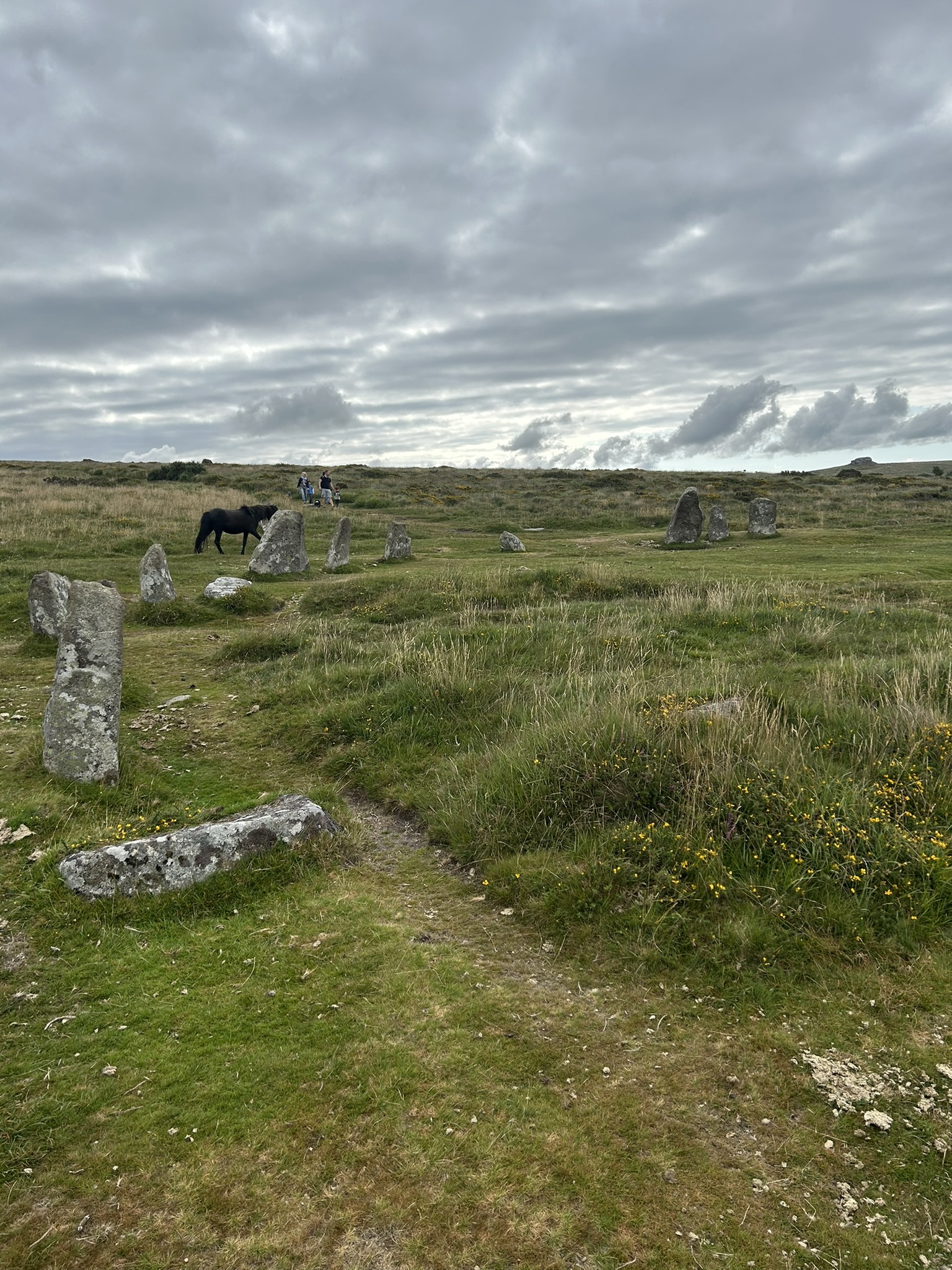
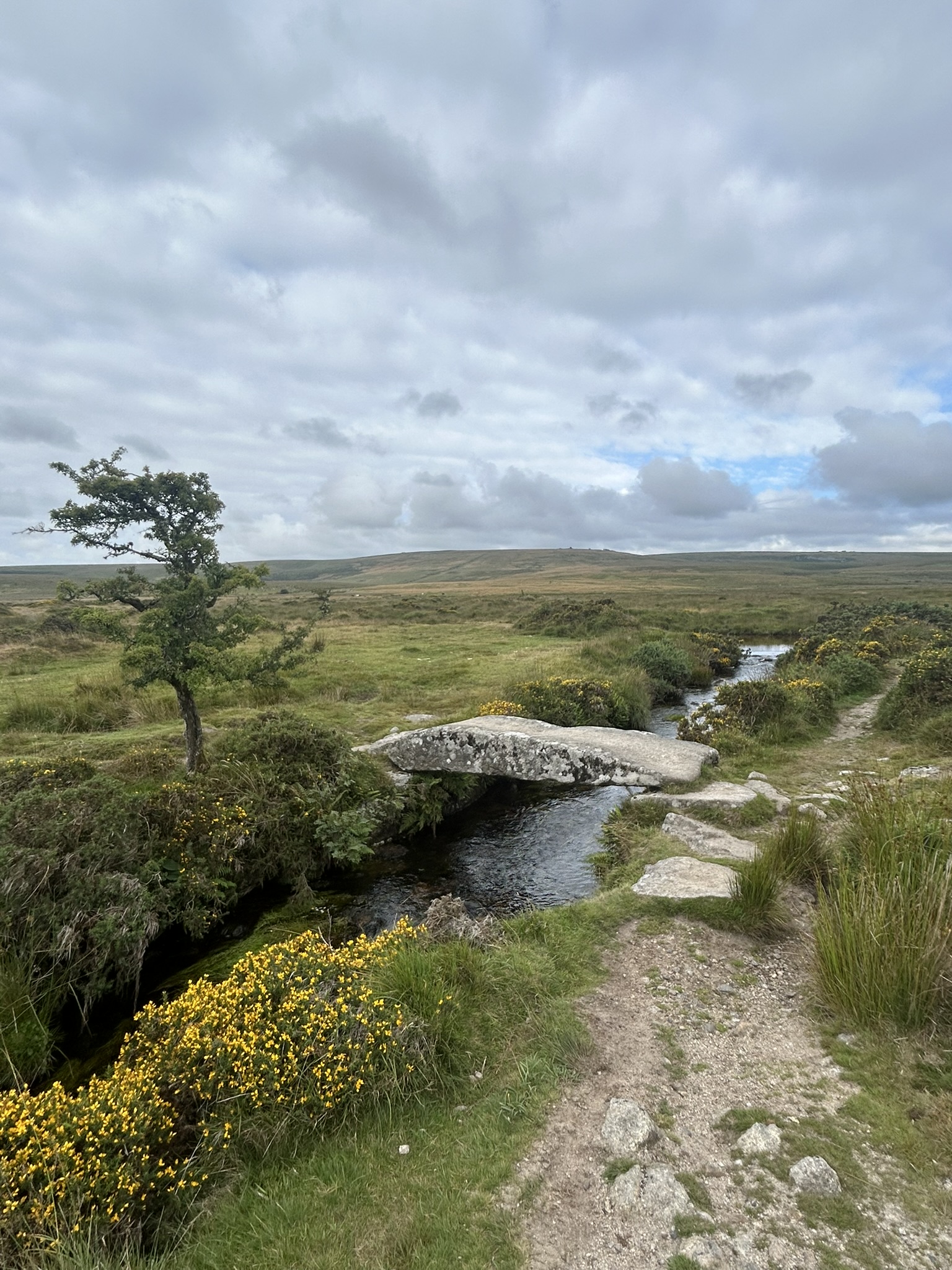
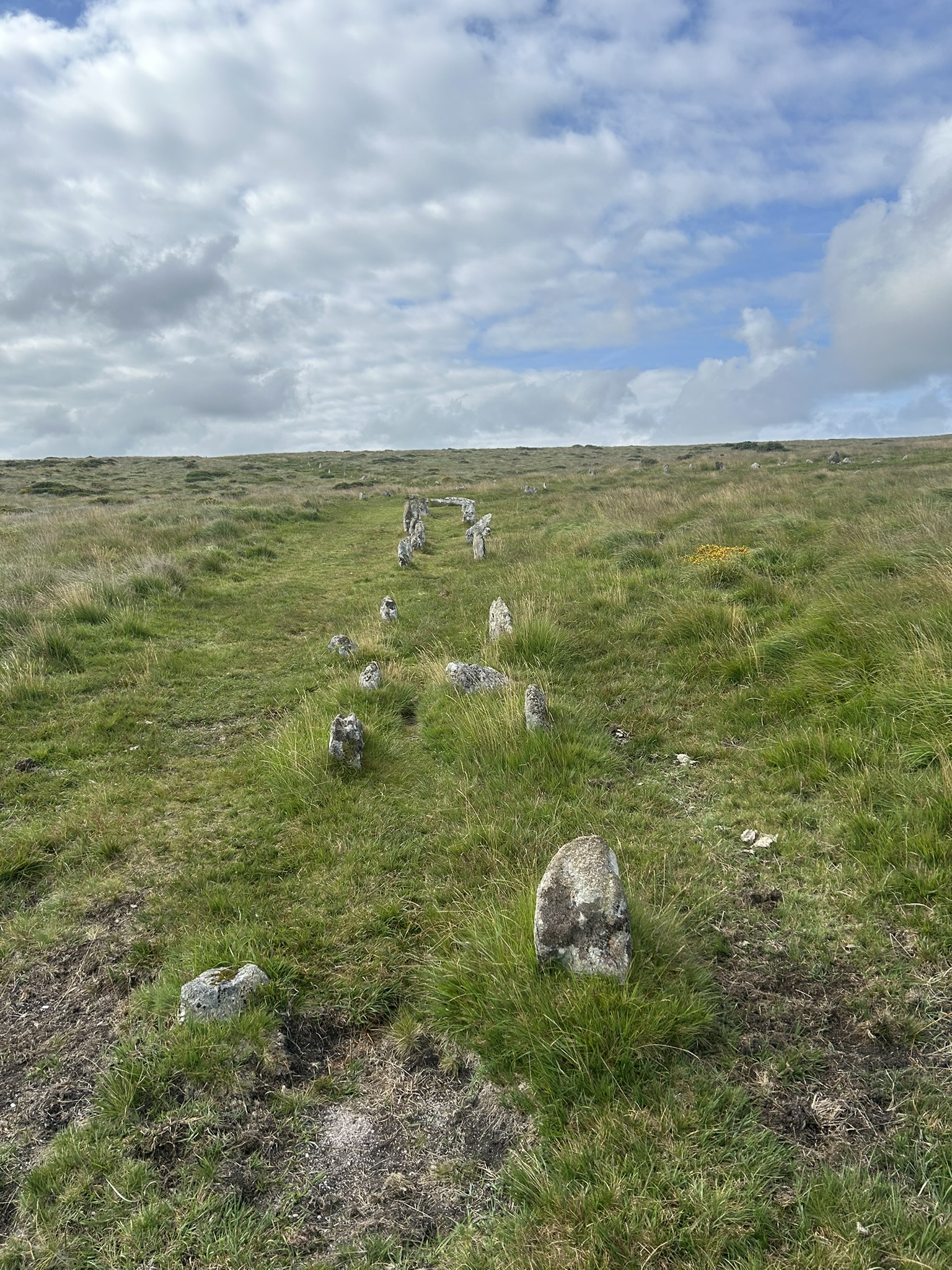
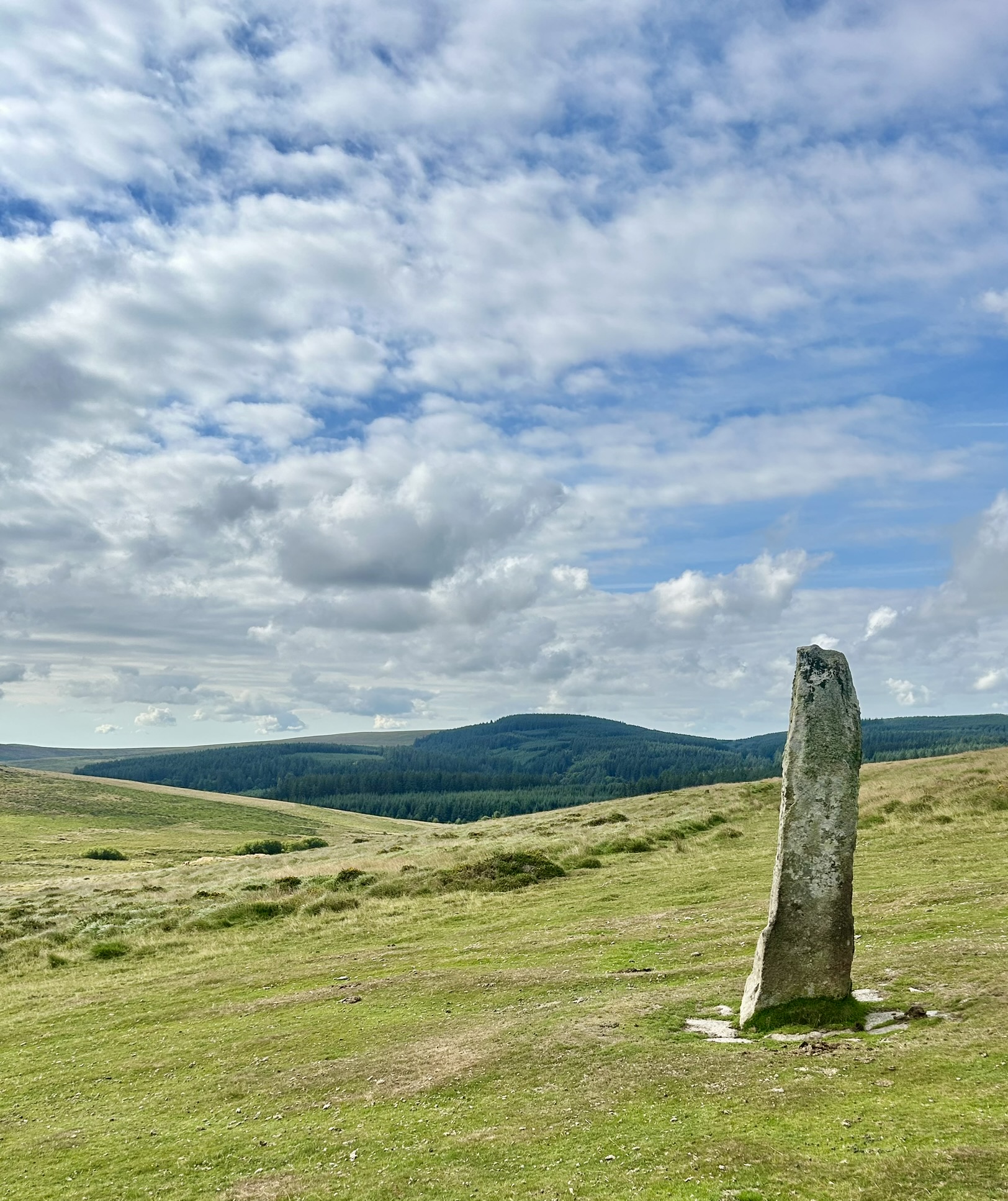
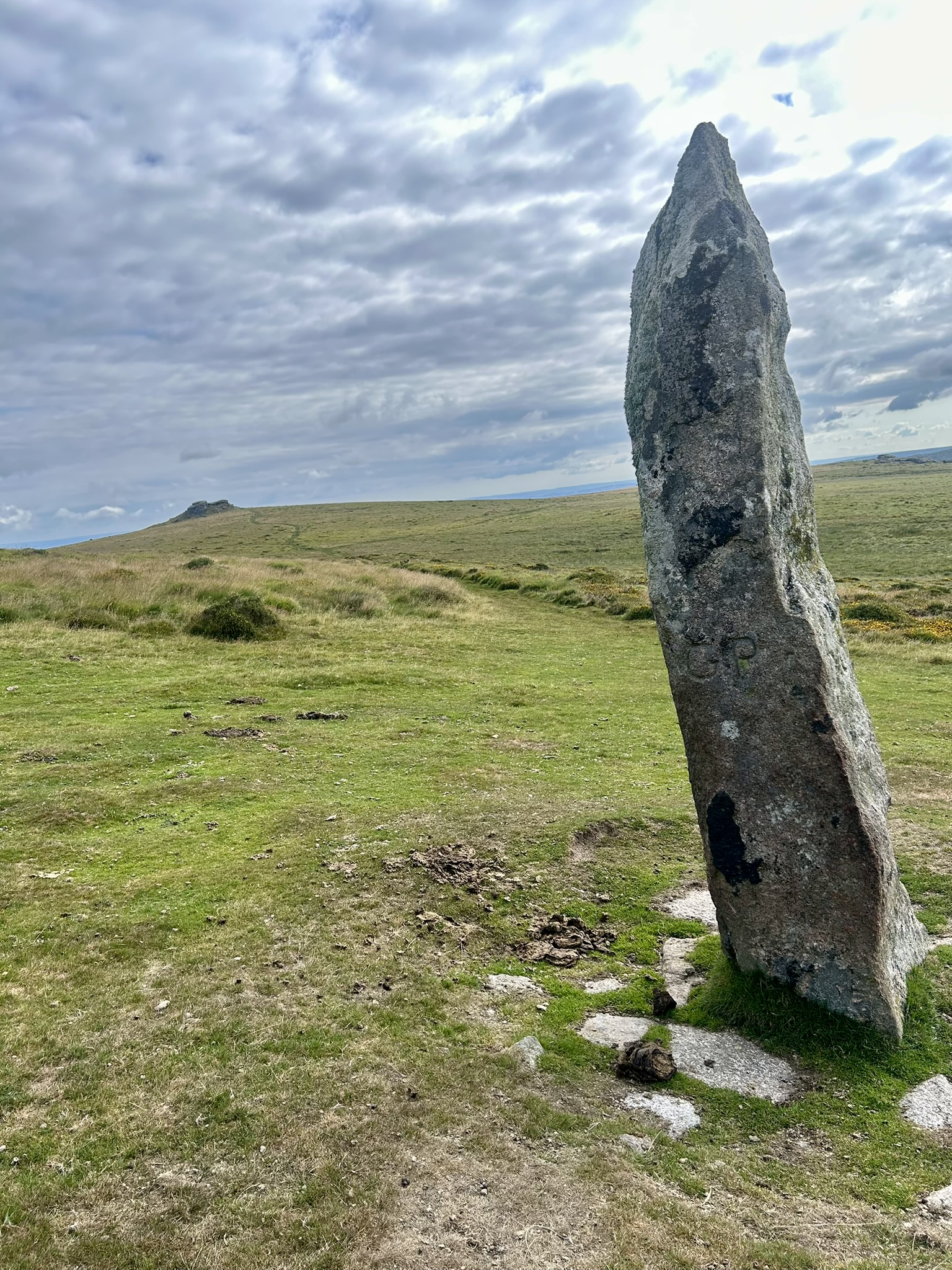
Leaving Scorhill stone circle, a short walk brings us to Shovel Down, a rich prehistoric landscape of stone rows, cairns, and the imposing Three Boys standing stones. One popular legend claims the stones are three brothers (or sometimes three young men) turned to granite as punishment for playing games on the Sabbath, a folklore trope that is associated with several Dartmoor monuments and reflects how later generations made sense of these enigmatic remains.
Fernworthy Stone Circle
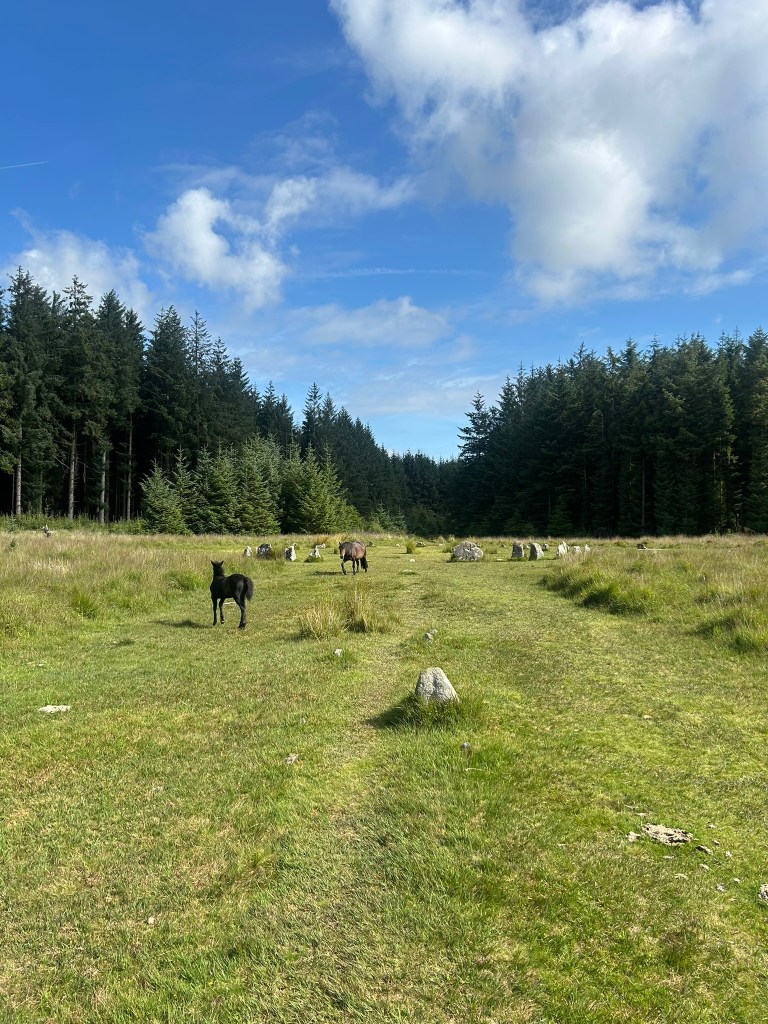
Entering Fernworthy Forest, the open moor gives way to shaded, resin-scented woodland. Here lies the Fernworthy Circle and its stone row, partly reclaimed by moss and bracken.
Dating from the late Neolithic to early Bronze Age, the Fernworthy (or Froggymede) circle measures about 20 metres in diameter and originally had 27 granite uprights, though some are now missing or fallen. The stones are relatively modest in height, but their setting in a grassy glade, ringed by dark conifers, gives them an almost secretive atmosphere. The clearing feels still and enclosed, in stark contrast to the open, windswept locations of our previously visited sites.
Close to the circle are several short stone rows, which may once have formed part of a ceremonial avenue or processional route. Archaeologists suggest they could have been aligned with astronomical events or connected to burials, as cairns have also been found nearby.
The name Froggymead comes from the marshy ground here before the forest was planted in the 20th century. While the trees are not original to the landscape, the secluded setting they create adds a sense of discovery
Grey Wethers Stone Circles
Emerging from the western edge of the forest, the route quickly reaches the Grey Wethers.
The Grey Wethers are a pair of nearly complete stone circles set side by side close to Sittaford Tor. Each measures about 33 metres in diameter and originally consisted of 30 granite uprights, many of which still stand. Archaeological evidence suggests they were built around 2500–1500 BCE, likely for ceremonial or ritual purposes. By the late 19th century, many stones had fallen or been removed, but in 1909 the circles were restored under the supervision of the Dartmoor Exploration Committee, with fallen stones re-erected in their original sockets. While this intervention has given the site its striking completeness, it also means the circles look tidier than most on the moor, perhaps changing how they would have originally felt.
The Grey Wethers, as with many of the striking features of the moor, are associated with myth and legend. The most famous tells of a farmer newly arrived on Dartmoor, in 1800. Upon his arrival, the farmer loudly declared his ambition to become the most prosperous landowner in the area. One misty autumn day, he rode to Tavistock market in search of his first flock of sheep. But after inspecting the pens, he scoffed at the lot, declaring them “totally useless” and the product of poor husbandry, much to the chagrin of the locals.
Having stopped at a local inn to drown his disappointment, with the help of several mugs of local cider, he struck up a conversation with a local shepherd who had a “fine flock grazing nearby” and for a “gud price, mind,” he’d be willing to sell them. After a few more ciders, the deal was struck in principle, and the pair rode out to inspect the goods. The night was slowly rolling in, along with the cold and mist, and they only went as far as White Ridge, where the farmer, peering through the haze, saw what he believed to be a splendid flock grazing below Sittaford Tor. Convinced he’d found the perfect start to his fortune, he hurried back to the inn to seal the bargain with yet more cider. The next morning, in the clear light of day, he set off to claim his prize, only to find no sheep at all. Instead, standing where his fine flock had been, were two perfect circles of granite, the Grey Wethers.
The Long Way Home
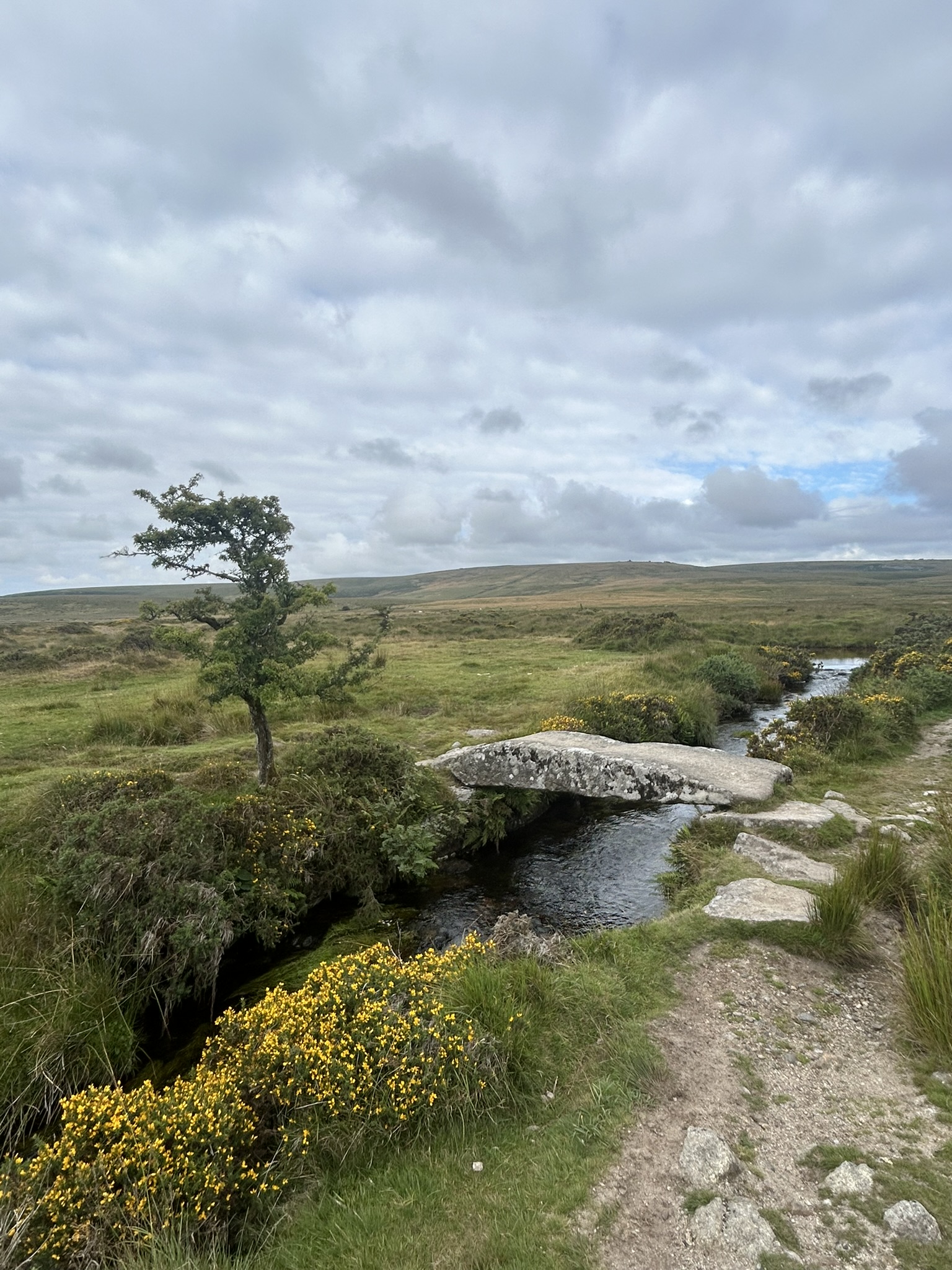
From the Grey Wethers, the our route swings westward, crossing wild, open moor past small streams and marshy ground, with views towards Kes Tor and Cosdon Hill. The path meanders back towards Belstone, passing over Hangingstone Hill, before gradually descending and offering glimpses of the village long before you arrive. The final kilometres are a pleasant mix of grassy tracks and stony paths, giving time to reflect on the sheer variety of landscapes covered in a single day.
Reflections
The Stone Circle Round is not just a physical challenge, as 30km over Dartmoor’s varied terrain is no small feat, but a journey through layers of time. Each site offers a different atmosphere, with some open and windswept, others sheltered and hidden. Along the way, walkers encounter both human history and natural drama with rolling hills, wide skies, rivers, and the ever-present ponies.
To walk this route is to trace the footsteps of Dartmoor’s earliest inhabitants, feeling, however briefly, part of their world. By the time you return to Belstone, boots dusty and legs pleasantly tired, the moor’s stories, both ancient and personal, will stay with you.
| Difficulty | Distance | Navigation Required? |
| Hard ` | 30km | Yes |
| Start / Finish | Safety | Footwear |
| SX 619935 | General considerations Firing Ranges River crossings Steep terrain | B1 upwards |


 Moorland Ramblings
Leave a comment