
It is a Bank Holiday weekend, and in true bank holiday style, it has been pouring with rain. Having spent a couple of days hidden away inside, the cabin fever was starting to strike. The baby was crying, the toddler was rampaging, and the parents were despairing. There was only thing to do – brave the storms and head outside with a dogged determination that was only strengthened by stubbornness with a dash of sheer bloody mindedness.
Having recently spent some time around the beautiful Bovey Castle, we decided to head towards the stunning views offered out by the peak of Easdon Tor. Parking up in North Bovey, the walk starts by heading through the churchyard of the beautiful St John the Baptist church. The church itself is full of history, having been dated back to the 13th century, with the first vicar recorded in 1279.
Heading out the southwest of the churchyard, our route takes us across the River Bovey, via a seldom used road. The River Bovey, home to brown trout, sea trout and at times, salmon, starts its life on the eastern side of Dartmoor National Park, near to the River Teign which it later flows into. The River Bovey has a rich history, playing a crucial role in the development and life of the surrounding areas, providing water for mills, industries, and daily life, while also contributing to the area’s geological significance as a source of ball clay, which continues to be extracted form the Bovey Basin.
Bowda Wood
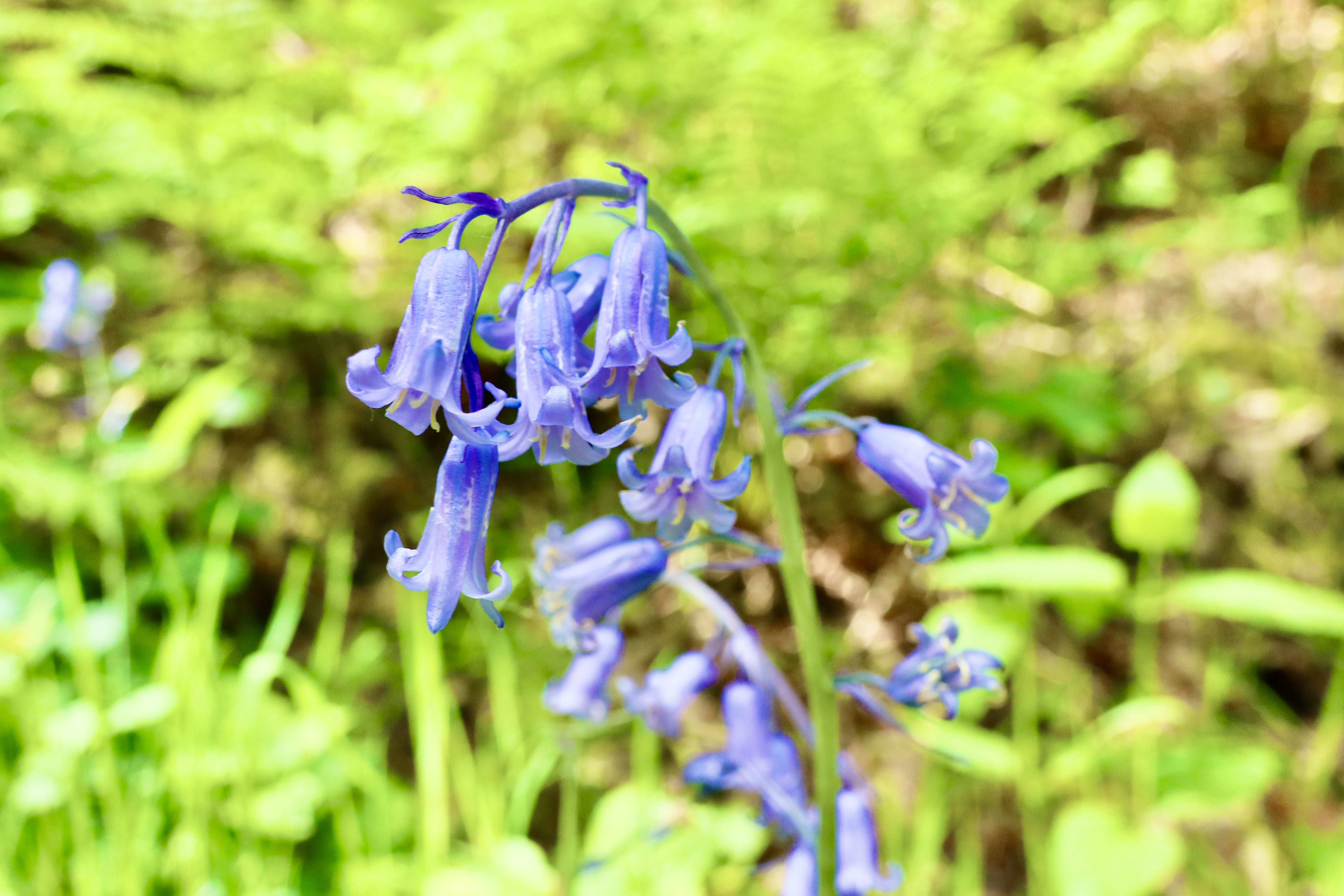
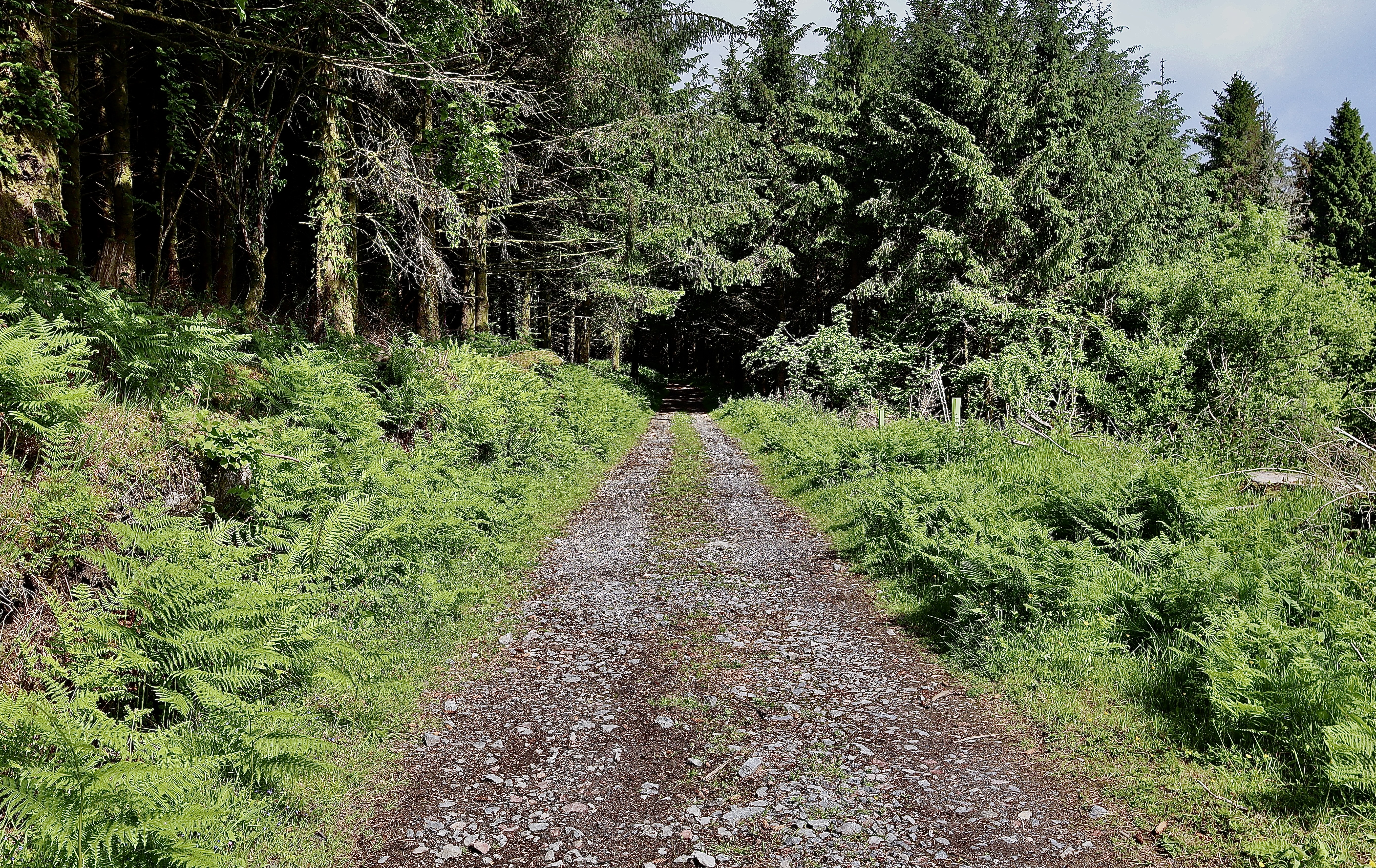
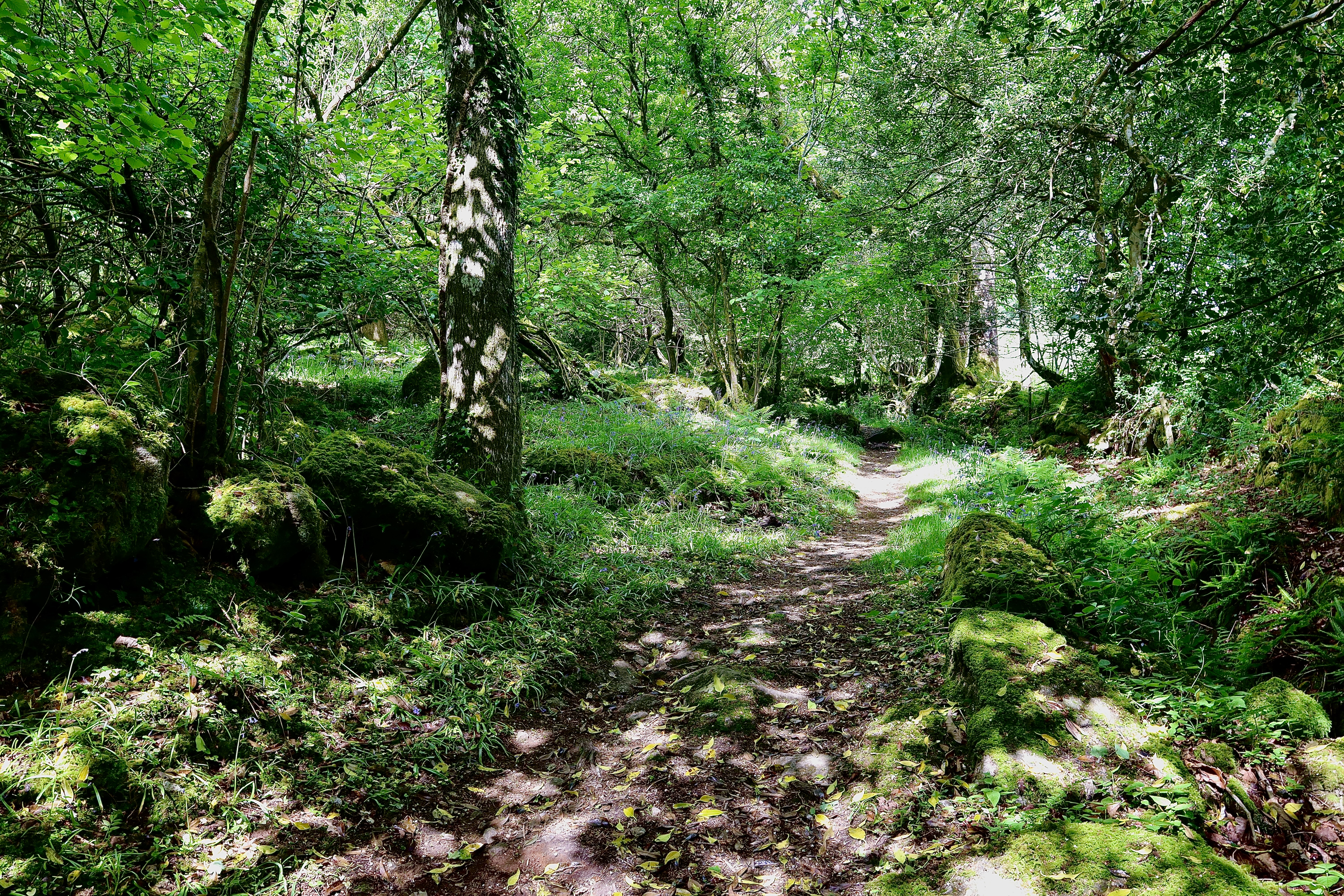
The road continues along, with a steep uphill portion, where upon an entrance to Bowda Woods is reached after about 250m. Invariably named Bowda Wood (after the ruined farmstead that calls it home) or North Bovey Wood (after the nearby village), this beautiful area is made up from Beech trees, Elm Trees and Sitka Spruce, the latter belying the purpose of this land as a commercial plantation. The sweet earthy smell of the spruce, with the blue and hazel flashes of bluebells and foxgloves, accompanied by the sounds of the gentle breeze blowing through the trees and birds chirping their songs following the storm like rain, creates a freshness that signals the transition of spring through to summer. It is a fantastic start to the ascent of the Tor.
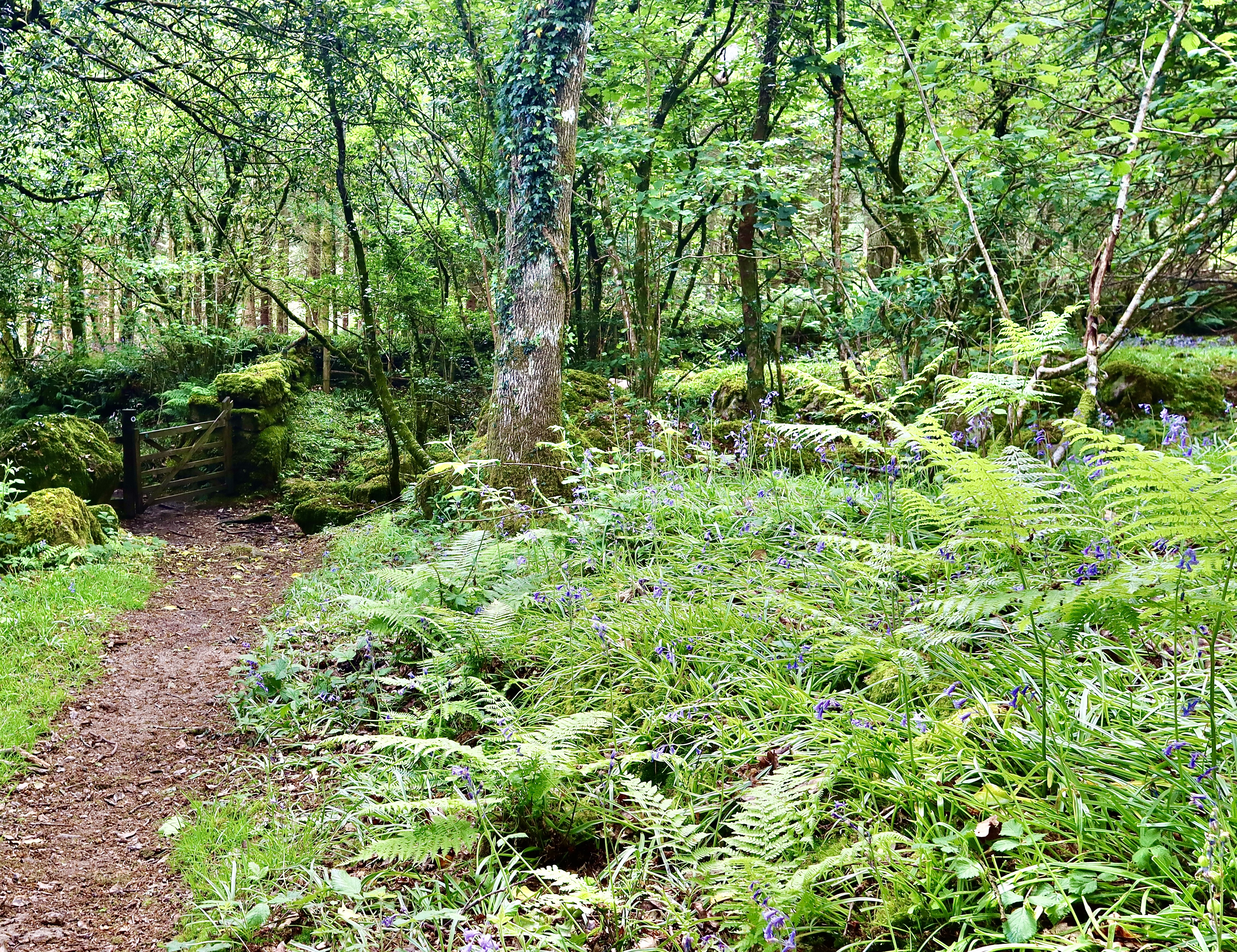
The path through the commercial plantation continues along for 1km before we take a new path, turning westwards up the Northeastern slopes of Easdon hill. The woodland here changes from the imposing, aged spruce to the spreading, twisted branches of native oak trees. With dry stone walls and coppice stools, the complex communities of plants, fungi and (according to my 3-year-old at least) fairies, work together to create a magical location that hints at ancient woodland, split by a gently babbling stream.
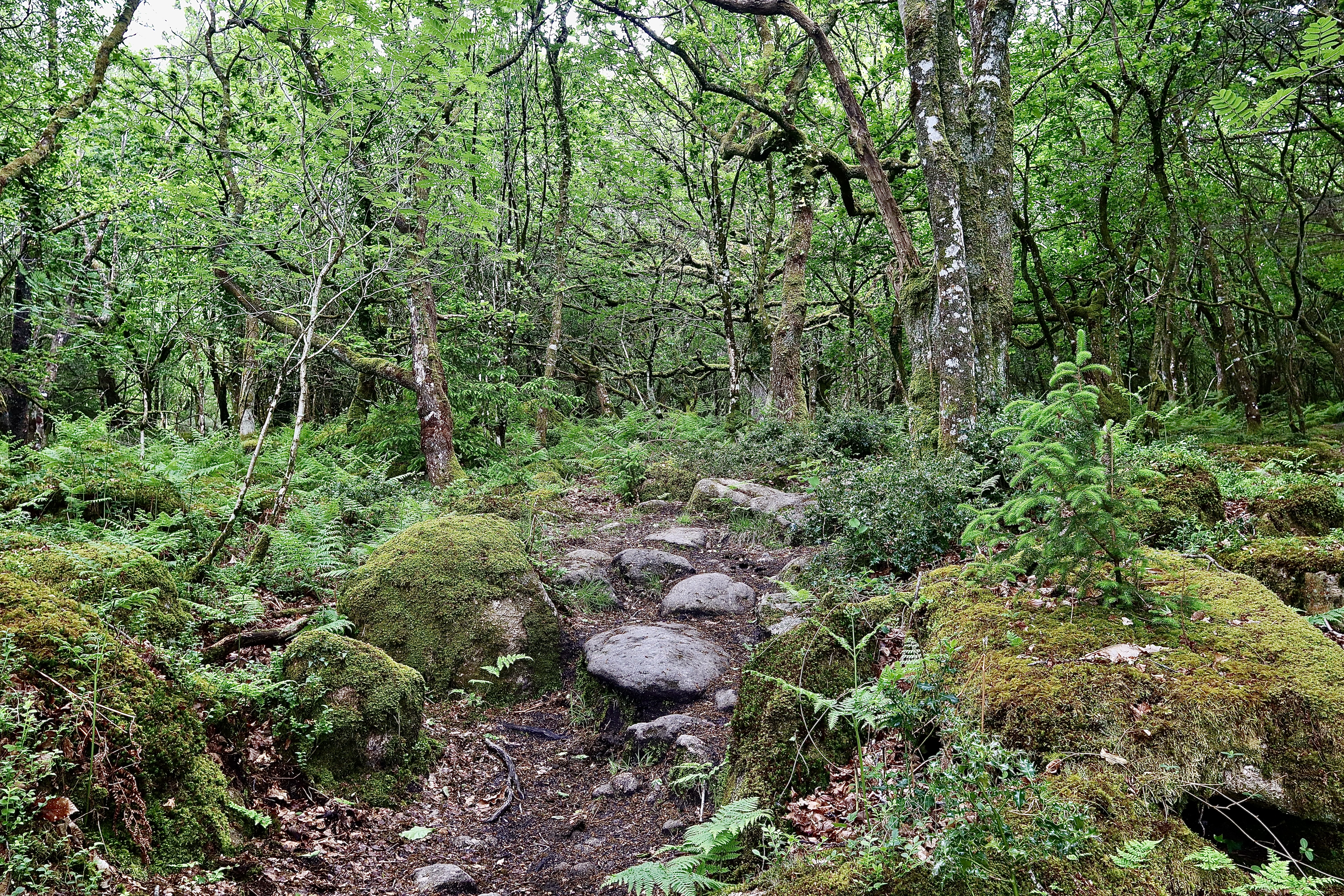
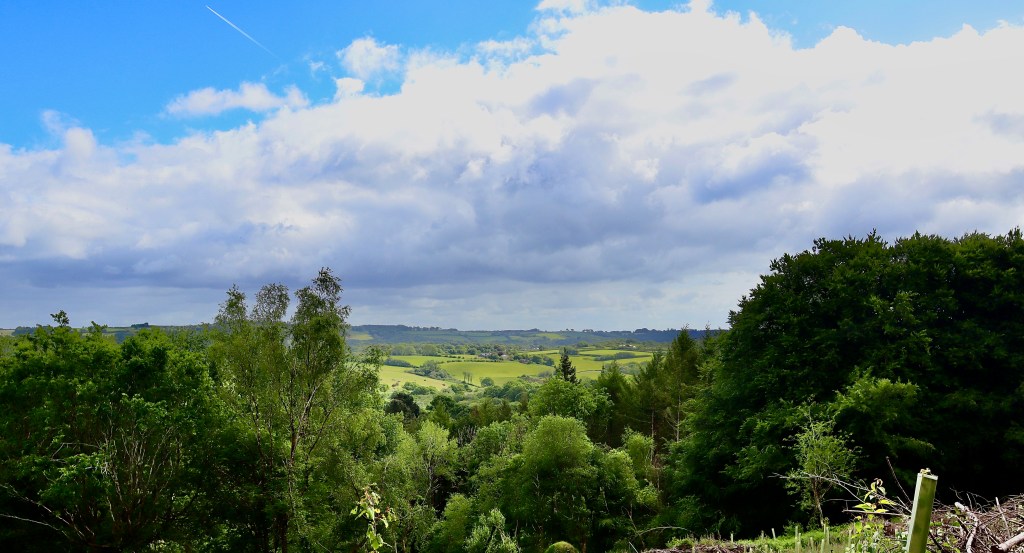
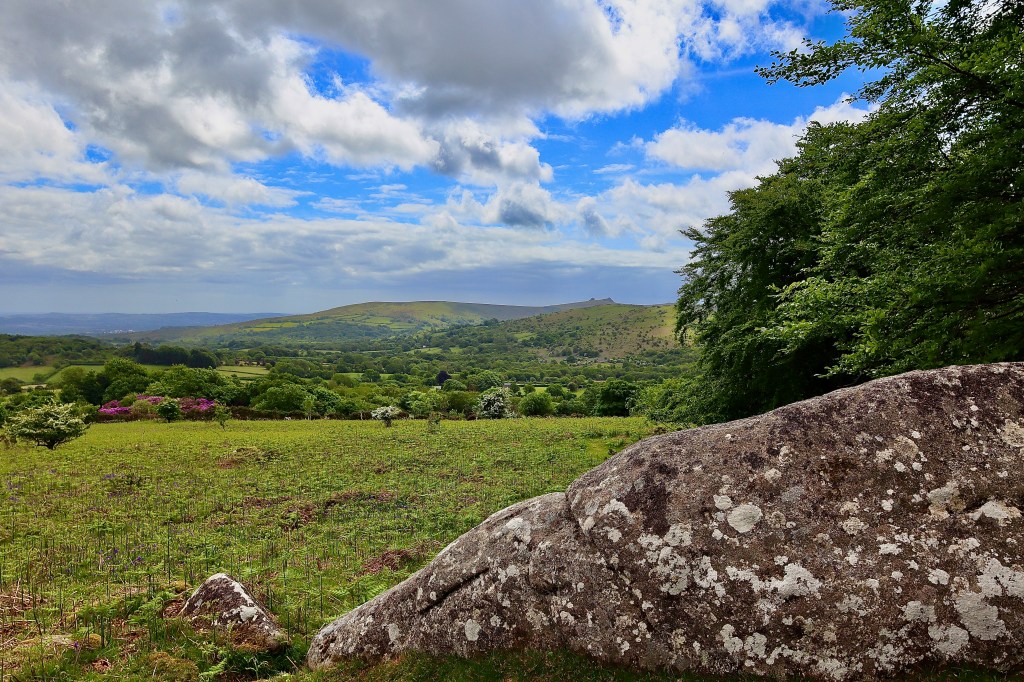
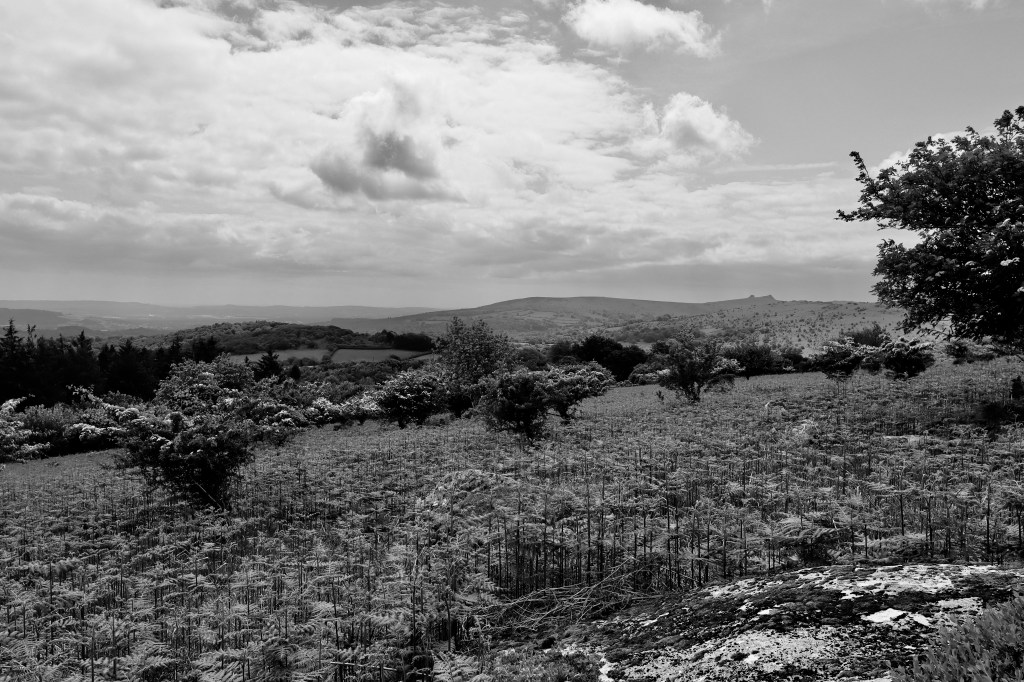
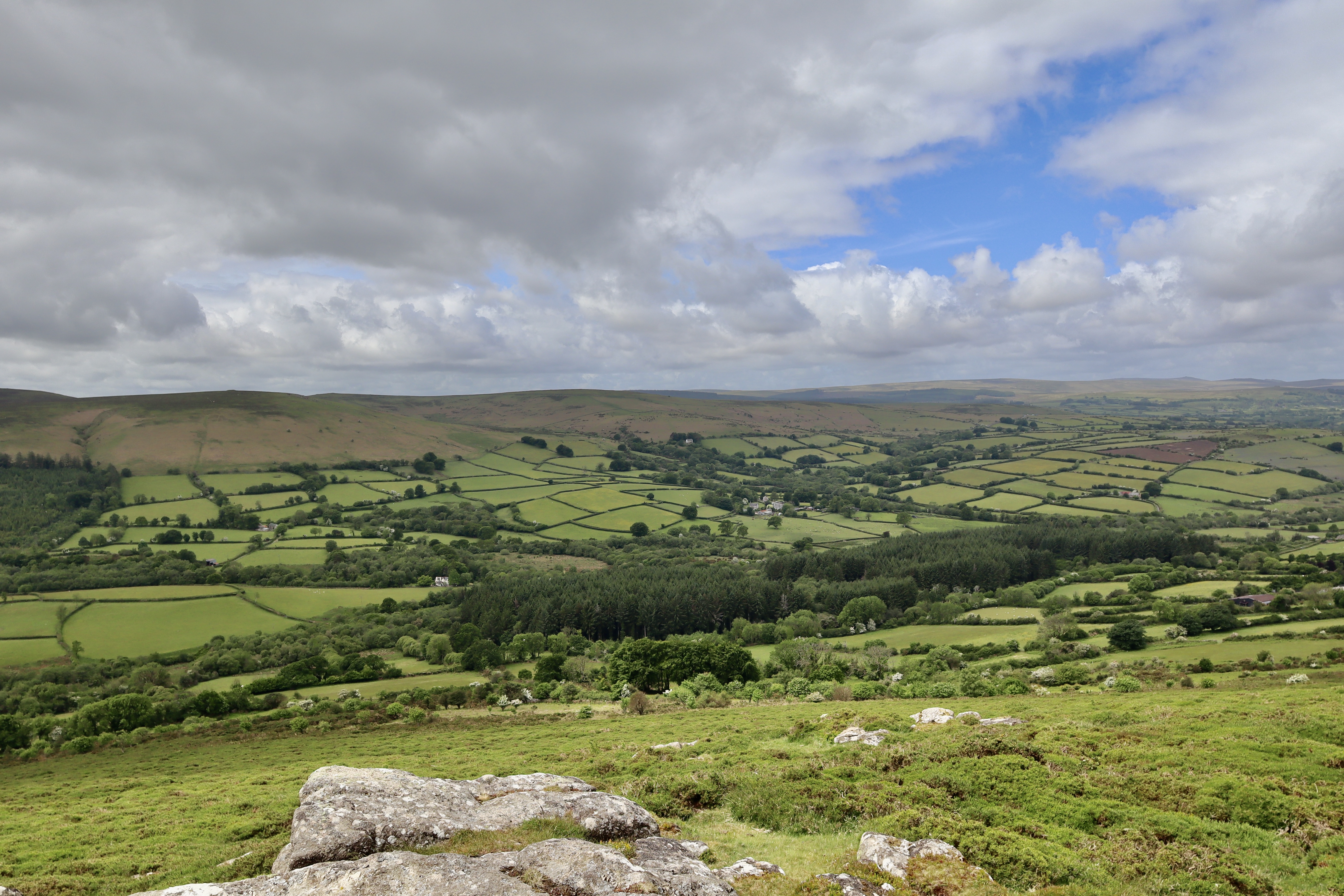
Continuing through the woodland for 1km, we emerge onto the open moorland, with the early emergence of the soon-to-be ocean-like tides of bracken. The view here changes from ancient woodland to a spectacle that only Dartmoor can offer up, with rolling hills characterised by changing colours of fields and untamed moorland, broken by the imposing peaks of Tors and overseen by the hovering Skylarks, calling their distraction song.
Figgie Daniel
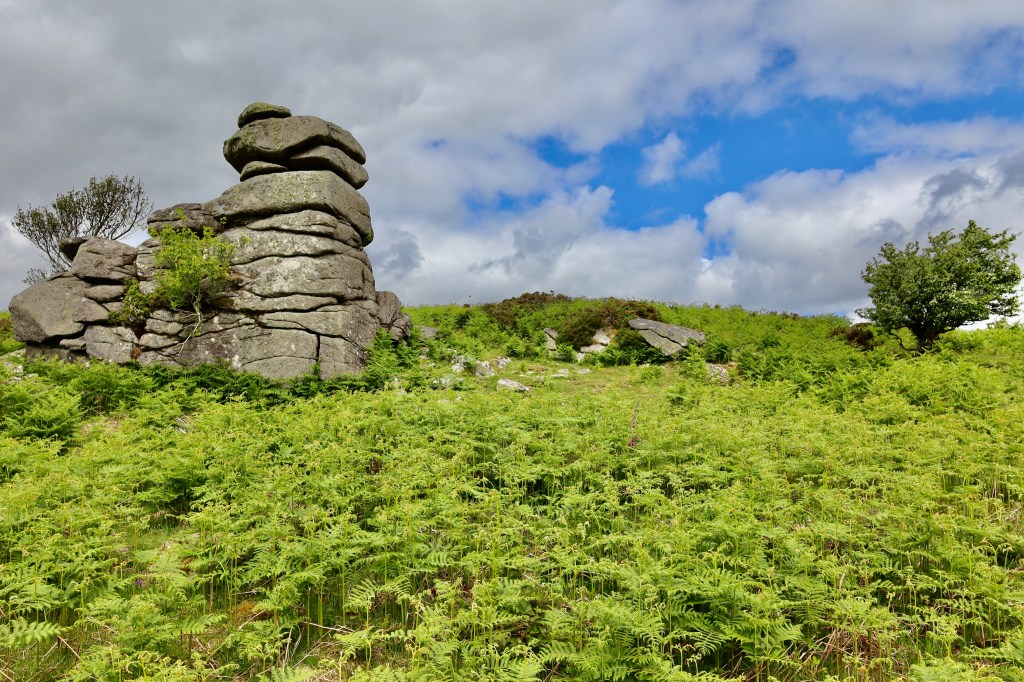
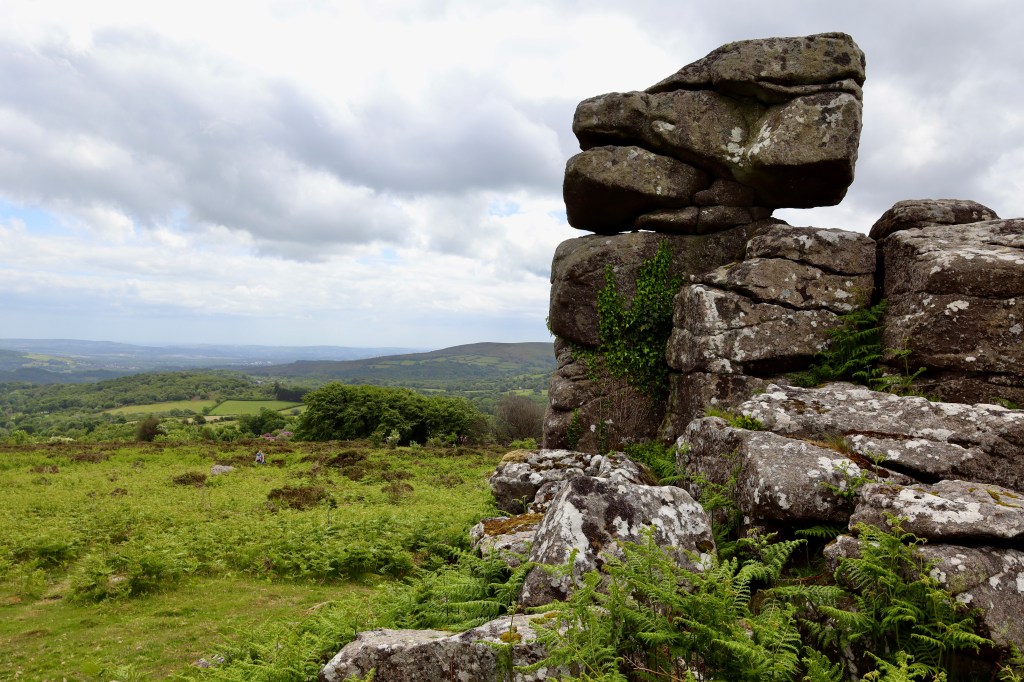
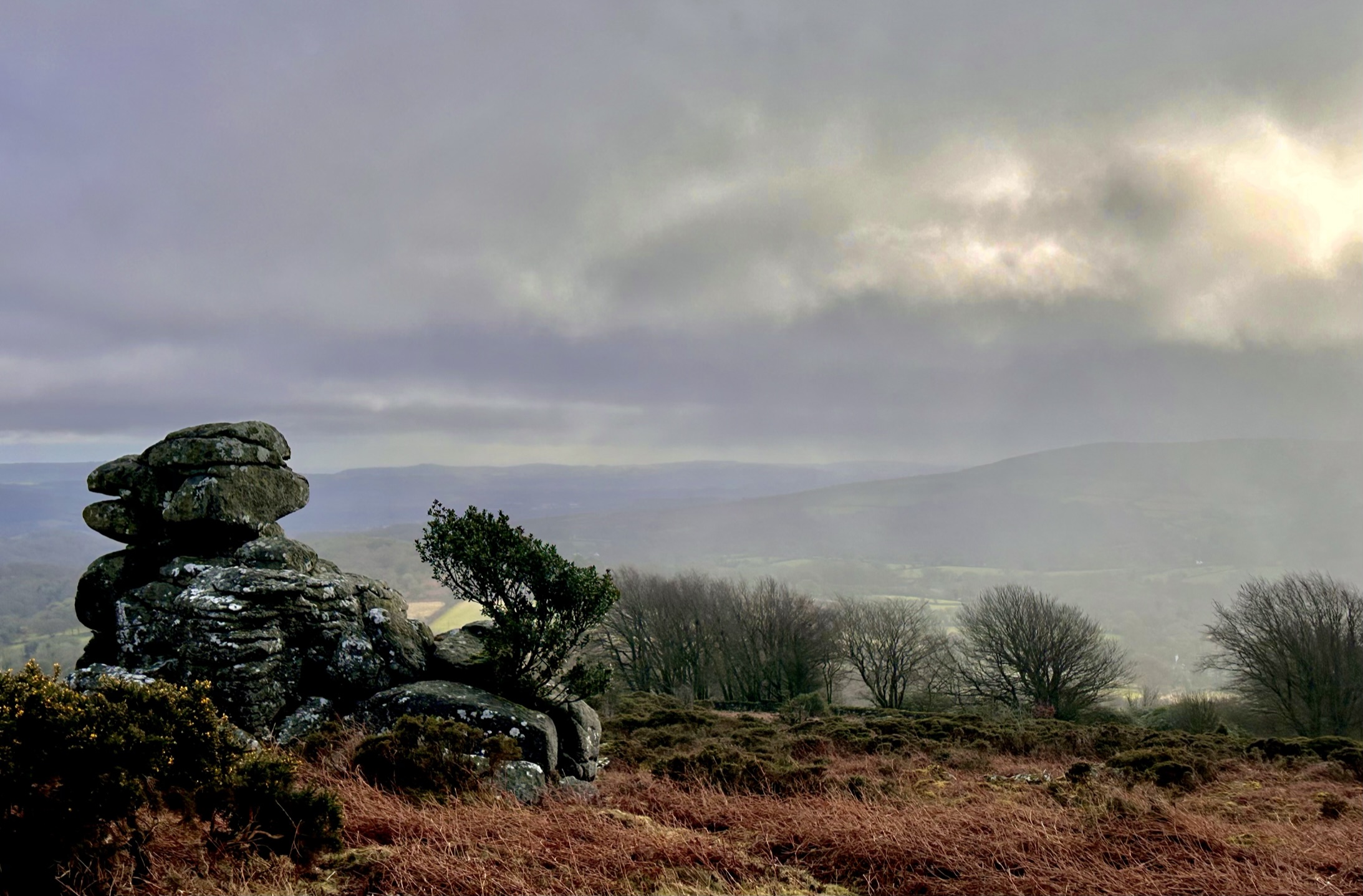
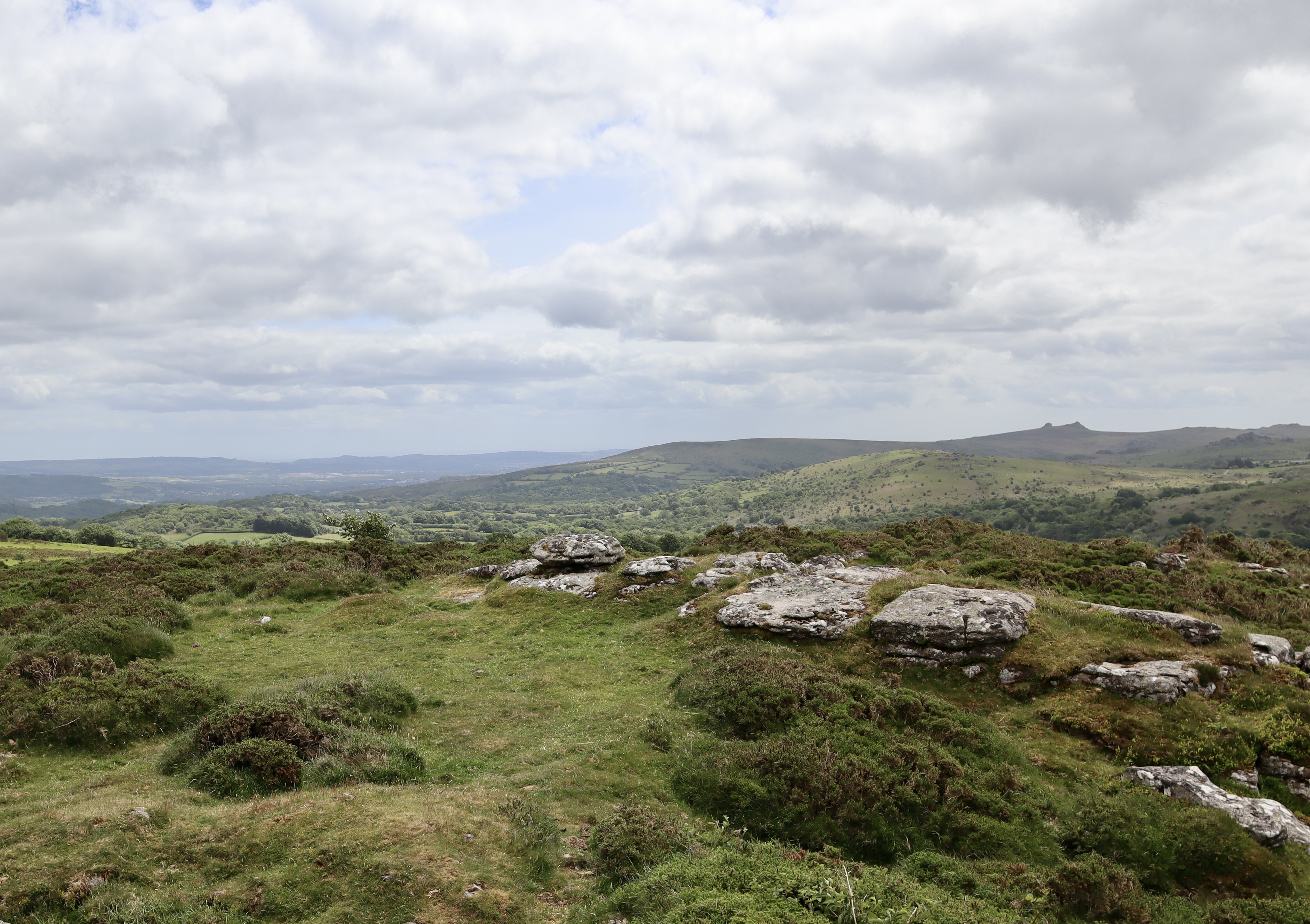
The slopes up the southeastern edge of Easdon Down are gentle, but covered in bracken and gorse, so care is needed. The path continues past Figgie Daniel, an imposing stack of rock that is often cited as a rival to the nearby Bowerman’s Nose. To my undiscerning eye, the imposing, impressive rock pile looks more sphinx like then a man, but one thing everyone can agree on is the spectacular views, especially to the south-east towards Hound Tor and the twin bosses of Hay Tor Rocks, over which Figgie Daniel commands. A grassy path links the stack of Figgie Daniel to the summit and Easdon Tor.
Easdon Tor
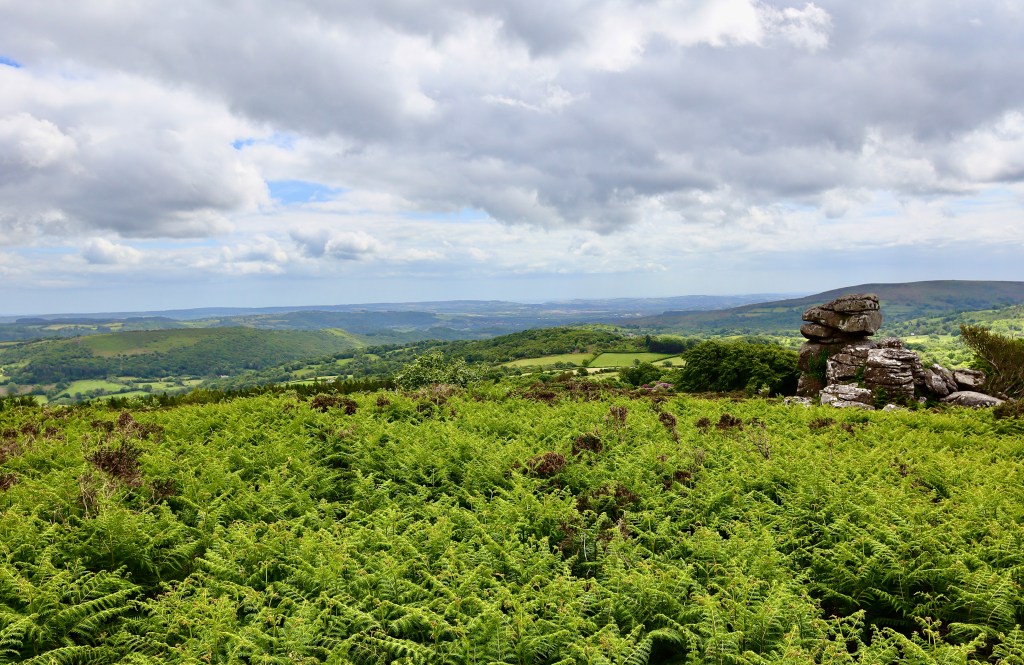
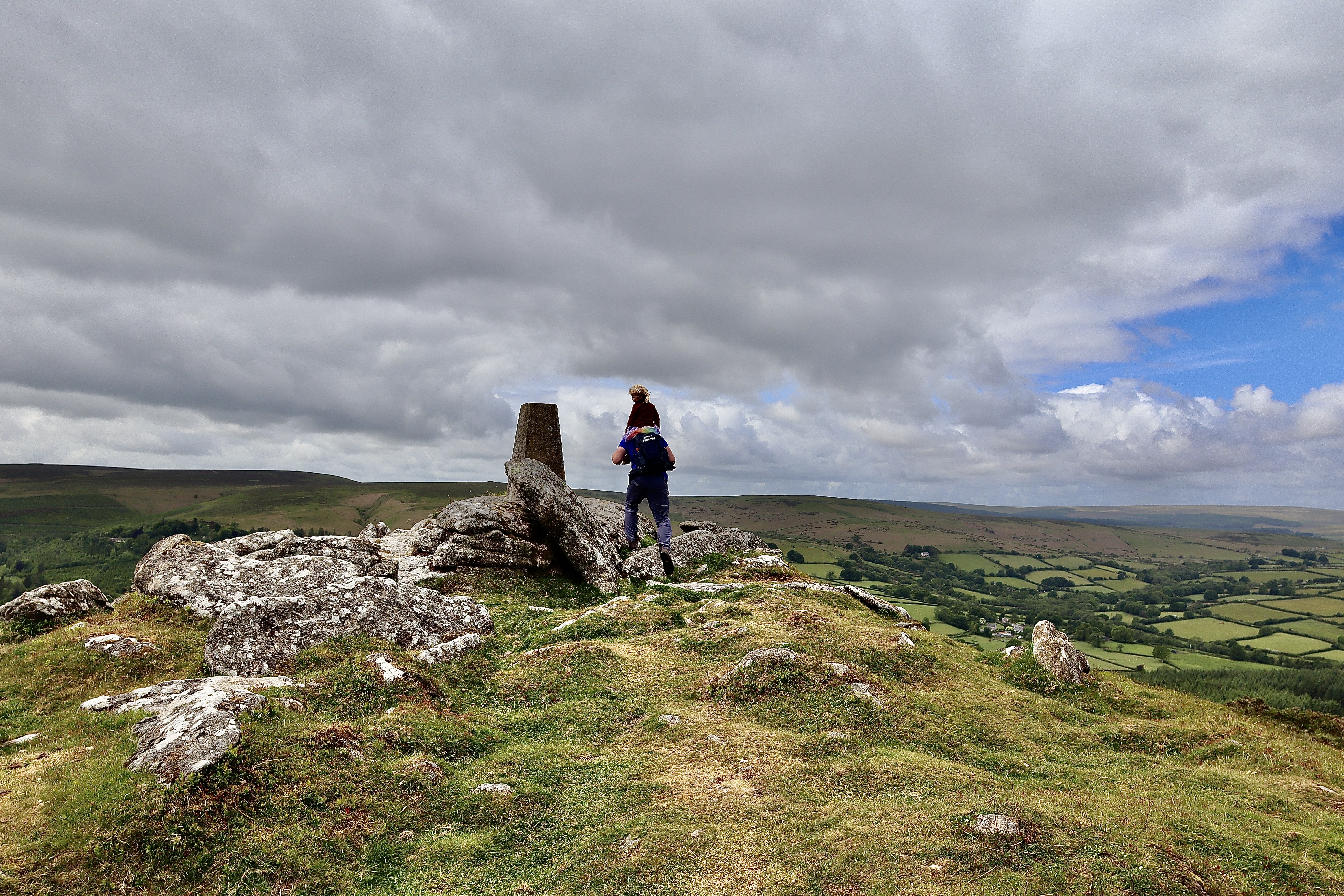
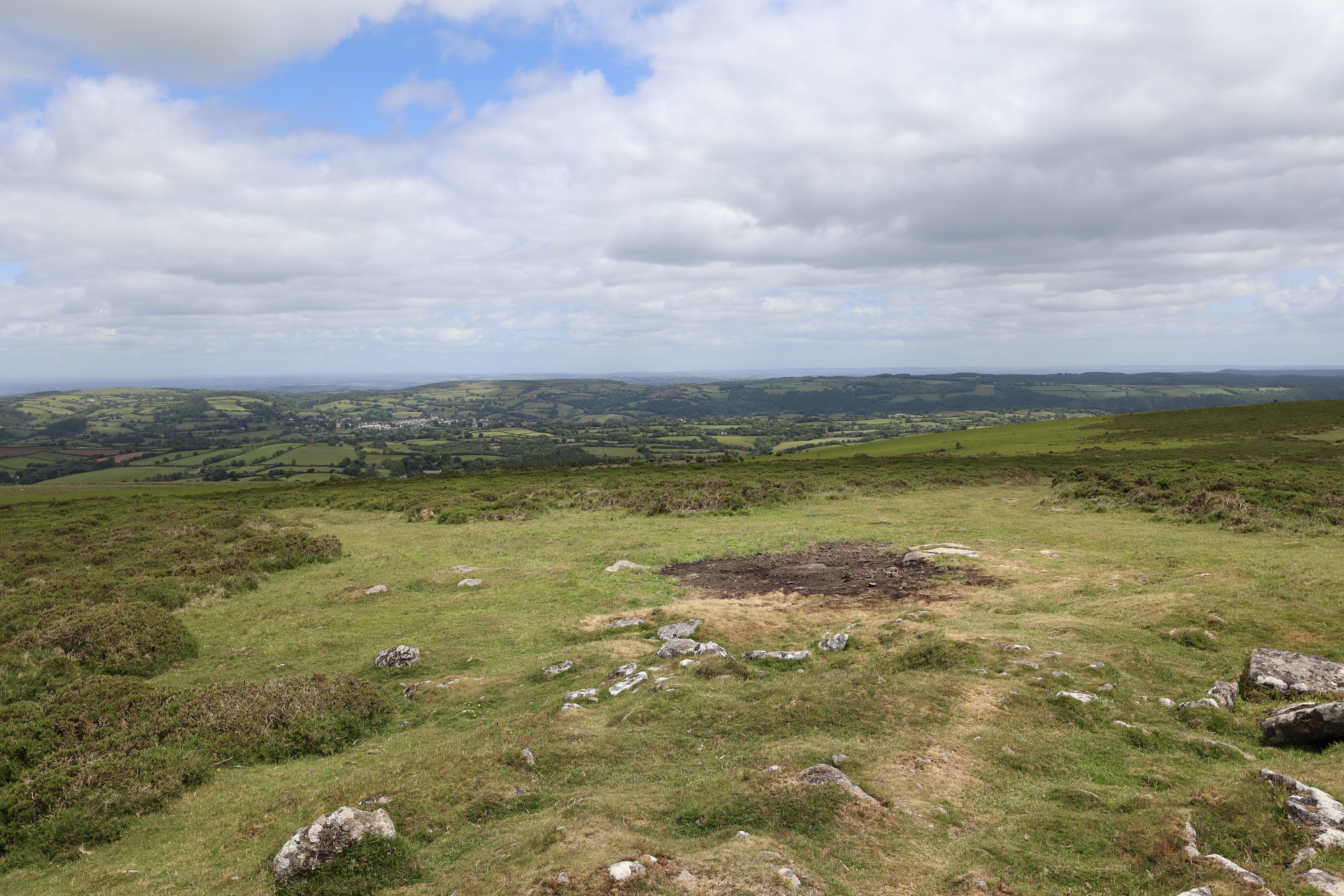
Easdon Tor crowns the small island of moorland that sits between North Bovey and Manaton. The Tor has weathered and fallen over the years so that all that remains on this peak are the broken, shabby rock ridges on the hilltop, capped by an Ordnance Survey triangulation pillar. What Easdon Tor lacks in splendour as a geological feature, is more than made up for by the breath taking (quite literally given the propensity for high winds at the summit) views. From the summit of Easdon Tor opens up an incredible panoramic view, which includes north and east Dartmoor, the historical Hameldown and the awe-inspiring twin peaks of Haytor Rocks. I really do believe this is one of the most spectacular viewpoints from the whole of the moor.

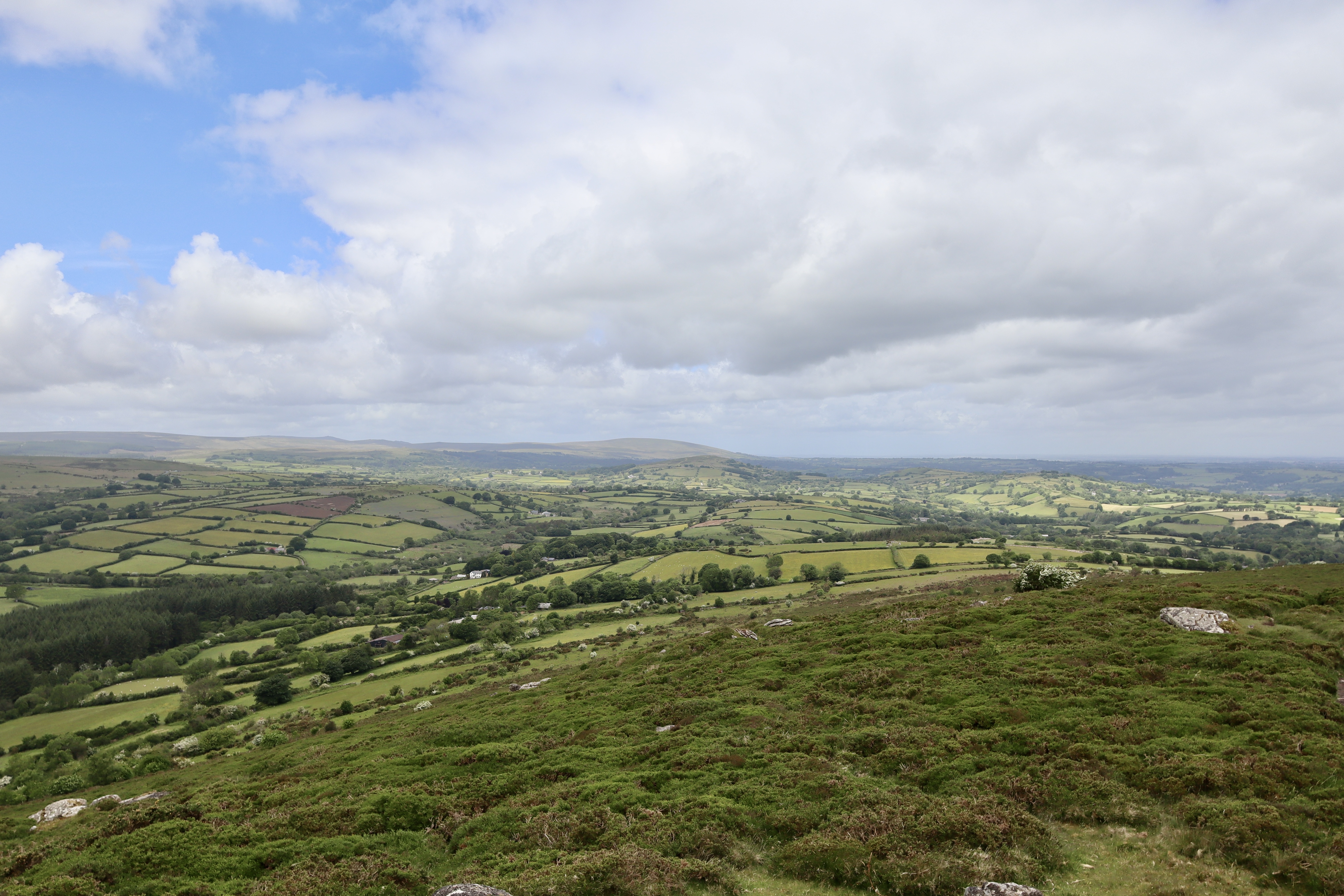
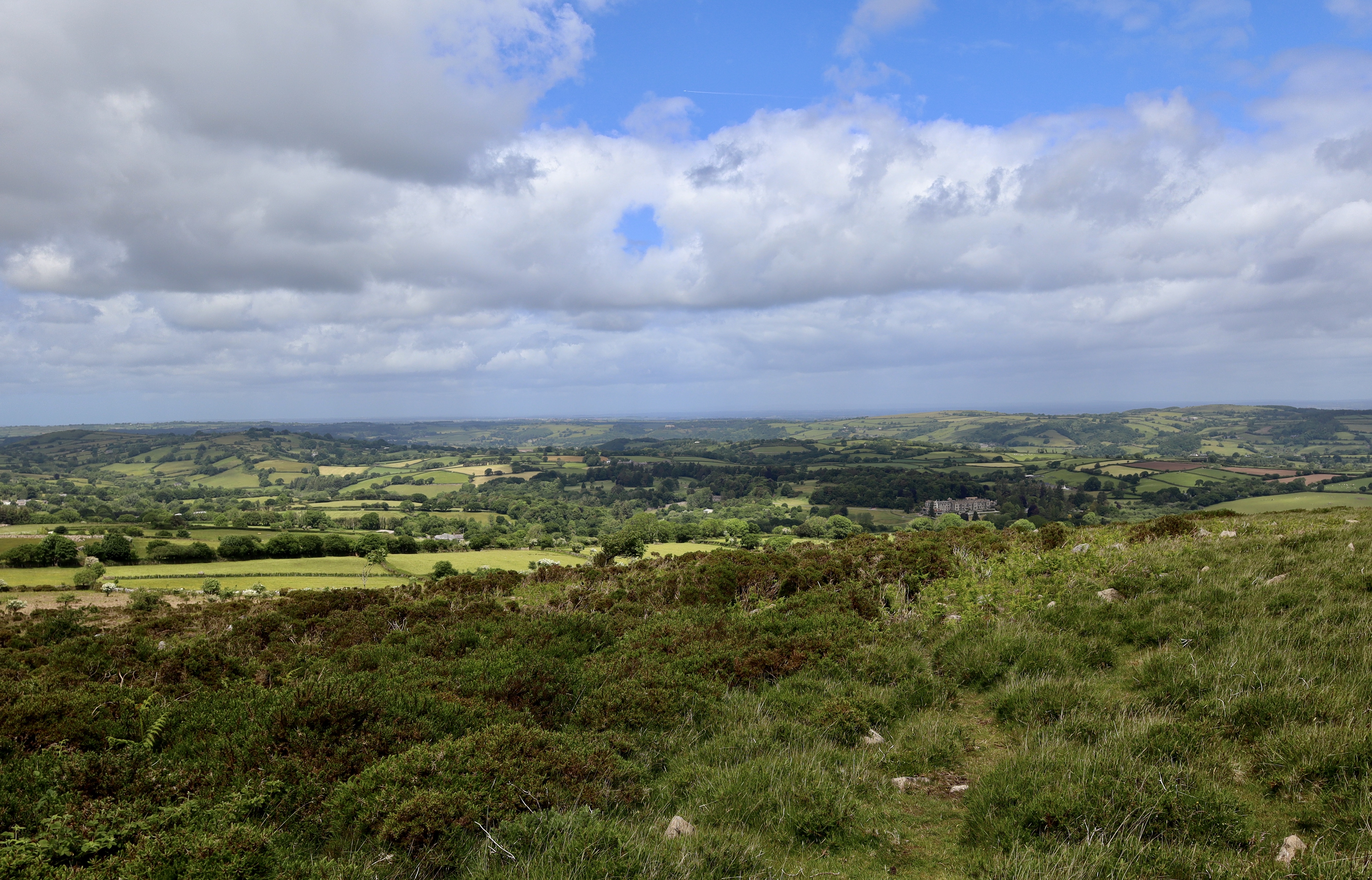
Whooping Rock
With a name that invokes legend and myth, close to Easdon Tor lies the Whooping Rock. At one time noted as a Logan Stone, it has been a long time since Whooping Rock rocked, if indeed it ever did. Whooping Rock is essentially a large compact outcrop, and is the most conspicuous of the scattering of rocks near the summit and OS triangulation pillar.
The name of the rock is associated with local lore and legend. There are two main stories as to how the rock got its name, with the first relying on it being a Logan Stone. An 1826 stone by Carrington suggests the name comes from the noise the rock makes in “tempestuous weather” occasioned “by the wind rushing through some aperture”. The second tale is told by John Chudleigh in 1892 in which he states “… is called the Whooping Rock from the belief, so it is said, that children placed in the midst of a flock of sheep will be cured of whooping cough; this rock being a place where flocks congregated was a likely place of cure.“
Return Home
We did not hang around the Whooping Rock long, as the wind was picking up and the children were getting tired. Instead, we began our descent, down the Northwestern slopes of Easdon Down. The views down continue to be spectacular, and only ends when we join the bridleway at Langdon. The spectacular views are replaced by an undeniably British sight, with flowering, singing hedgerows lining the bridleway path. The bridleway continues along, offering amazing views of the ever-spectacular Bovey Castle, before rejoining the road of Yard Hill.

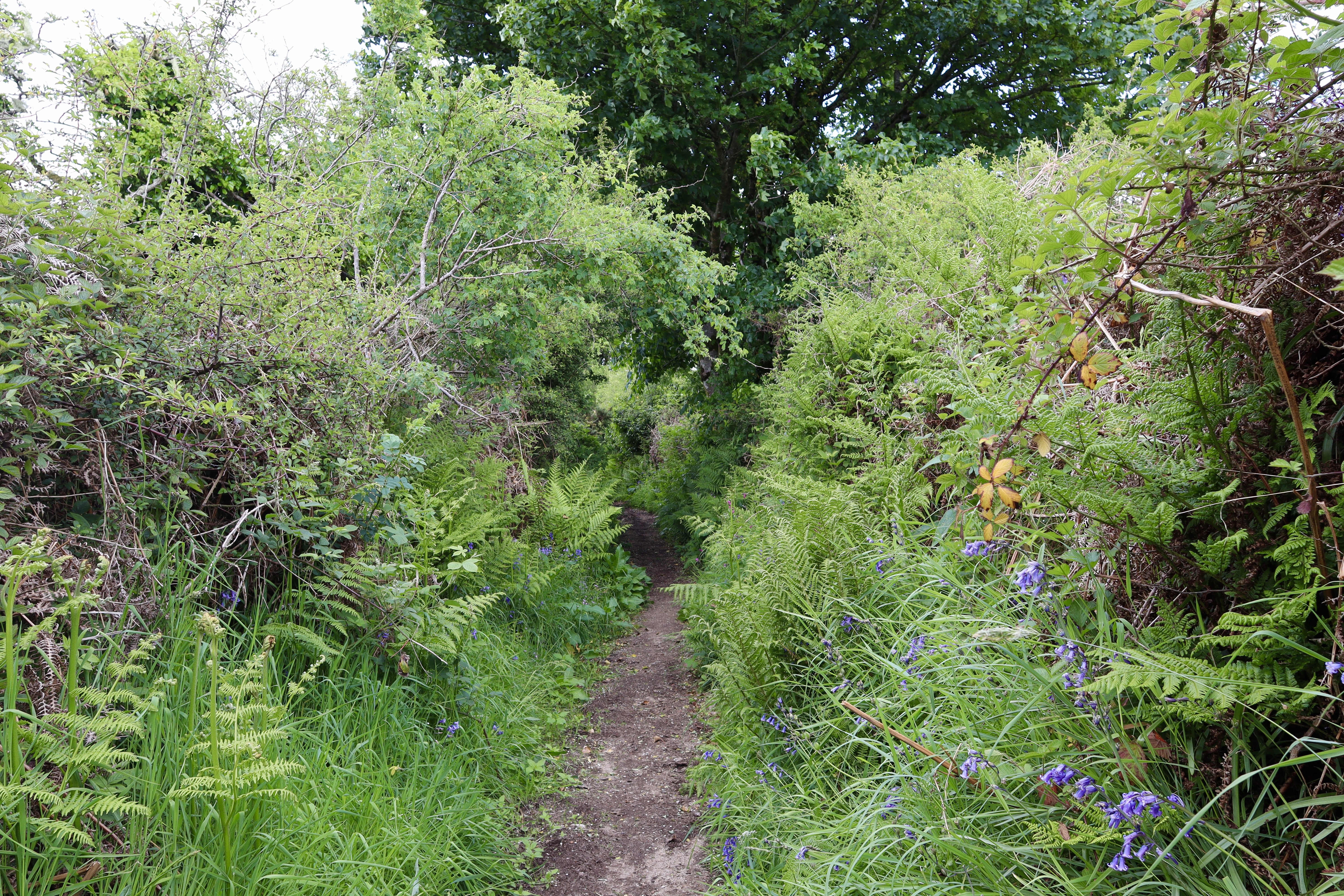
We follow this road back all the way to North Bovey, reflecting on a walk that offers up history, folklore, geographical wonders and views that are hard pressed to be beaten. Not too bad for a pressure relieving walk on a rainy bank holiday.
| Difficulty | Distance | Navigation Required? |
| Easy | 6.5km | No |
| Grid Reference | Safety | Footwear |
| SX 740 838 | Road crossings Normal Dartmoor considerations | B0 |



 Moorland Ramblings
Leave a comment