Names
- Foxglove
- Digitalis Purpurea
- Dead man’s Bells
Flowering Period
- June to August
Identify
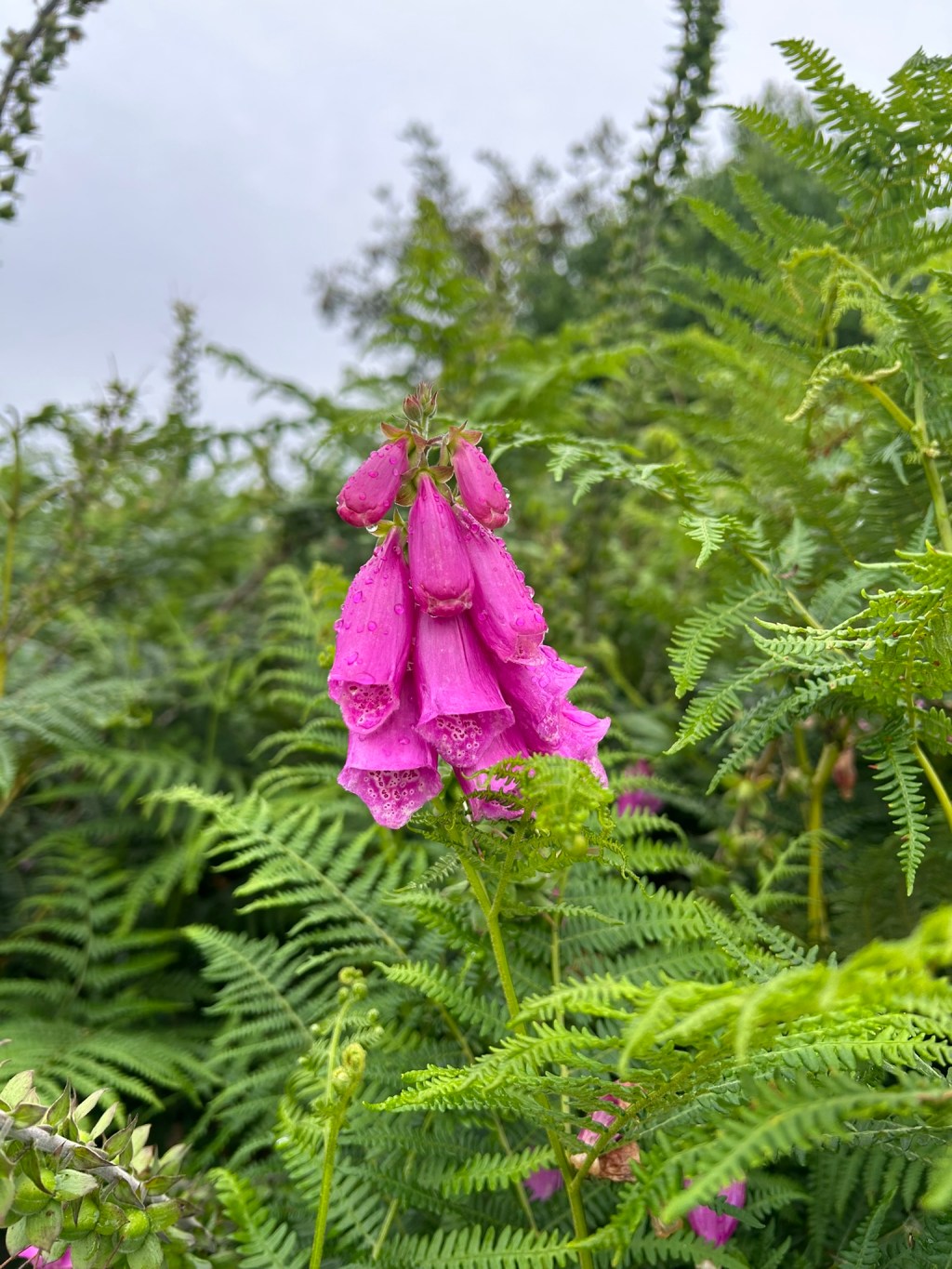
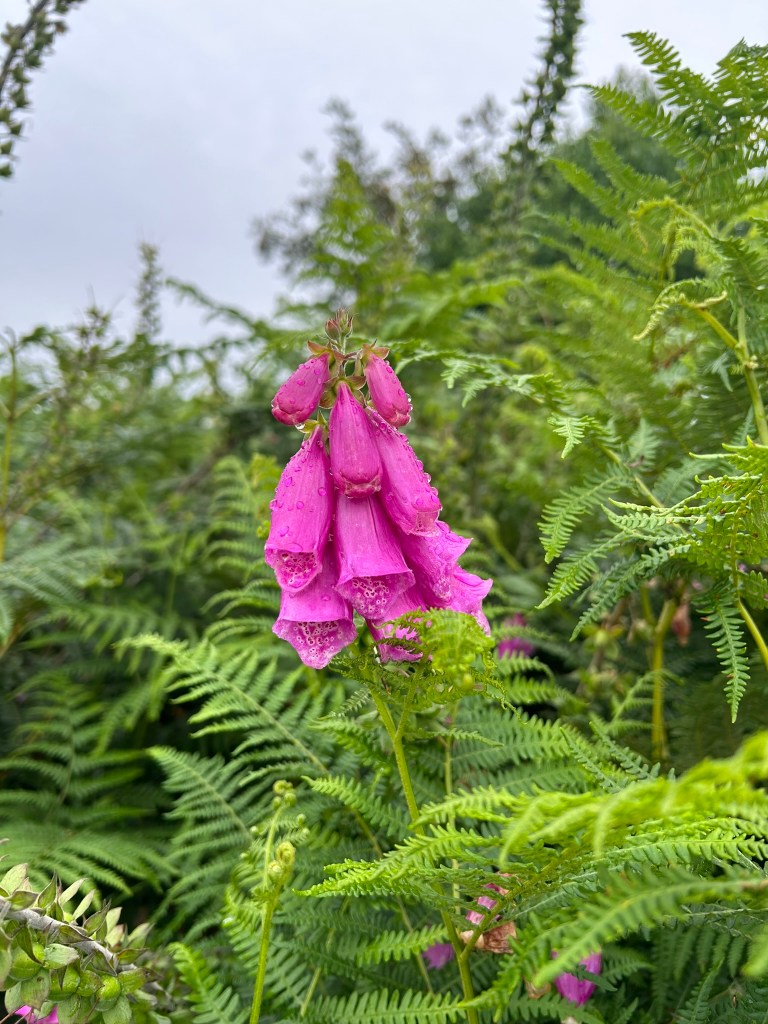
Large leaves form the base pf the plant, below a tall upright stalk. Tube shaped purple flowers form around the stem
About
Foxgloves can be found across the UK and are a sure sign of summer. They provide an excellent source of nectar and honey for our native bees and moths. The pretty nature of the flower is contrasted by the potential of its deadly consequence for ingestions, as ingestion of any parts of the Foxglove by humans can result in nausea, headaches, diarrhoea, heart and kidney problems. Given this, wash your hands carefully following handling of the plant.
Uses
- The chemical digitalis is found in Foxgloves. Digitalis is used to make Digoxin, a drug commonly used in the treatment of Atrial Fibrillation (an abnormal heart rhythm that causes an irregularly irregular and fast heart rate)
Folklore & Mythology
The origin of the name Foxglove is uncertain, but can be traced to Anglo-Saxon times.
- It is often thought that foxes wore the flowers on their paws, to slience their movements whilst hunting. An alternative (although less fun) theory is that Foxgloves are often found growing close to the earths where foxes raise their young.
- Foxgloves are said to be able to “Raise the dead and kill the living” given the poisionous nature of the plant, alongside its medicinal use.

 Moorland Ramblings
Leave a comment