
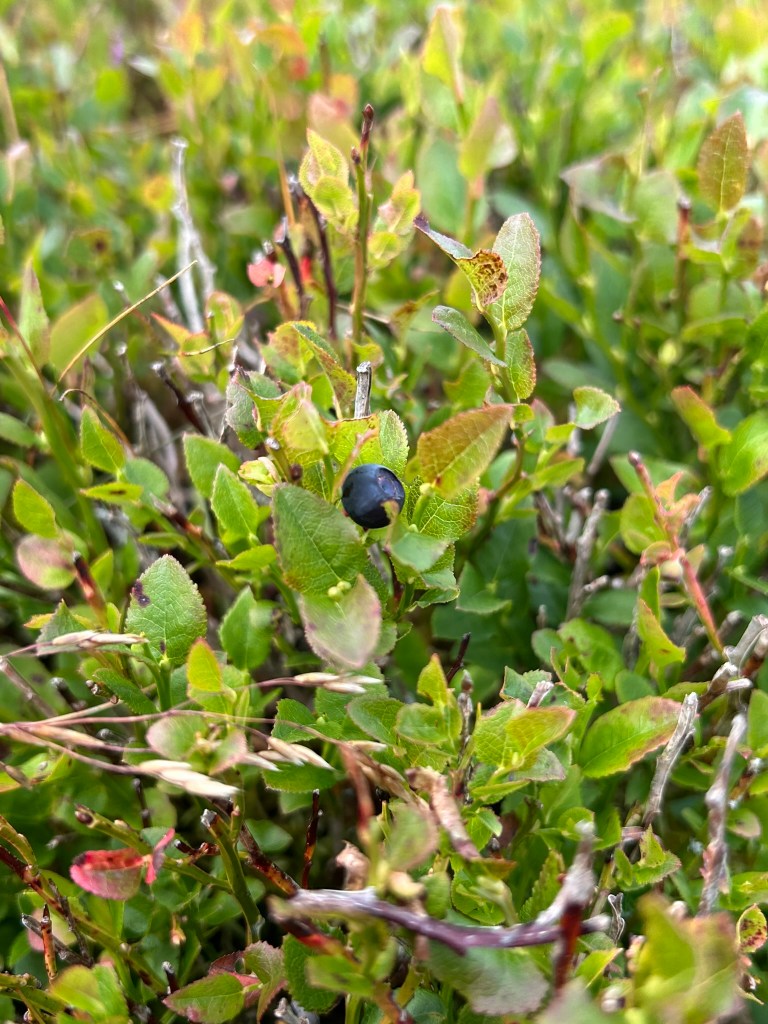
Names
- Bilberry
- European Blueberry
- Whortleberry
- Wimberry
- Vaccinium myrtillus
Flowering Period
- April to June
Identify
Low growing shrib that produced bell-shaped flowers and purple berries with a pinkish inner flesh. Grows in clumps that reach upto 60cm tall.
About
Bilberry is found in woodland, heathland and moorlands, favoring nutrient-poor, acidic soils.
Bilberry provide an invaluable source of food for a number of animals, from bees and flies, to birds and deer.
Uses
- Commonly used in traditional medicine as a treatment for digestive problems, diabetes and as an antiseptic
- Tasty food source that cna be eaten on their own or in jams, pies, sauces and liquers
Folklore & Mythology
- Bilberry is known to represent treachery, most likely due to the assocaition with Myrtilus (hence the Latin name of the Bilberry) a Greek charioteer who betrayed the king by replacing the bronze linchpins of the King’s chariot who some made of wax, leading to the King’s death. In retirbution for the King’s death, Myrtilus was thrown into the sea and when his dead body wahed up on shore, it turned into a Bilberry Bush

 Moorland Ramblings
Leave a comment