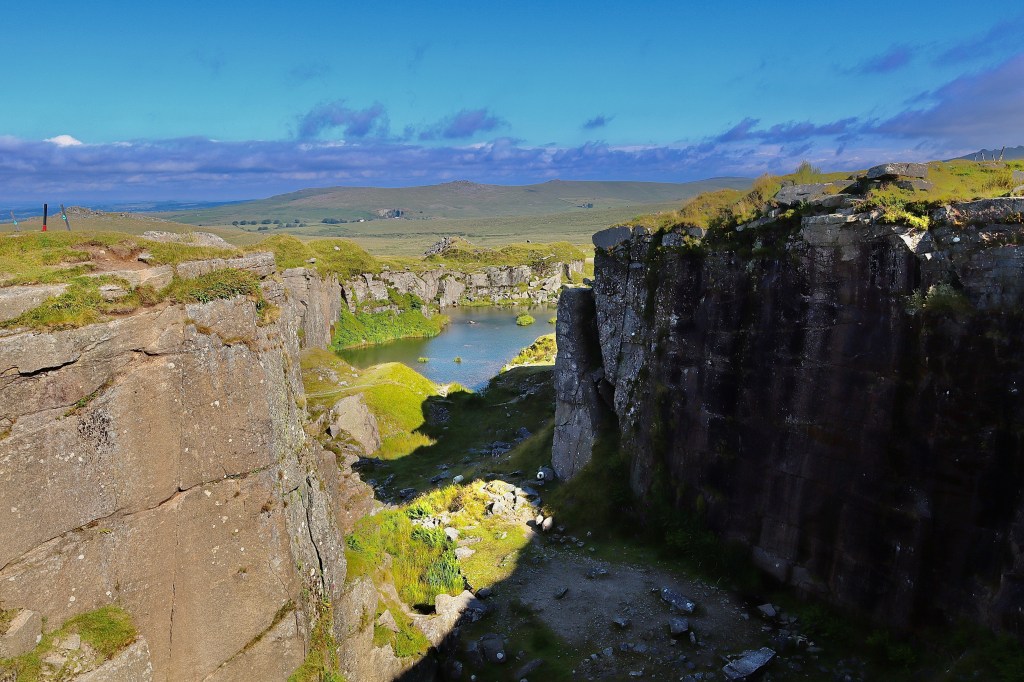
Foggintor Quarry, found about 2.25 km West of Princetown in the centre of Dartmoor, is a beautiful spot, and given its relative accessibility, is well worth a visit. This post will cover the walking route I took, and the history of Foggintor Quarry.
Foggintor Quarry Walking Route
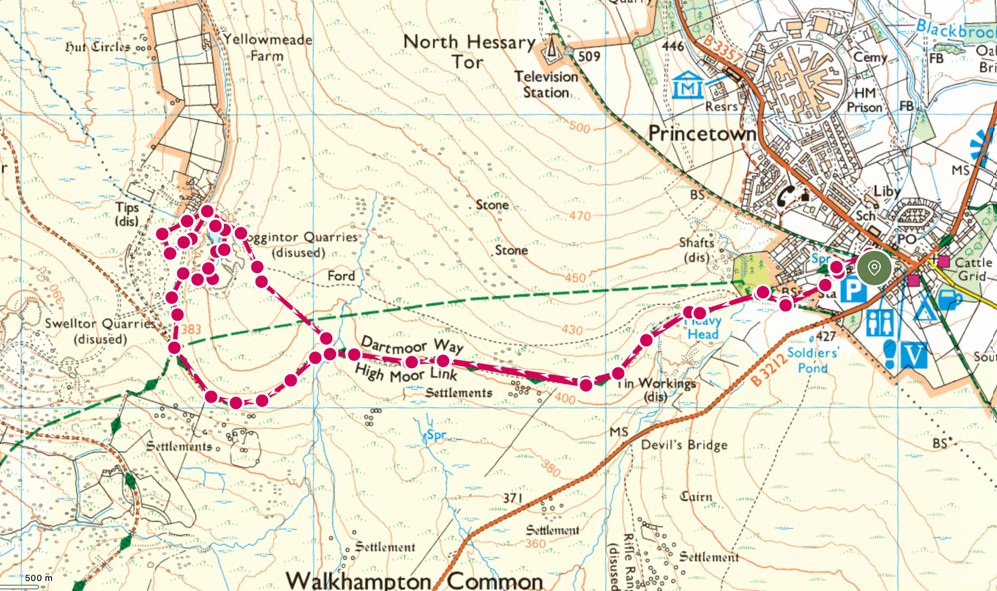
The route to Foggintor is an easy one. There are two commonly taken, the first coming from North of the quarry, accessed via the track that leads from the Pump House car park, past Yellowmeade farm. The second, is the route I took, starting from the main car park in Princetown.
Exit the car park and turn towards the west. From here, enter onto the Dartmoor Way / High Moor Link path which follows the route of the old railway track (make sure to take the old railway track, and don’t follow the road, Station Cottages – the field of horse should be to your right), that used to transport the granite, by horse, from the quarries at Ingra Tor, Swell Tor and of course, Foggintor.
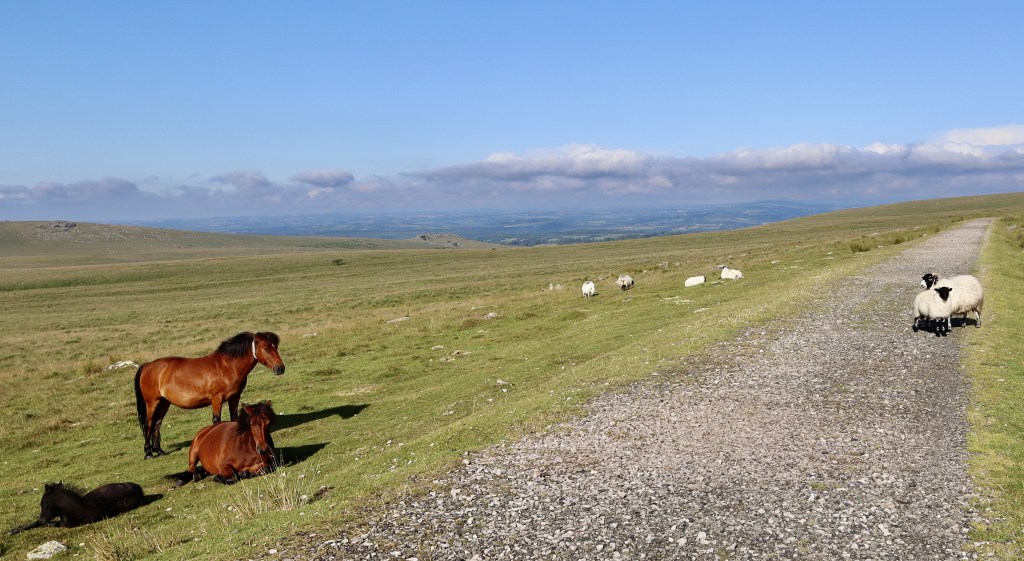
All that is needed is to then follow this winding path, all the way to Foggintor Quarry. As ever with Dartmoor, the simplicity of the path belies the grandeur of the scenery, and history of the location in which you walk. As the path twists and turns towards Foggintor Quarry those who walk along it are treated to varying views. At times Burrator Reservoir, surrounded by its plantations dominates the horizon, util you turn a corner and the shimmer water is replaced by the jagged outcrops of the Tors scattered across Walkhampton common. For much of the path, the rolling hills of bracken, grass and gorse provide the backdrop, but it only takes the turn of a bend for this to be replaced by the rolling fields that make up West Devon. If the views aren’t enough to steal the imagination, then the history, both industrial and anthropological, that lines the path should, with hut circles indicating long disused shelters, the water work boundary stones, marked with PCWW (Plymouth Corporation Water Works) and the scars left by our mining past.
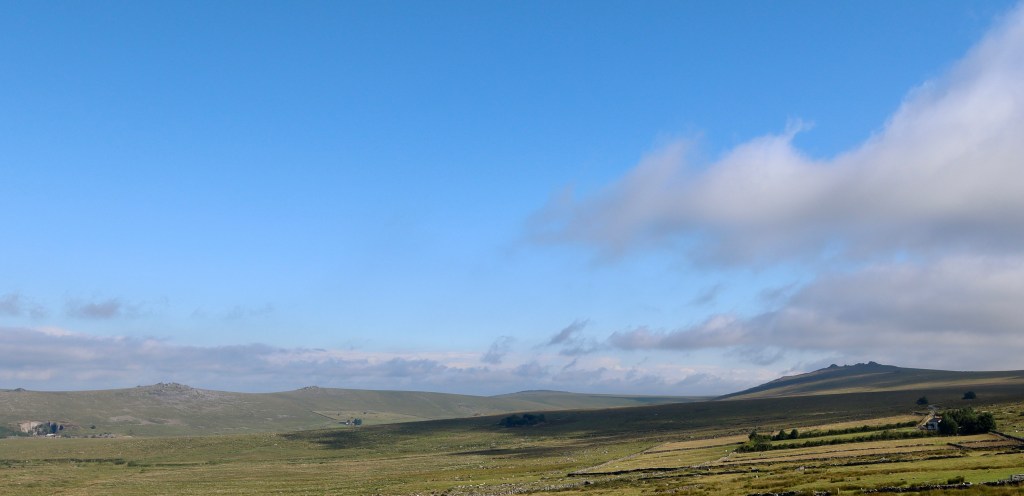
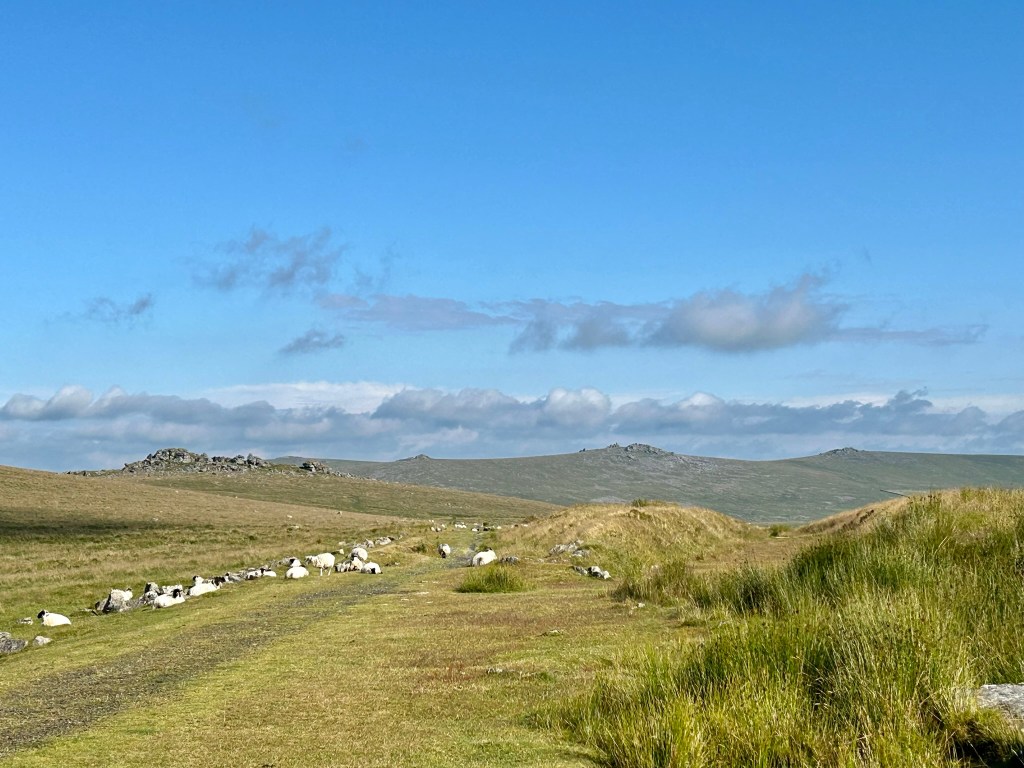
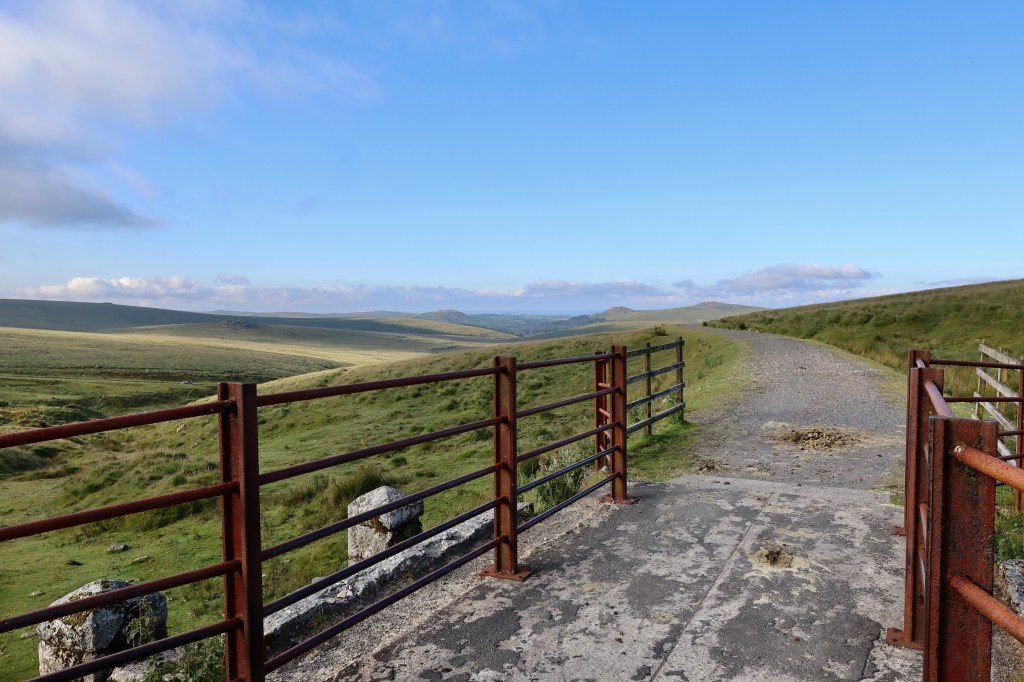
After about 2.8km from the start point, the path splits. Take the right-hand path that heads north, marked on a clear day not just by the quarry but the splendid outcrops of Great Mis Tor. This path leads you to the Quarry entrances, but along it there are multiple boot trodden trails that mark various entry points to the quarry, at various hights and locations. I enter in by one such trail, on the southwest border of the quarry, which takes me up to the top of it. Immediately, the vast steep sided chasm, caused by years of granite is apparent.
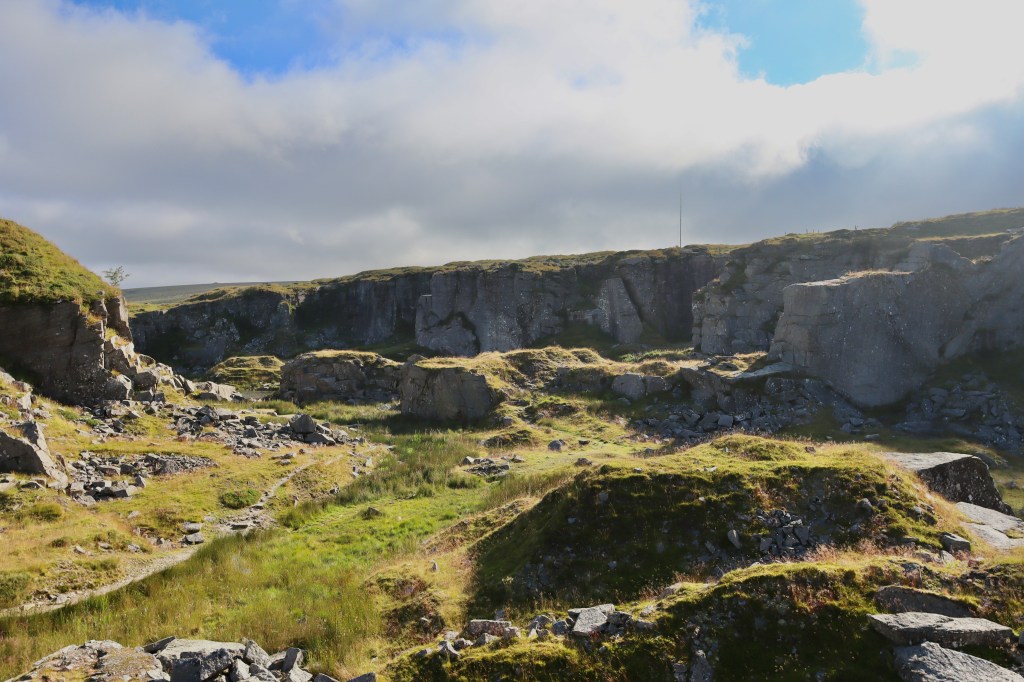
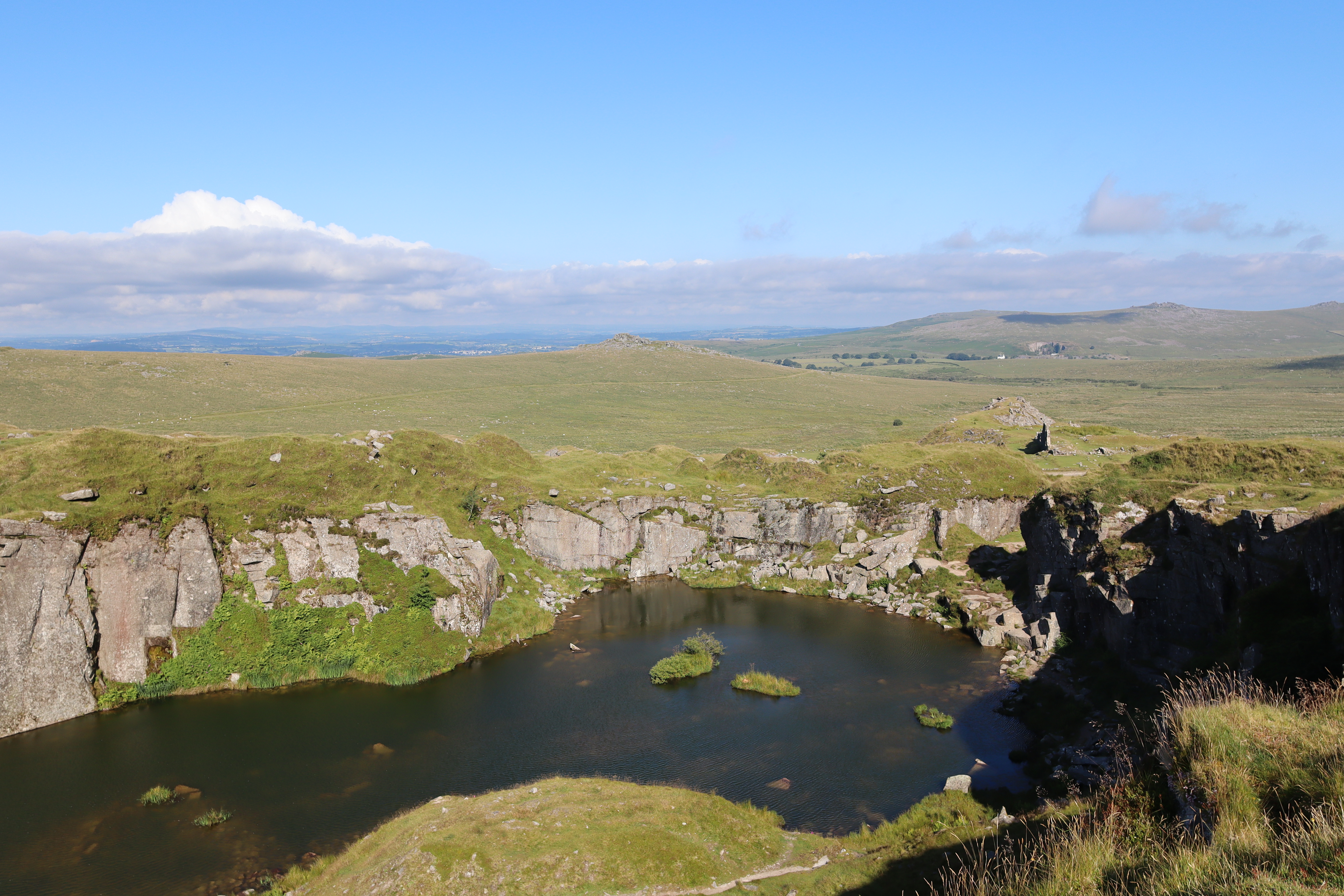
The quarry is split into two sections. The south section is dry and filled with stone, with the granite mounds now covered in grass, and flashes of white and purple as the stone crop pushes through. The northern section contains a large, shimmering pool of water, its gentle ripples reflecting the grassy, craggy walls above, giving a blue-green sheen. When viewed from a far, the quarry looks like a small blip in the landscape, a scar leaving the impression of our industrial pasts, but when there, stood in the centre of its cavernous walls, the size of the place feels overawing. The contradiction continues, with the threatened and real dangers of the site contradicting the welcoming beauty of the location. Foggintor Quarry, really does provide a desolate beauty.
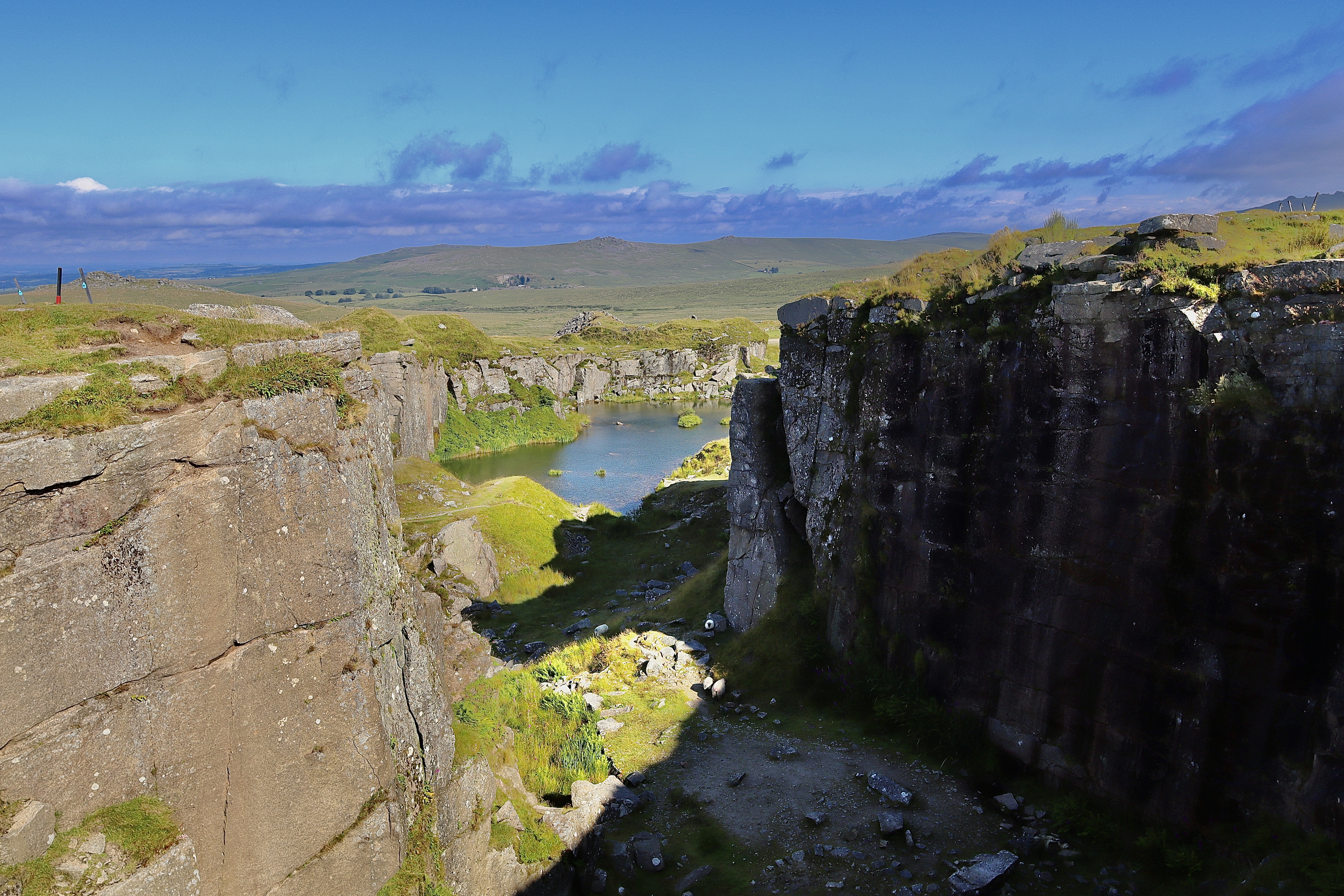
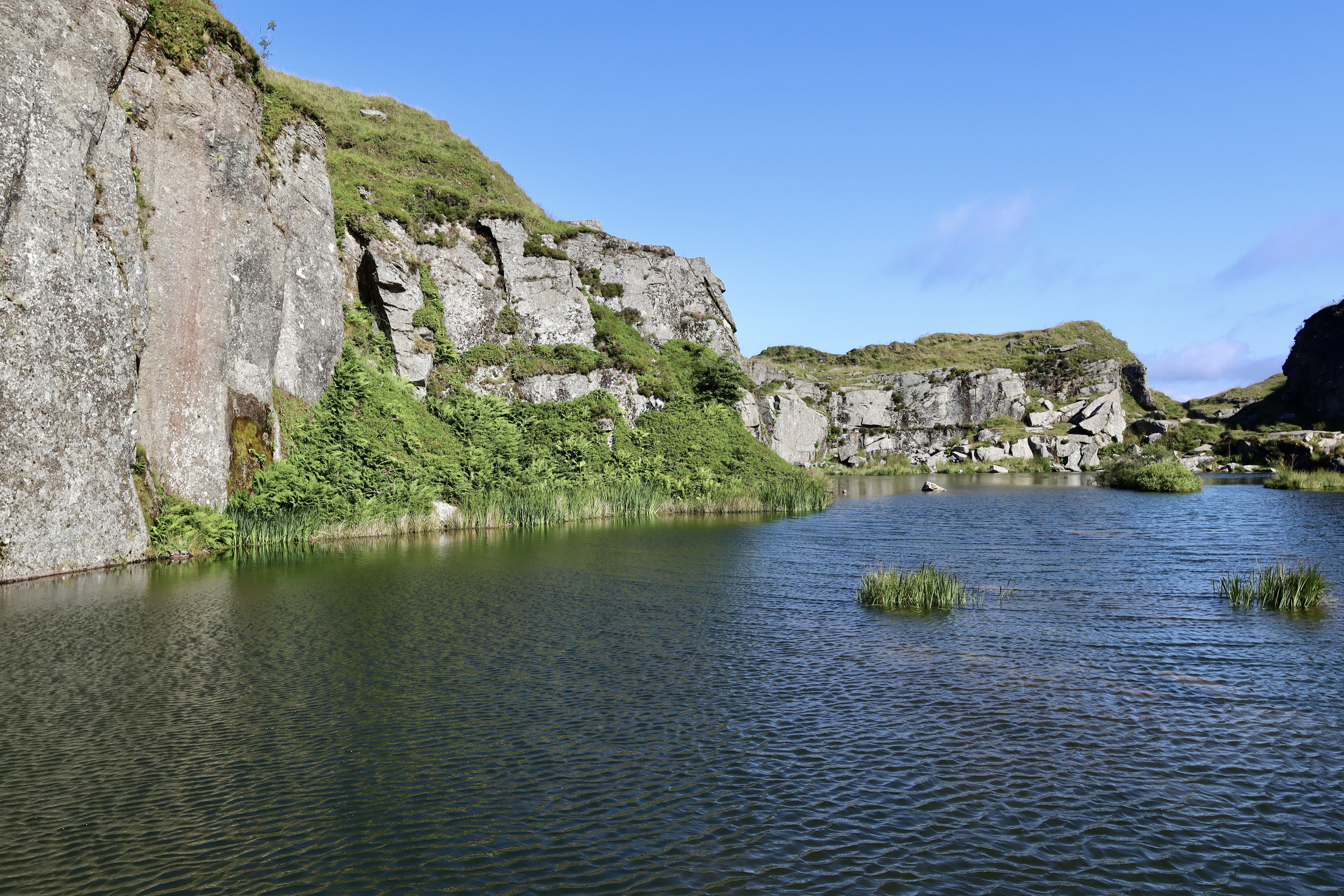

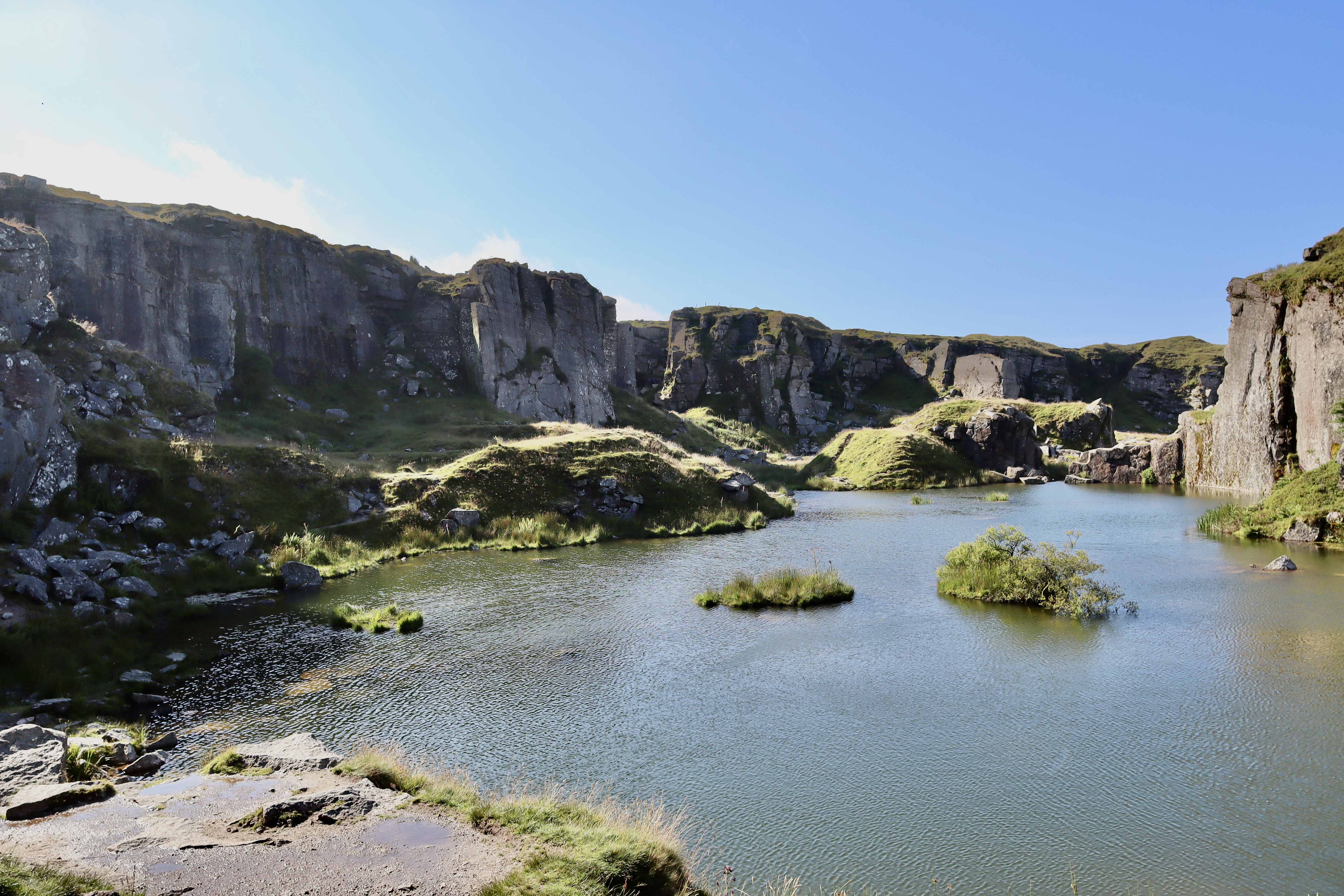
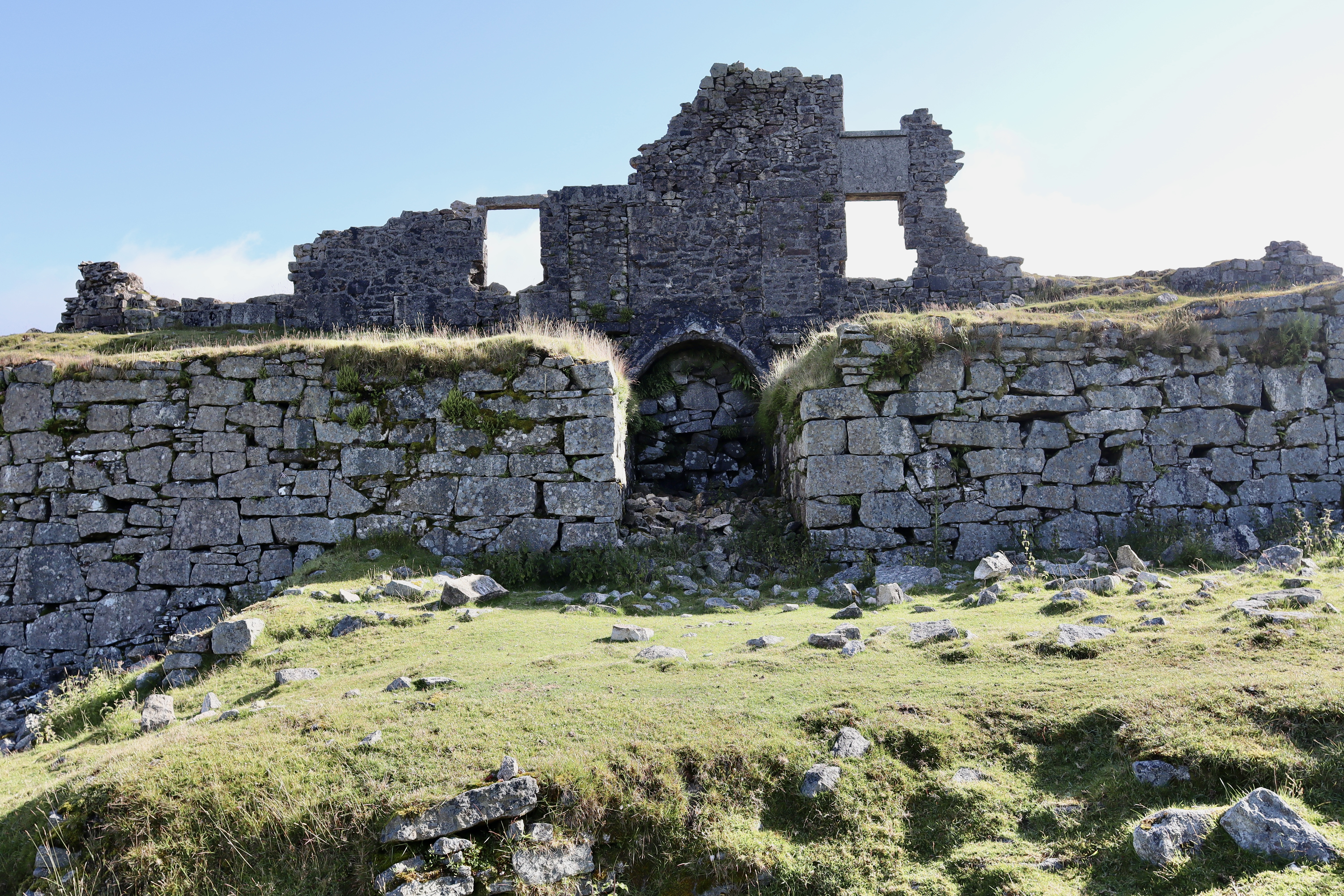
Having explored around the quarry, scrambling over a few of the rocks, I emerge on the other side, to look around the accompanying ruins, the stand as a monument, looking solemnly over the vistas, now stood quietly, where once they would have been filled with the noise of machinery, horse drawn trains and hard labour.
To return, I walked to the top of the Quarry walls, following the boot worn tracks around the northeastern ledge, past the metal posts used as anchor points by the army for climbing equipment (I’m told, I haven’t had this confirmed) and following the track gently downhill, until it puts me back on the old railway track, by a bridge over the spring.
Foggintor Quarry
Foggintor Quarry, previously known as Royal Oak Quarry, was, for more than one hundred years, one of the three great Granite Quarries of Dartmoor. Alongside Haytor and Merrivale, Foggintor Quarry helped supply stone for buildings, roads, bridges and famous structures (including London Bridge and Nelson’s Column) both locally and across the country.
Foggintor Quarry was worked from the 18th century until the early 20th century. Although officially opened in 1800, it is thought that the stone was first used to build Tor Royal, by Sir Thomas Tyrwhitt in 1785 (see information under “South Hessary Tor” section in Dartmoor Circular Walk: History, Folklore, and Ghost Stories post). Following this, the stone was used in many of the building that make up Princetown, including the Prison, before being used further afield.
The quarries productivity grew ever further, with reports suggesting that in 1833, 8,374 tons of granite were quarried in a single year. As the work at Foggintor Quarry increased, so did the number of workers, with over three hundred men employed there during the 1840s. To support the workers, a number of buildings were erected in and around the site, the remnants of which form the ruins that can be seen today. The buildings supported around 180 men and their families at its peak, and as such, more then just bunk houses were built, with the site boasting a foundry, a smithy, stables, office and tool store house, a powder store, a manger’s house, a cottage and, a school (which is now the four winds car park) and in 1833, a Chapel was also built.
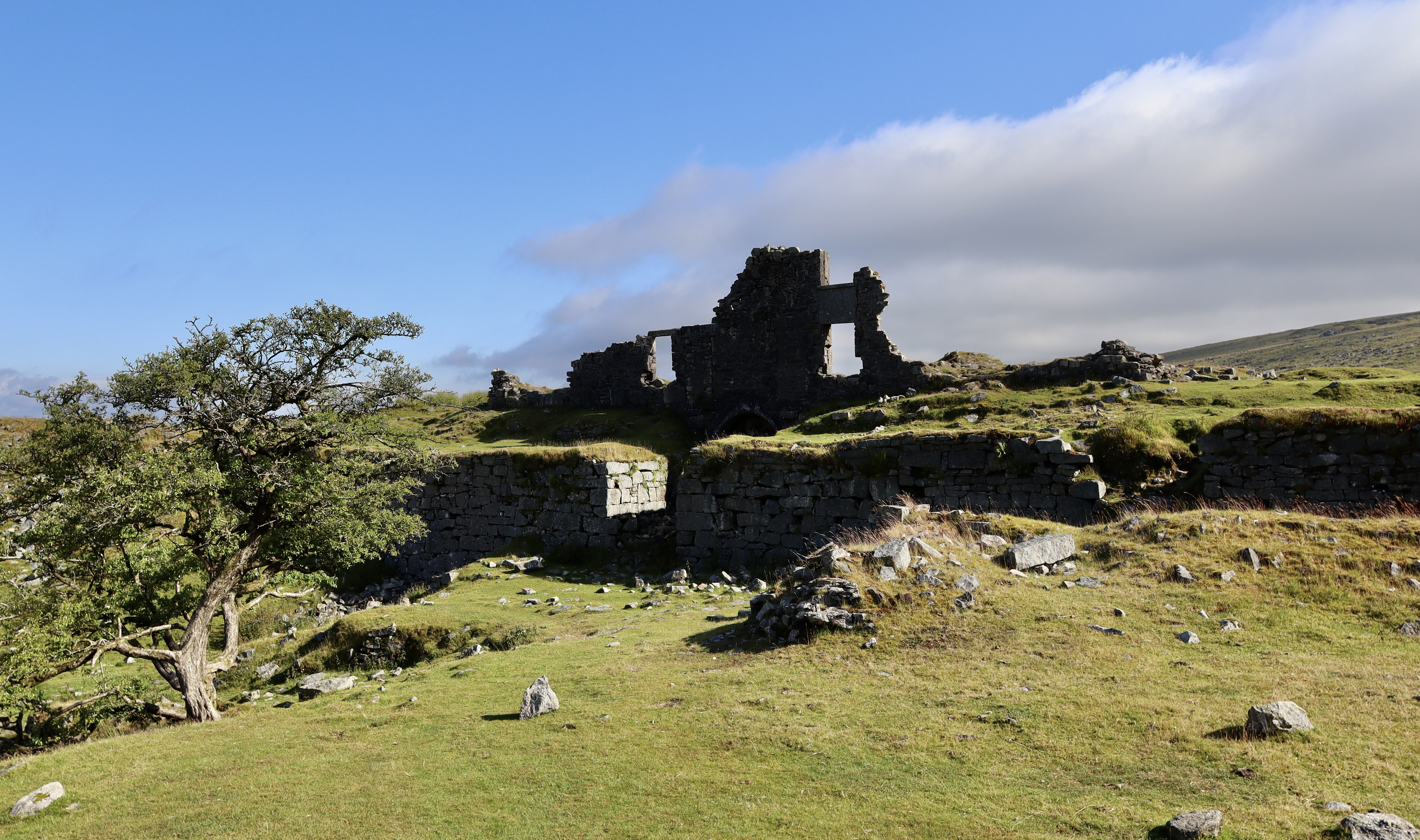
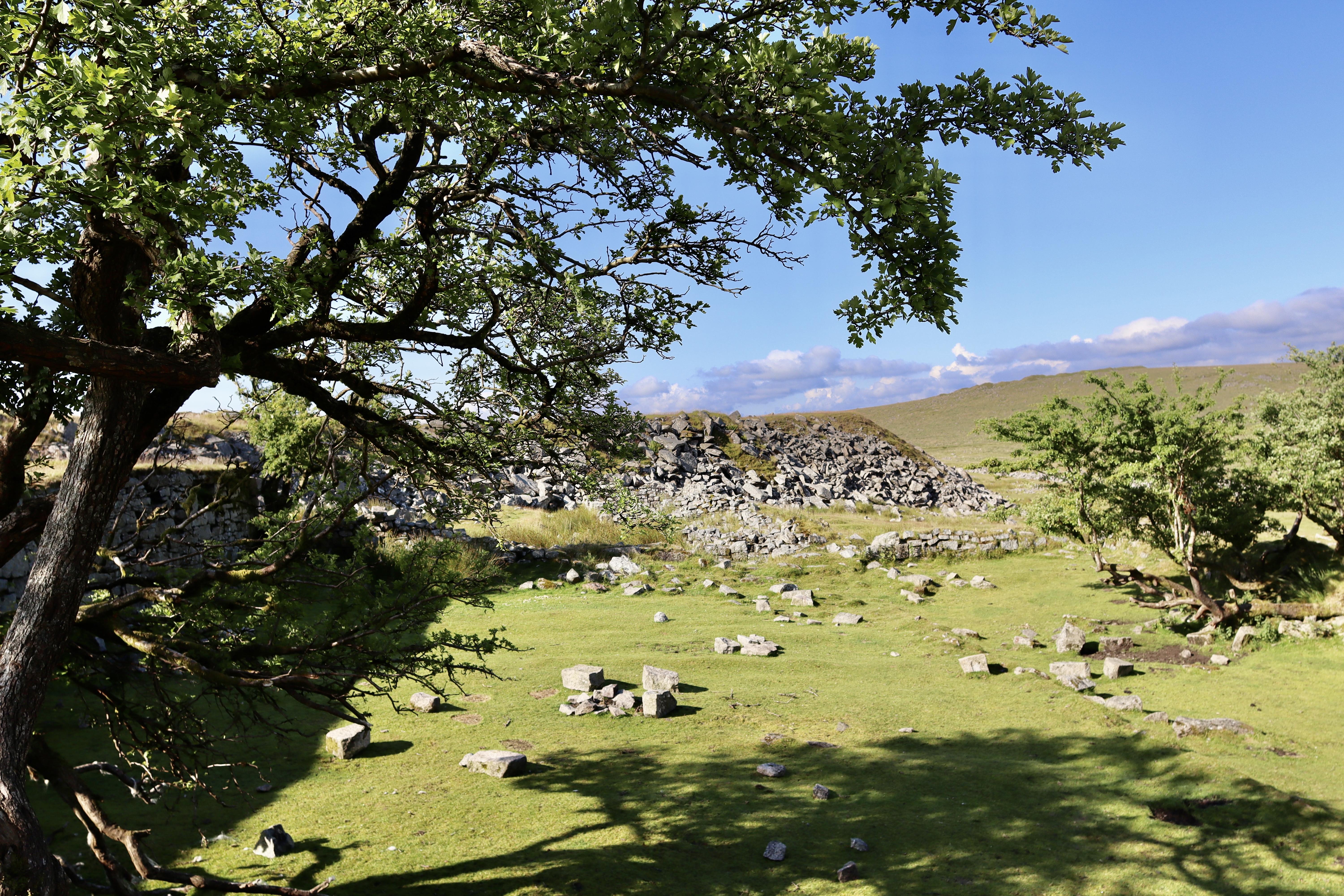
The mining of granite ceased in 1906, when attention was turned instead to the nearby Swell Tor Quarry. In the years since its abandonment, the surrounding moors have reclaimed the industrial site. The scarred pit now hosts a still, shimmering lake, the granite clumps providing home to bracken, foxgloves and stone crop and the the jagged walls giving shelter from the inclement weather to ponies, sheep and the occasional hiker.
The end of the granite harvest hasn’t prevented the quarry from being used however. Whilst the sounds of chisel, hammer and machine may have stopped, Foggintor Quarry is now regularly used for wild swimming, rock climbing and as a filming location.
Foggintor Quarry Legend
As always with Dartmoor, where there’s a site of interest, there’s a legend to go alongside it.
The legend of Foggintor Quarry tells of a drummer boy, who was accompanying a group of prisoners of war, taken from the Napoleonic army. As the group made there way across the boggy moorland, the snows of winter began to fall, making the hard going ever harder. As the prisoner trudged on, the sound of the drums to which they kept their marching pace began to become an annoyance, as the drummer boy, local to Dartmoor, appear to find the going easy, and therefore set the pace too high.
The prisoners convinced the drummer boy and their guards that they needed a rest, and found a convenient location in a farm, found near the entrance to Foggintor Quarry. They prisoners, grateful for the opportunity of rest and shelter tried the doors to the farm building only to find them locked and barred. Entry would not be possible and the promise of warmth and shelter was taken from them, as quickly as it was given.
In their frustration, the soldiers, who were tired, cold, hungry and scared of what life as a prisoner of war would hold, struck out at the nearest authority figure they could find. The drummer boy fell to the ground, bleeding from a head wound inflicted by the hand of a prisoner. In panic, the boy was checked over and found to still be breathing, though this was laboured and he could not be roused. Pushed on by their cold and hunger, the group left the boy where he fell, leaving him behind as they marched on towards Princetown and the prison.
It did not take long for the boy to succumb to the weather and he died frozen, hungry and tired, his body buried under a blanket of snow. Whilst the body of the drummer was taken by the moors, his spirit lingers on and the sounds of drumming can be heard to echo of the walls of Foggintor Quarry, and travel across the surrounding moors, on snowy nights to this day.
| Difficulty | Distance | Navigation Required? |
| Easy | 7km | No |
| Grid Reference | Safety | Footwear |
| SX 589 734 | General Dartmoor Considerations Steep cliffs and rocks in the quarry | B0 |


 Moorland Ramblings
Leave a comment