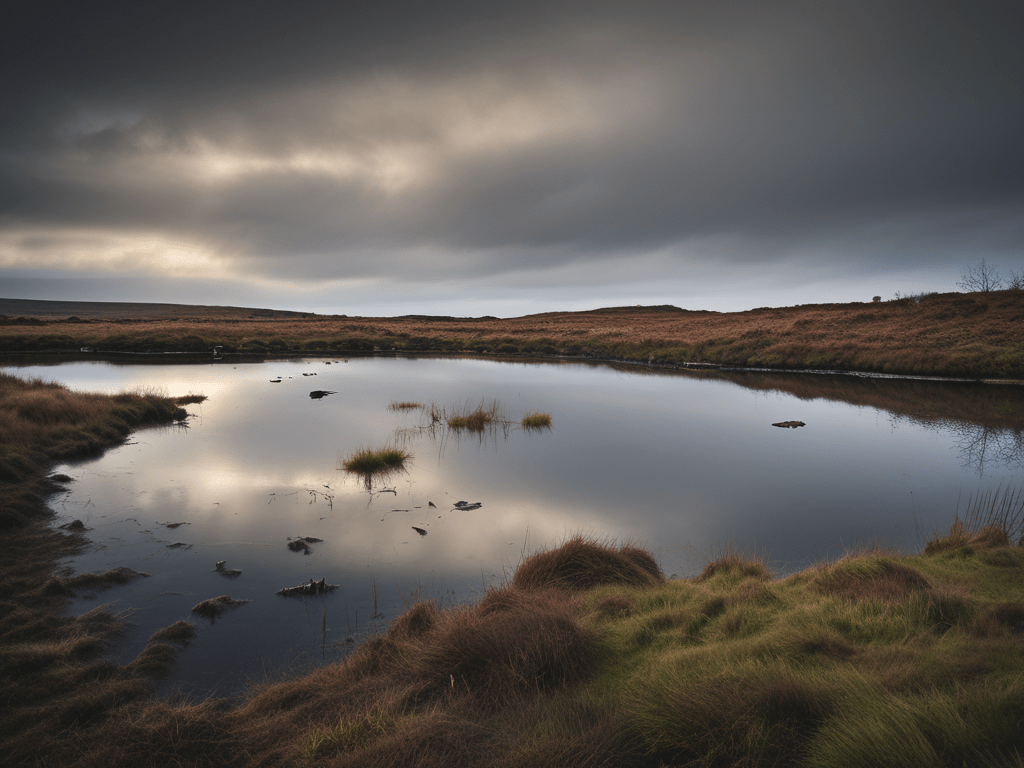
Cranmere pool lies in the northern moor at OS grid reference SX603858, about 8km (5 miles) south of Okehampton Train Station.
The name Cranmere Pool conjures up images of calm, blue waters, sitting on the higher moor overlooking some of the most stunning scenery Dartmoor has to offer. Alas, as those who have been there know, this is far from the case. The “pool” is in fact not a pool at all, but rather a fairly uninspiring small depression within a peat bog that drains into the West Okement Head and lies near to the Taw Head and the East Dart Head. The views it overlooks are equally uninspiring, with few features of note. In truth, Cranmere Pool is wet, bleak, remote and hard to find. In this way, Cranmere Pool reflects the mood and character of Dartmoor better than anywhere else. It is truly and honestly magnificent and one of my favourite places to walk to when I get the opportunity.
Given my less then positive description, why is Cranmere Pool often recommended as a must visit for dedicated walkers? Well, the answer is twofold. First, it is the location of the first ever Letterbox on Dartmoor. Second, is that an area such as this will always spark the imagination and there are many stories of ghosts lurking in the waters of this lonely and desolate spot. Most famous of these, and the focus of our tale here, is Benjamin Gayer (AKA Benjie Geare).
In the late 1600s, the seas around the world were plagued by piracy. In particular, fear abounded about the savagery and actions of the Corsair pirates. Not just being content with the plunder of a ship, the Corsair pirates were known to swoop down on their targets, using oar-powered galleys, to kidnap sailors and passengers. These poor victims would be released upon the payment of a ransom. Without that ransom, they would either be killed or sold into slavery. So common an occurrence, and so highly held a fear was this business, that many towns across England set up local funds, from which pirate ransoms could be paid. Okehampton was no different in this regard.

The responsibility of collecting, and overseeing this fund fell to Benjamin Gayer. Benjamin Gayer had been born and lived in Okehampton his whole life. He was known to be clever and a hard worker and had pulled himself up from humble beginnings into a position of power. Not only was he a rich merchant, who owned several trading ships that would be the attention of the pirates, but Benjamin Gayer was on his third run of being the Mayor of Okehampton. He knew the moors, he knew the town and its people and importantly, Benjamin Gayer was trusted. Through the generosity of the town, and the contributions of his wealthy contacts, Benjamin Gayer managed to accrue a substantial fund.
One day, in 1700, one of Benjamin Gayer’s own ships, which held his whole wealth, was attacked. As per its intention, the fund was used to free the poor souls who were captured and much to the relief of the town, a small, but significant amount was left over (due to the success of Benjamin Gayer’s fundraising effort) which could be used for future ransoms. Whilst the occupants of the ship were recovered, Benjamin Gayer’s wealth wasn’t and he was left on the verge of bankruptcy and destitution.
Benjamin was determined that this wouldn’t happen to him and he worked hard to regain his fortune. His efforts however proved fruitless and so he turned to his contacts. He begged for loans, but nobody was willing to take the risk and so in his desperation, Benjamin Gayer turned his gaze towards the fund that he has raised. In his desperation, Benjamin Gayer stole the remnants of the ransom fund and with it, he stole not only the trust but the safety of those he had grown up with.
In his guilt, Benjamin Gayer convinced himself that his theft was in fact a loan. He would use his ill-gotten gains to buy a new ship, employ locals from Okehampton to build and crew it, and once he had made enough, he would restock the ransom fund with interest. He worked towards this end and in 1701 his new merchant ship set sail. Tragedy would strike again however, and the second ship, much like the first, was assailed by pirates. Once again, all of Benjamin Gayer’s fortune was stolen and the sailors on the ship kidnapped. The people of Okehampton turned to their fund and much to their horror, disappointment and then disgust found that it had been stolen. With the ransom unpaid, the sailors were killed. The town of Okehampton grieved. Shunned by his community, feeling hopeless for his future and wracked with well-founded guilt, Benjamin Gayer fell ill and, in the eyes of the town, justice was served when, in late 1701, he died.
On his death, given his actions in life, Benjamin Gayer’s soul could not find rest. Instead, it roamed the streets of Okehampton after dark, wailing and moaning and keeping the locals from sleep. This went on for years, until finally, sleep deprived, and fed up with the lingering haunting of a man that did them such wrong, the towns folk implored the archdeacon to call together clergy and send Benjamin Gayer to his final resting place.
Amongst the local Dartmoor clergy, only one had a solution. On his arrival in the town, he was noted, much to the curiosity of the locals, to be carrying a bridle and bit, and was accompanied by a confused horseman. That night, at the witching hour when the wailing began, the clergyman simply stood atop the moor above the town and in Arabic shouted “Benjamin Gayer, the time has come for you to be gone from Okehampton and the mortal world, you must return to the grave and await your final call, the Lord shall decide the weight of your sins”. Upon hearing this, in response, the ghost of Benjamin Gayer replied “Now that you have spoken, I will be gone”. With those words, Benjamin Gayer, to the shock of everyone but the clergyman, transformed into a jet-black horse.
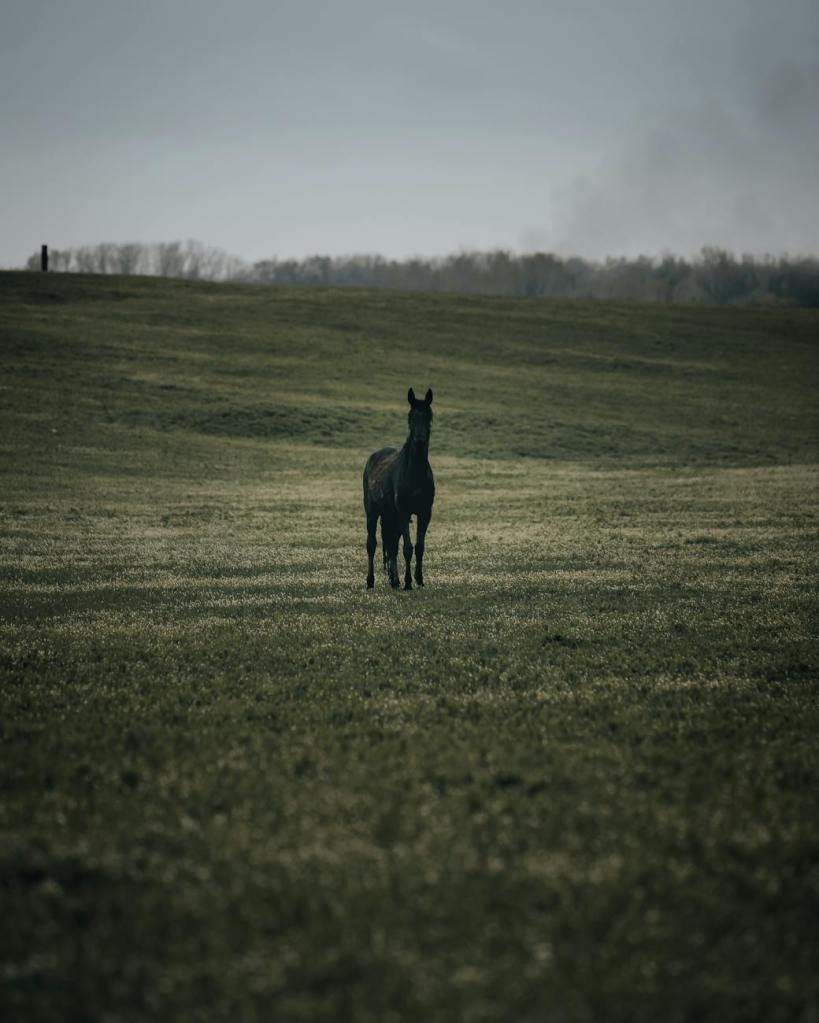
The horseman, now understanding his role, took the bridle and bit and upon the instruction of the priest, rode the horse towards Cranmere Pool. At the very last moment he dismounted and rolled along the edge of the pool, leaving the horse to plunge into its depths. To ensure his spirit never returned, Benjamin Gayer was assigned the task of draining Cranmere Pool (at this point we can assume it actually had water in it), with a sieve. A seemingly impossible task which would never end, leaving the folk of Okehampton in peace.
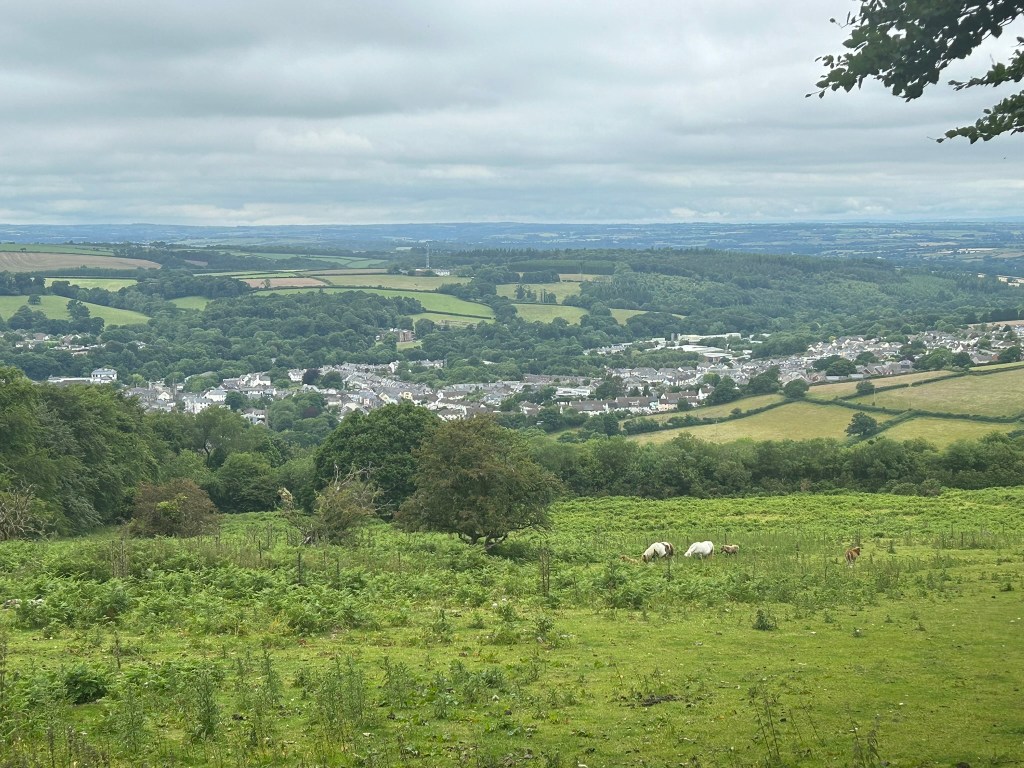
For months, the spirit of Benjamin Gayer worked away, sieving the pool only for his work to be undone at the first rainfall. Then, one day, Benjamin Gayer spotted the carcass of a dead sheep. He skinned the sheep and lined the sieve with its hide, and now, with enthusiasm and relish, he was able to empty Cranmere Pool. So effective was this method however, that the water flowed down the moors, past West Mill Tor, East Mill Tor, Row Tor and into the river Okement. The end result flooded Okehampton and with the success of his task, Benjamin Gayer returned to haunting the town.
Once again, the townsfolk summoned the learned clergy who has successfully rid them of Benjamin Gayer previously and once again, the priest confronted the ghost and set it a task. This time the priest demanded that the ghost should make trusses of grit and that they should be bound with plaits made of sand and this task was to last until judgement day.
Finally, the people of Okehampton were free from Benjamin Gayer – or are they? Even to this day, on still nights many people have heard wailing across Okehampton common, emanating from Cranmere Pool. Occasionally night walkers have also reported seeing the ghost of a black colt thundering across the moor in the Cranmere Pool area. Maybe therefore, Benjamin Gayer will haunt Okehampton for ever more (moor).


 Moorland Ramblings
Leave a comment