Black-a-Tor-Copse is an upland temperate rainsforest, the sort that long ago would have been found across Dartmoor and much of Western Britain. It is the start of June when I head out for this walk, but far from the humid warmth that it is reasonable to anticipate when you head to a rainforest, there’s a freshness in the air. It feels more like summer verging into autumn then the start of summer as I step out of my car at the Meldon Reservoir Car Park. Still, the sky is clear and there is no prospect of rain so actually, I couldn’t have asked for anything more weather wise. What’s more, the chill hasn’t put off the birds nor farmers and as I head from the car park I am accompanied by the shrill chirping of a dunnock, defending its territory against the horse being herded in their field, from the branches of a birch tree.
Meldon Reservoir
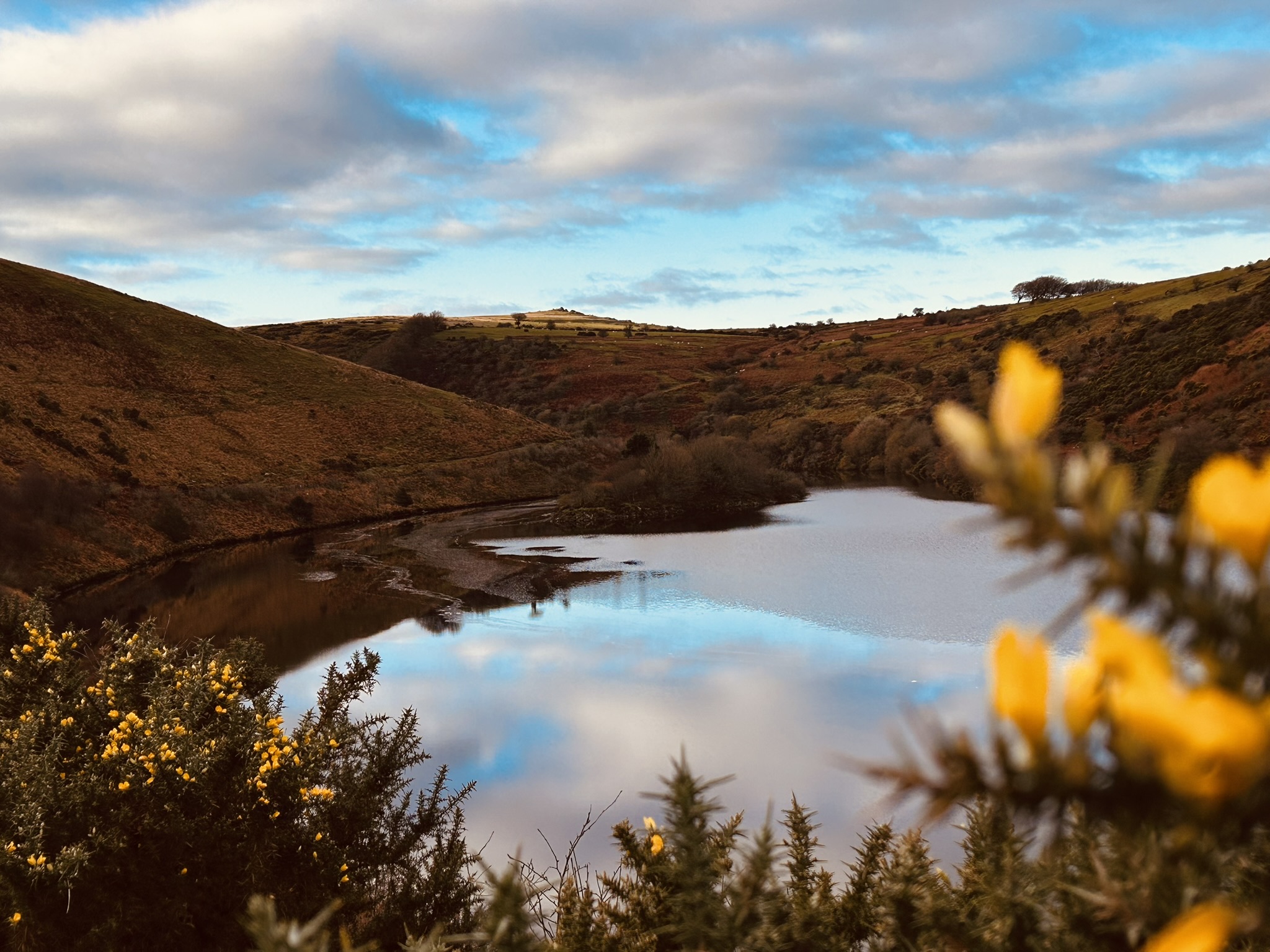
Turning left out of the car park, you come immediately to Meldon Reservoir. Nestled in between open moorland, steep sided banks and dramatic Tors, this beauty spot sits 900 feet above sea level, holds 80 million gallons of water and plays host to a rich abundance of wildlife. The dam over which you’ll cross was opened in 1972, is 200m long and 44m high. Crossing the dam, you get two views. To the right, the Meldon Reservoir strentched to the horizon, water rippling gently as a breeze brushes the surface, reflecting off the surrounding hills. To the left, the reservoir overlooks the striking Okement valley, which snakes away, with Meldon Viaduct offering safe crossing far in the distance.
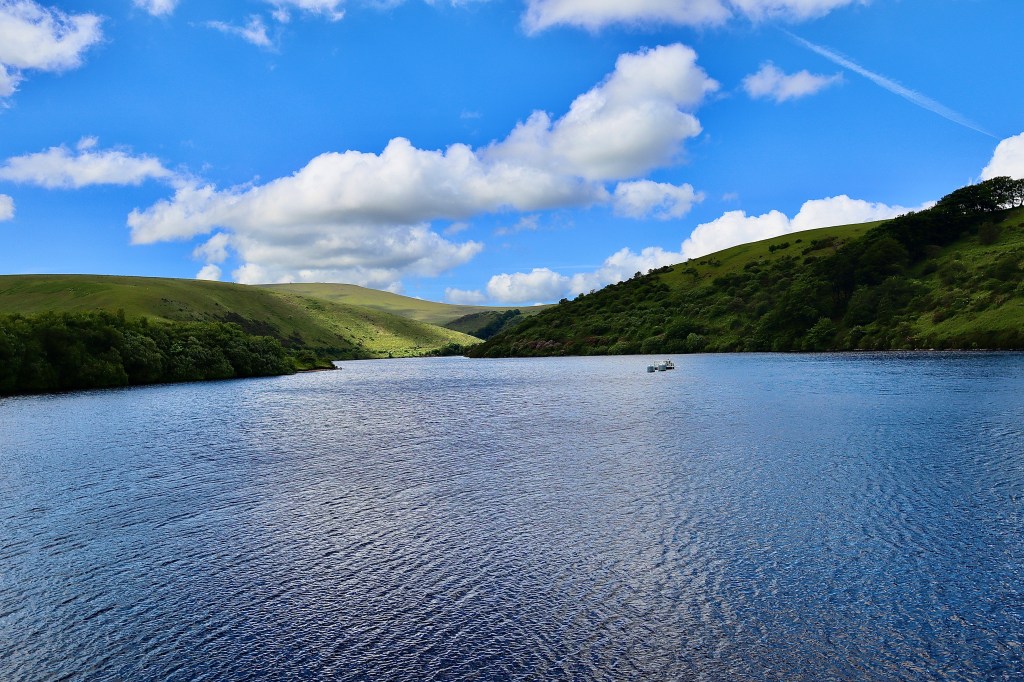
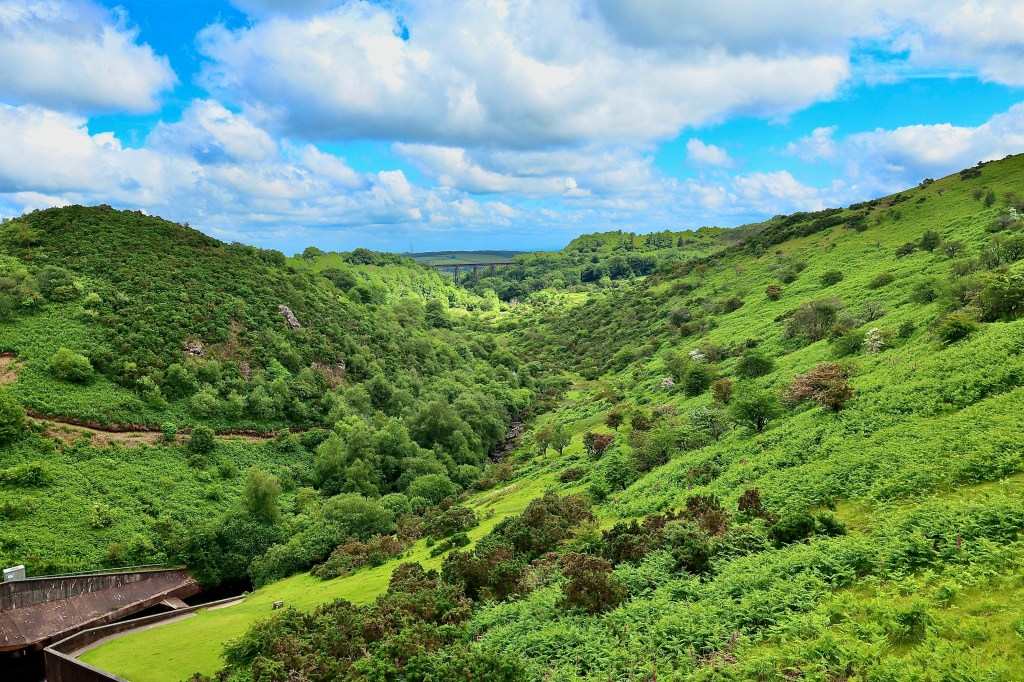
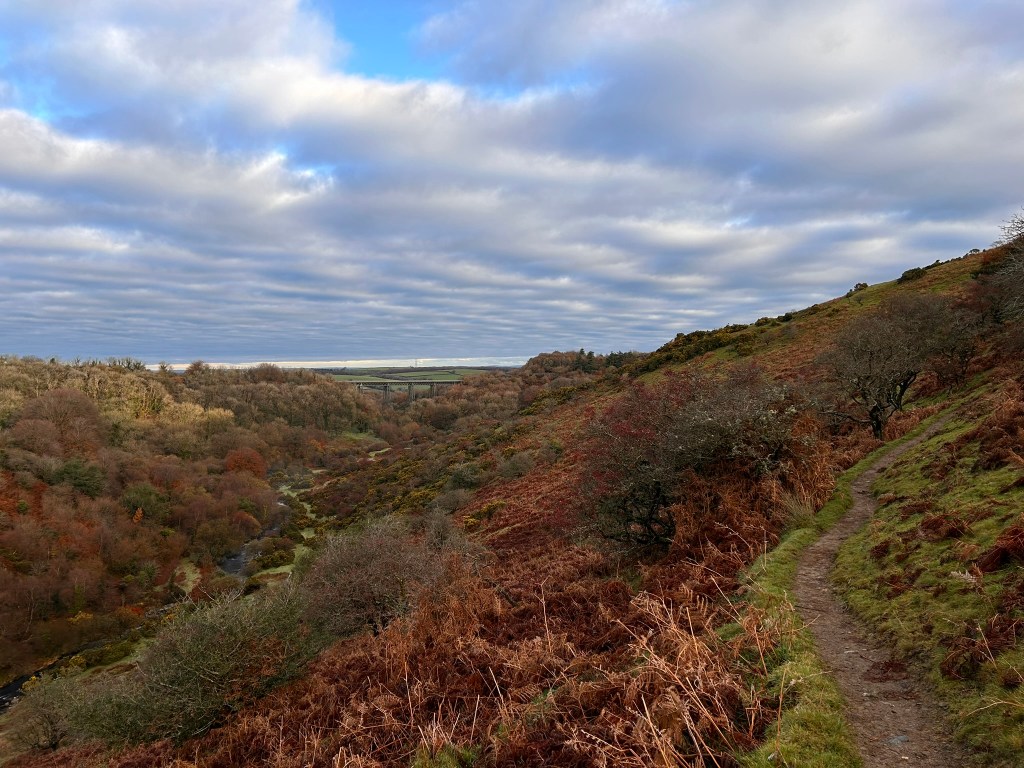
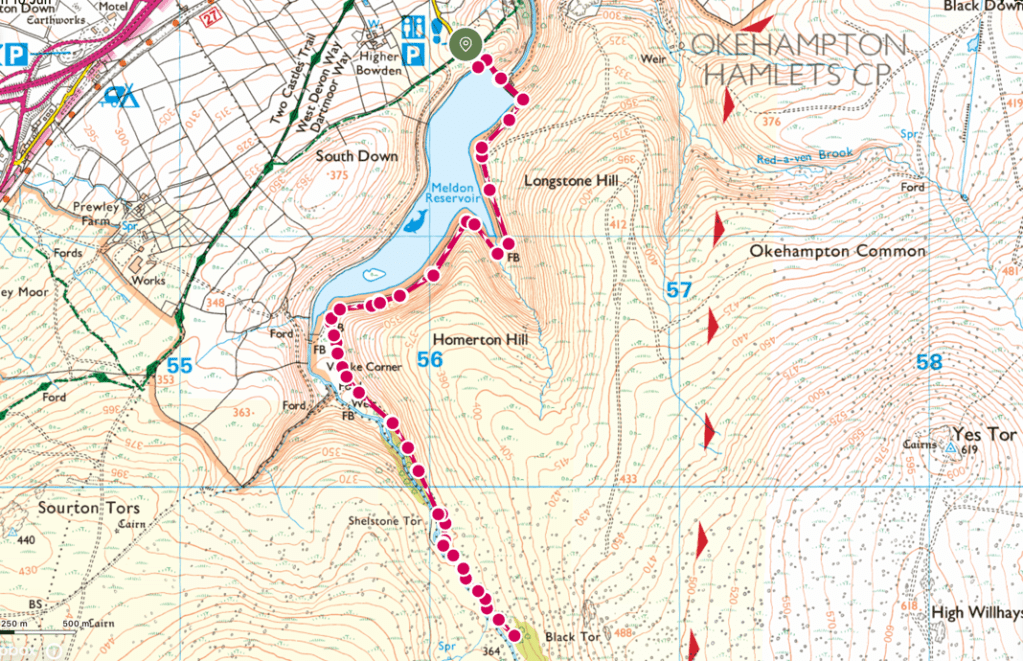
Coming off the dam, I turn right down a well-maintained path, following the route that has clearly been taken by a herd of cows in the not-too-distant past. The slopes of Longstone hill are to the left, but the hill will remain unconquered (by me) today as I continue on the path along its base, hand railing the edges of the reservoir. The path mercifully offers a route through the boggy ground (indicated by the bog cotton) and continues to wind its way along the eastern edge of the water.
Crossing the bridge that offers passage over the valley between Longstone and Homerton hills, and climbing the short incline on the other side, with the beech trees and water to my right. I’m greeted by the view of Sourton Tor, standing inconspicuously in the distance, like a custodian, supervising unobtrusively from a distance. The hills to the right are made up from multiple shades of green, broken by flashes of purple from the foxgloves and the choking, invading rhododendron.


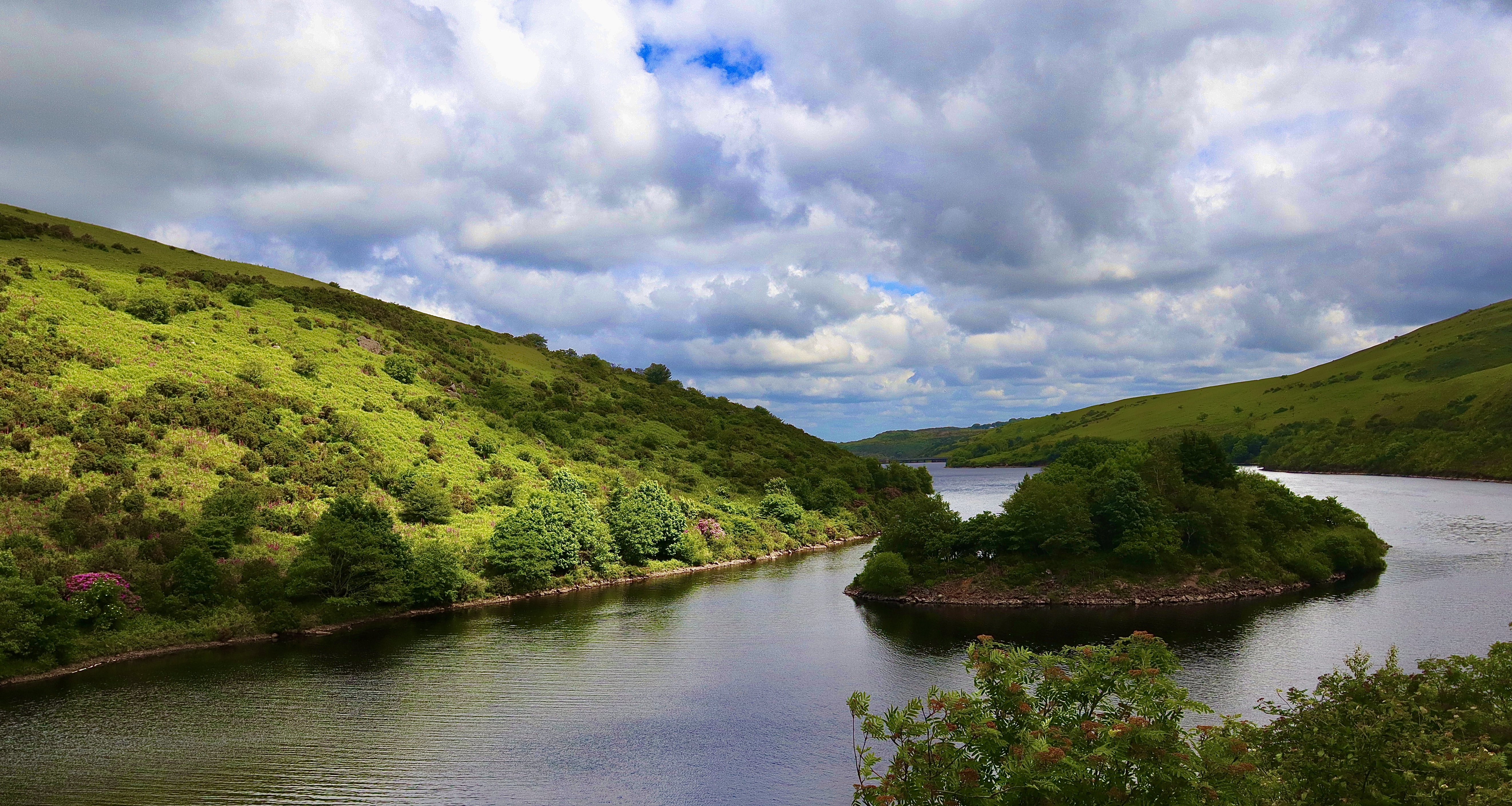
West Okement River
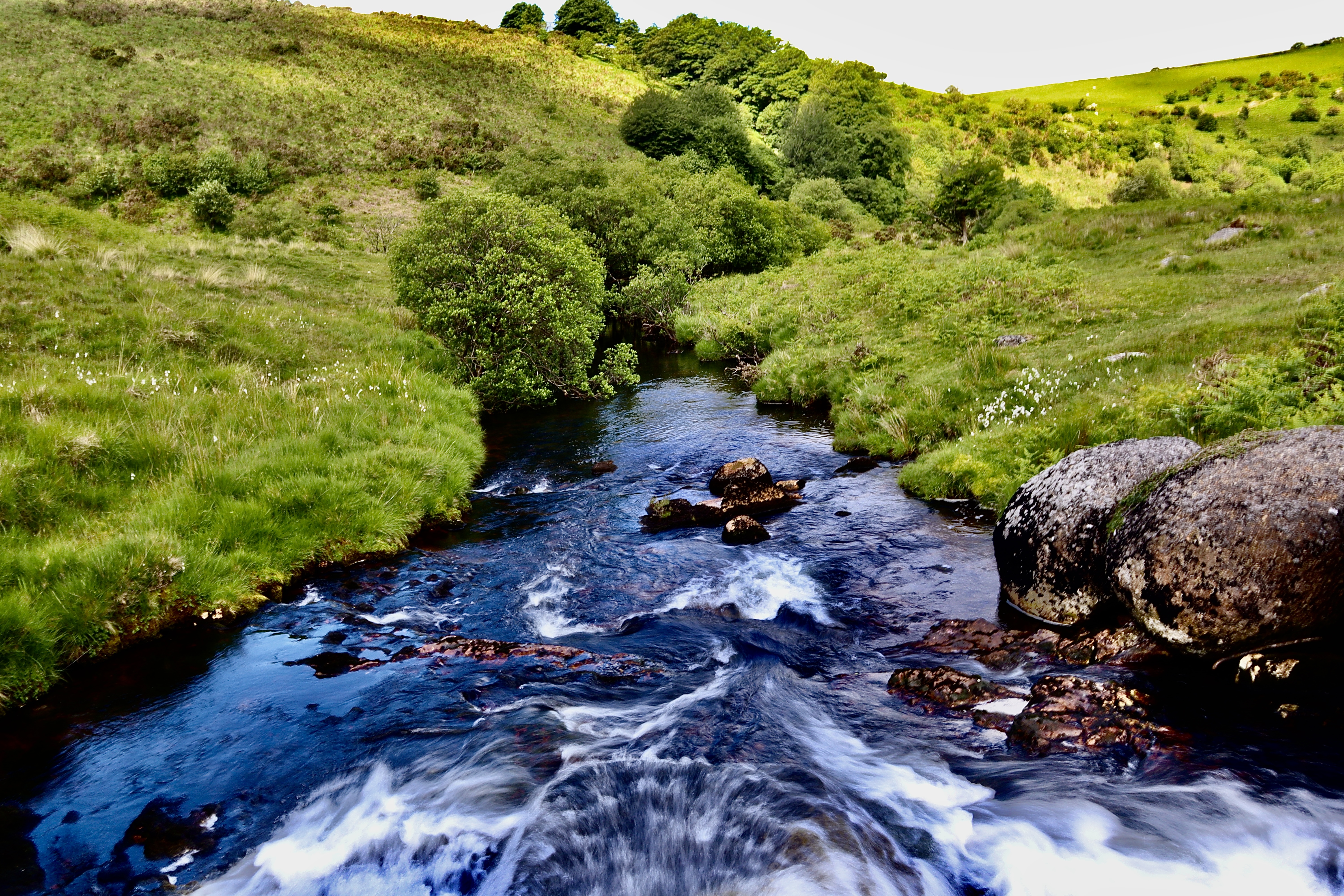
The path continues along the southeastern edge, passing through gorse, bracken and heath bedstraw, before bringing you away from the reservoir at Vellake corner. From here, follow the path southwest, in the foothills of Homerton Hill where it picks up the West Okement river, cutting its course relentlessly through the valley between Shelstone and Black Tors. The West Okement river rises high in the northern moors, from the West Okement head, just by Cranmere Pool (another great walk and will definitely be the subject of a post soon). The river takes its course through some of the most dramatic and wild areas of Dartmoor, curving around Great Kneeset before turning past Lints Tor into a steep sided and beautiful valley. It is through this valley that the river runs past Black-a-Tor Copse, the focus of our walk today and so we join the river for a short stretch of it run.

Black-a-Tor Copse
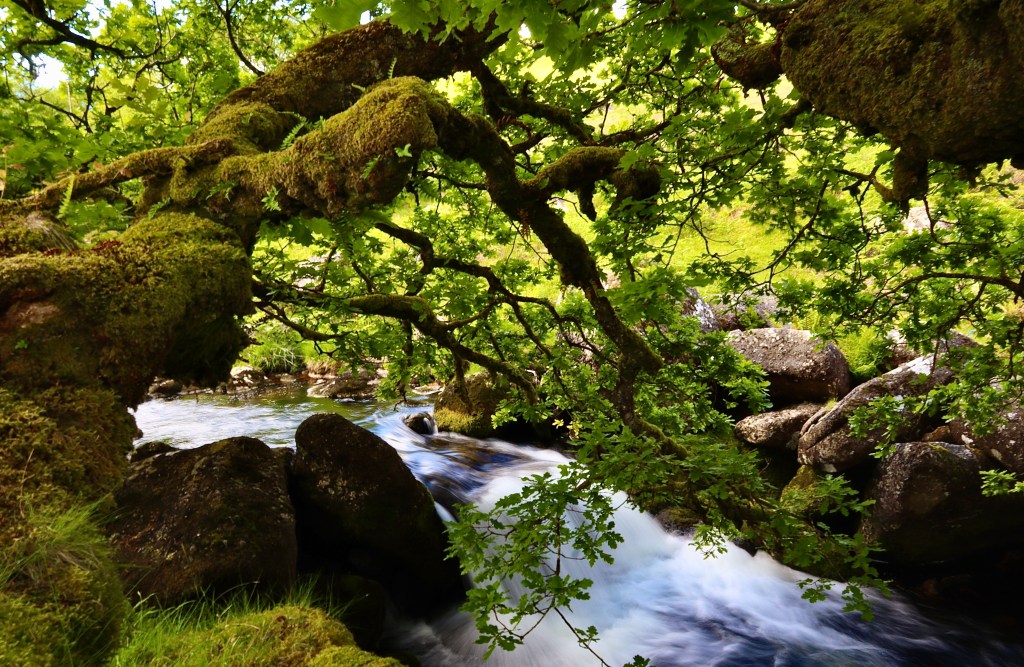
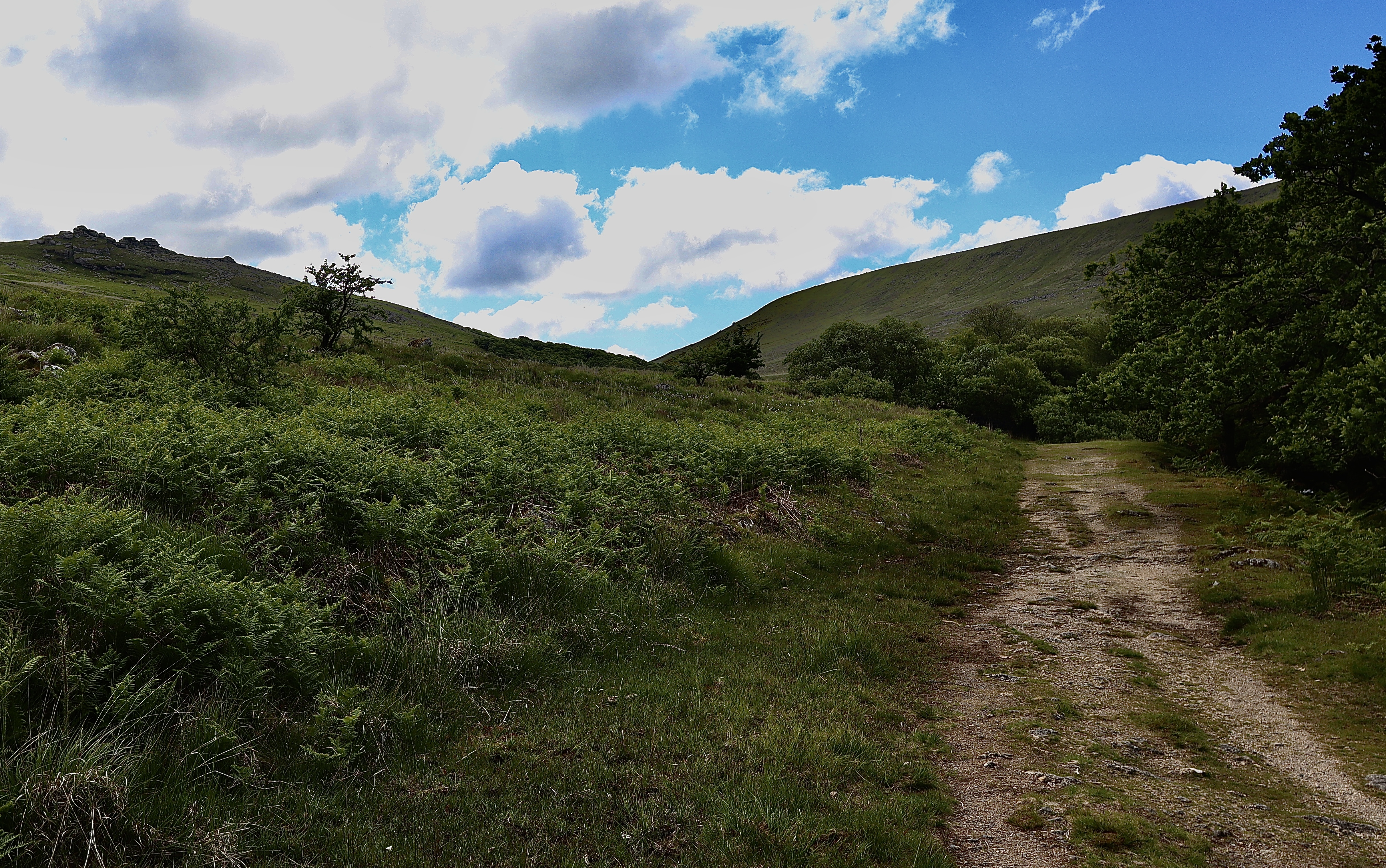
As the path makes its way gently uphill and Black Tor starts to come into view, the slopes of the riverbank play host to stubby, twisting oaks covered in a blanket of moss. At the same time, the tops of the wood that is our end point come into view, offering a tantalising teaser of what’s to come.
Continuing along the river path, we make our way to Black-a-Tor copse, guarded by the commanding, ferocious looking Black Tor. Black-a-Tor copse is a splendid example of an upland temperate rainforest. Upland Temperate Rainforests are found in areas with “high oceanicity” and provide some of the most biodiverse habitats in the UK, providing the perfect conditions for lichens, mosses and liverworts, which in turn provides a foundation for numerous birds and animal to flourish. Black-a-Tor Copse therefore is of vital importance and it is a necessity to protect these habitats, particularly as they provide a space for rare species.

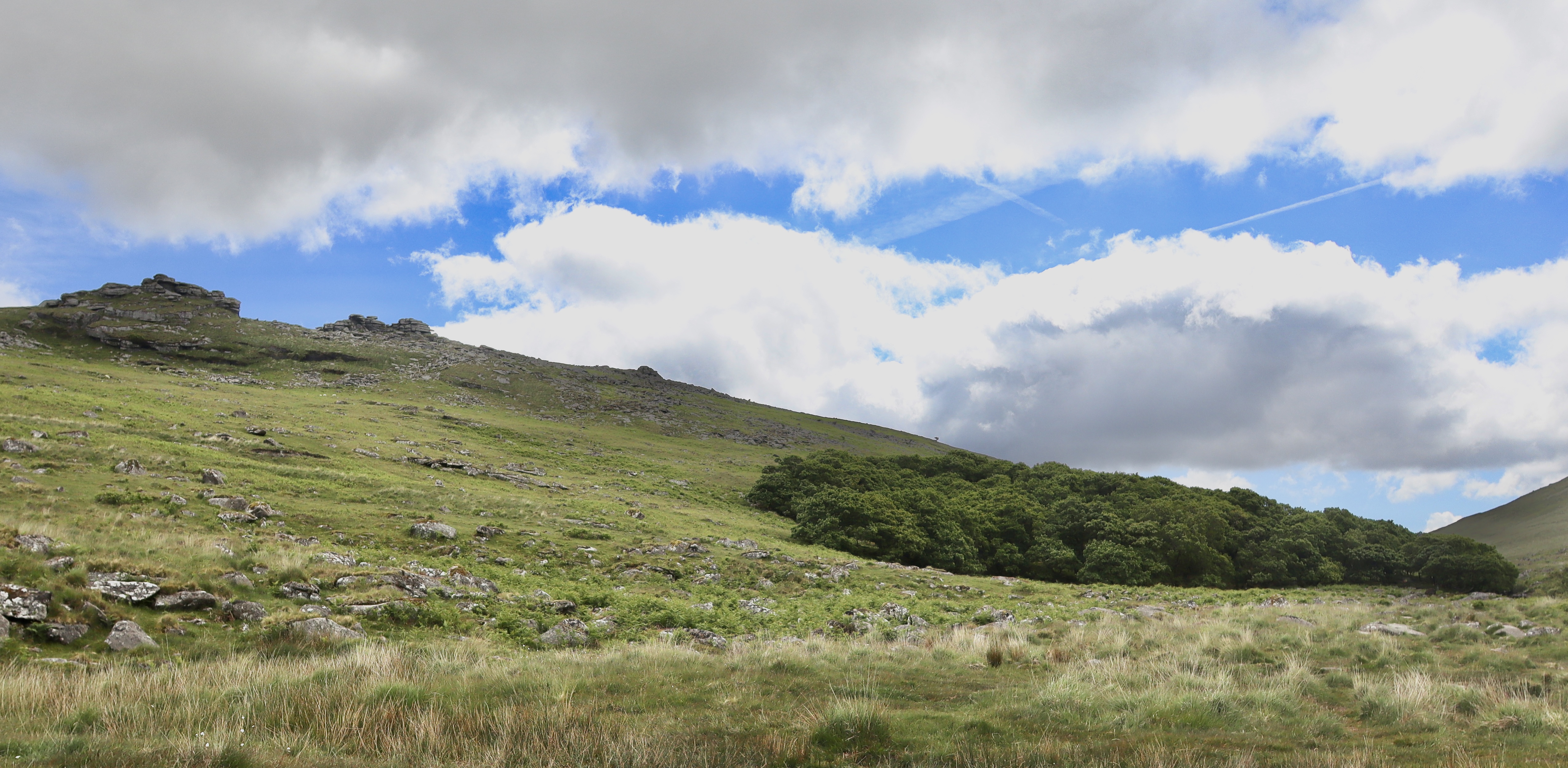
Whilst there is little evidence of Tolkien visiting Dartmoor, there is an abundance of evidence of his love for trees and it would be easy to assume that he used Black-a-Tor Copse and the other temperate rainforests of Britain as the inspiration for the wise, monolith like Ents, custodians of the forests they farm. What is certain, is that the artist for the film adaptations of Tolkien’s famous books, Alan Lee, did used Dartmoor temperate rainforests as inspiration and standing at the edge of Black-a-Tor Copse, it is easy to see why. The picture in front of me if one of twisting, gnarled Oak Trees covered in mosses and lichens with polypody ferns rising from their branches like the bristles of a brush. With the rounding boulders sheltered by their mossy coats, and the West Okement river babbling its way at the front of the forest, the scene is idyllic and fairytale like, and further enhanced by the presence of grey wagtail flying low in an undulating, bobbing manner.

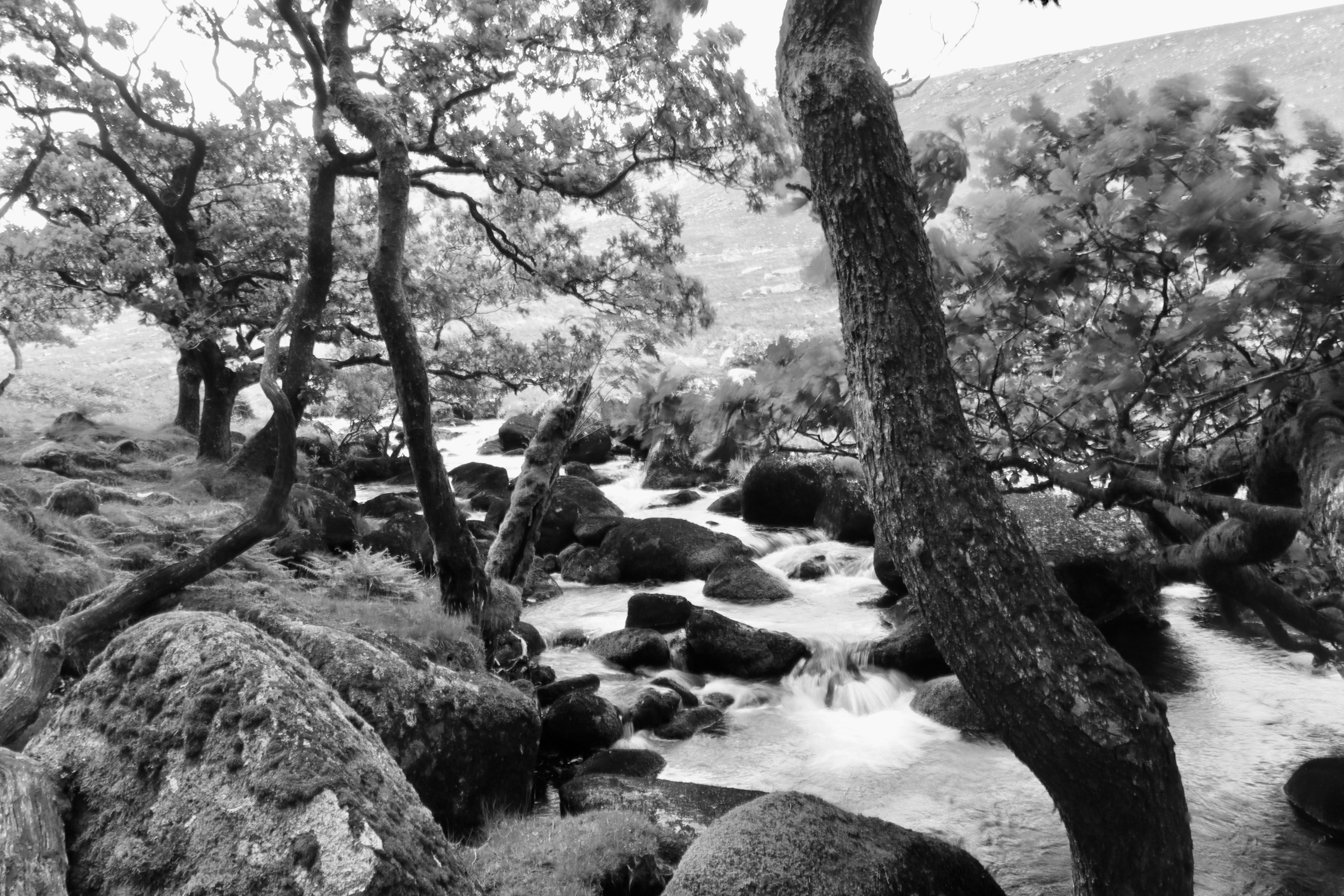
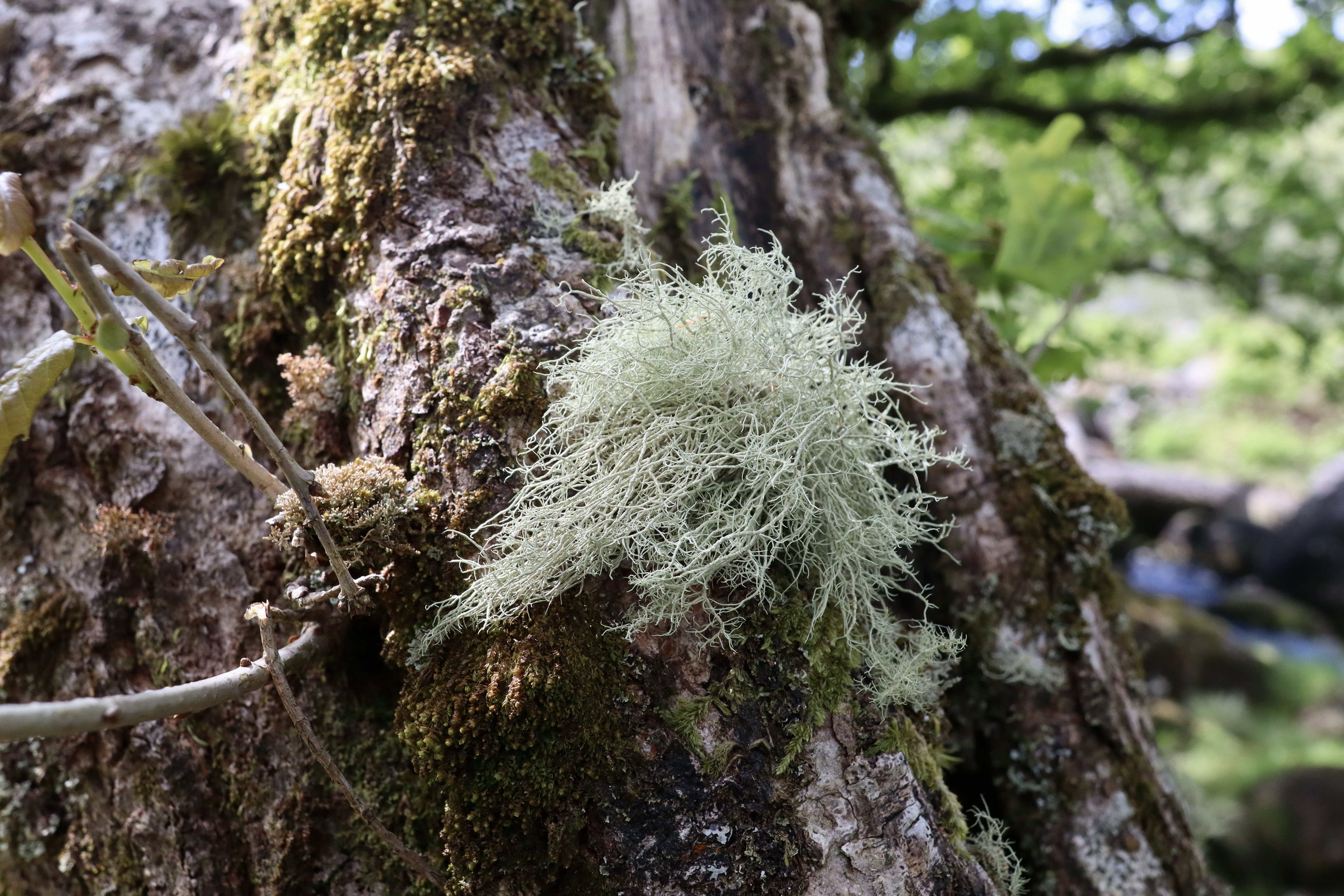
These ancient ecosystems are critically endangered (I will write a post on temperate rainforests in the near future) and as such, although the path continues on, I don’t. I instead walk along until I encounter the first moss covered boulder and use this as my end point. The rainforest stands in defiance against that which threatens it, including the nearby grazing sheep and the (I’ll be kind and say naive and ignorant) individuals who have left evidence of their campfire a few metres from its edge. I don’t want to disturb or damage the area anymore then already has been. Turning for home, I follow the route I’ve already taken back to the car.
The route is easy to access, doesn’t require any particular skill or fitness and doesn’t require any specialist equipment or clothing. This route is simple but if anything that adds to the beauty. Not having to look at maps or think about catching points etc. means you can really take the opportunity to look around and marvel at the wonder that Dartmoor so readily offers up.
| Difficulty | Distance | Navigation Required? |
| Easy | 7km | No – Paths |
| Grid Reference | Safety | Footwear |
| SX 561 917 | General Dartmoor considerations. | B0 |

 Moorland Ramblings
Leave a comment