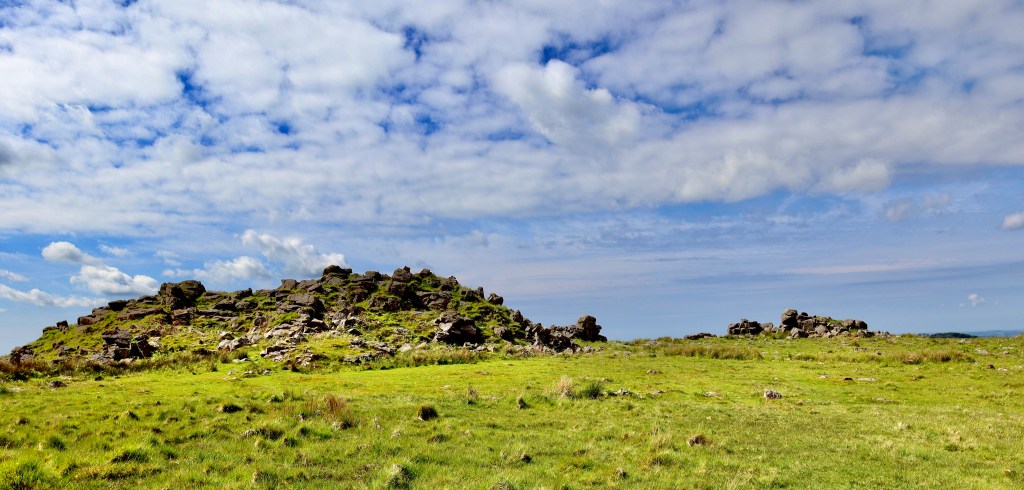
This is a walk that takes in a bit of height, a riverside walk, two tors, a load of cows and a film. Oh and it was a bank holiday weekend – what’s not to love?
The day starts with a jolting crunch, as the car forces its way over a pothole (felt more like a cavern to be honest). Parking up in the “Scout Hut” car park we got out to check the car for damage. Having found none, we could enjoy the view the car park offers. Standing next to a ford over through a little babbling brook, you get a glimpse of Ditsworthy Warren, Ringmoor down and Tors that cover the area. As car parks go, this one isn’t bad.
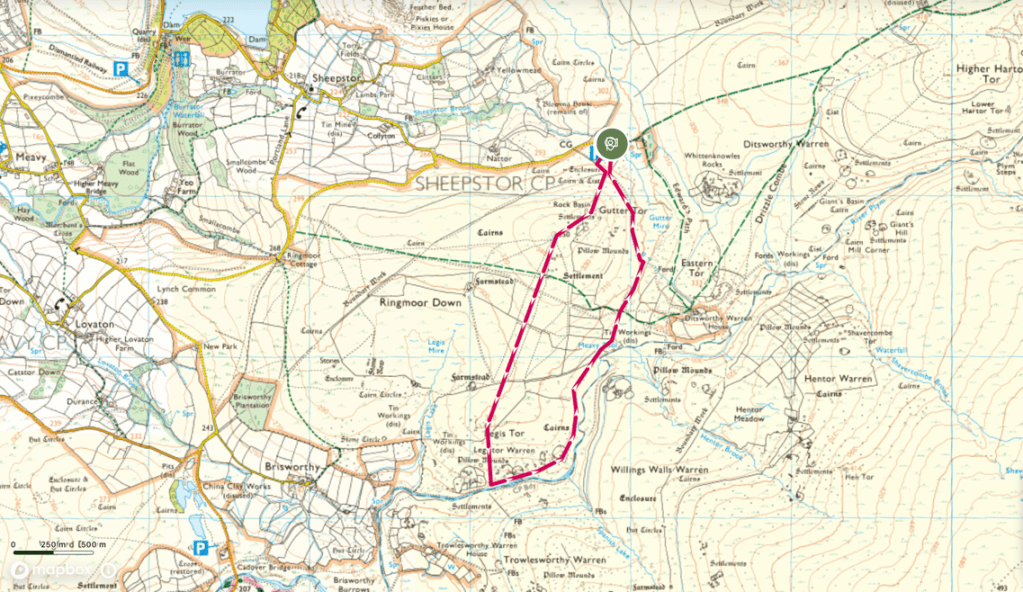
The walk itself starts by heading south out of the car park and heading up. The first “check point” (for want of a better word) is the Trig Point at the top of Ringmoor Down, so the only direction is up. Heading upward from this carpark, for about 500m, brings you naturally onto Gutter Tor.
Gutter Tor is relatively large and comprises three main outcrops. Whether it’s the closely cropped grass that surrounds the Tor, the proximity of the spring at Gutter Mire or the incredibly ease of access, Gutter Tor feels safe, welcoming and almost homely. It is no wonder this Tor is so popular with picnickers and families during the warm days of summer, and this therefore comes with a warning. If you want to get a spot in the aforementioned lovely car park during summer, come early.
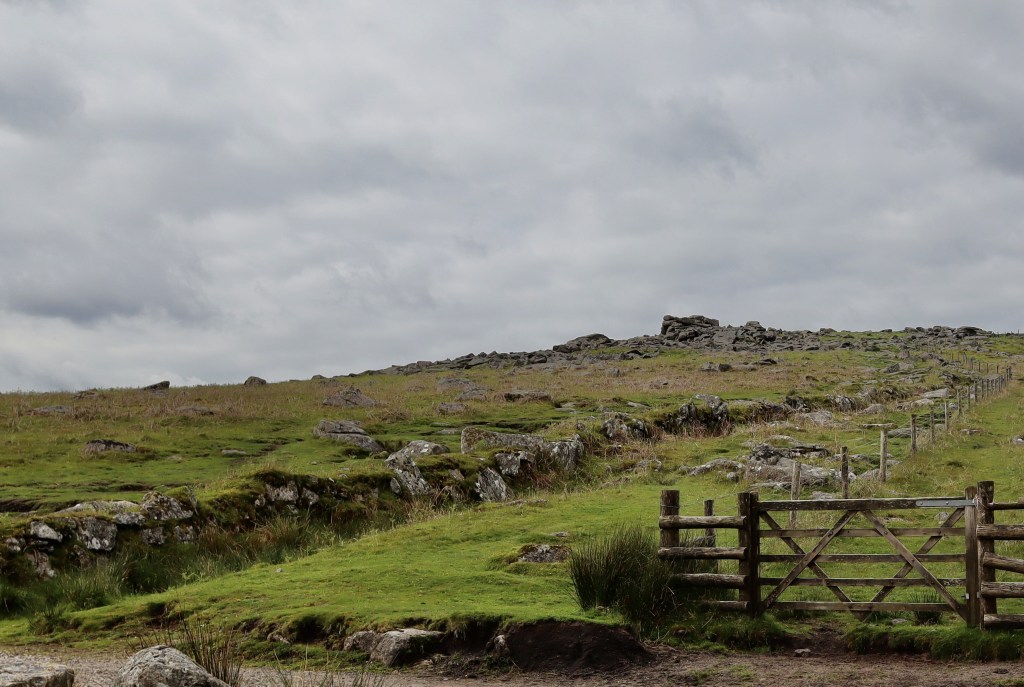
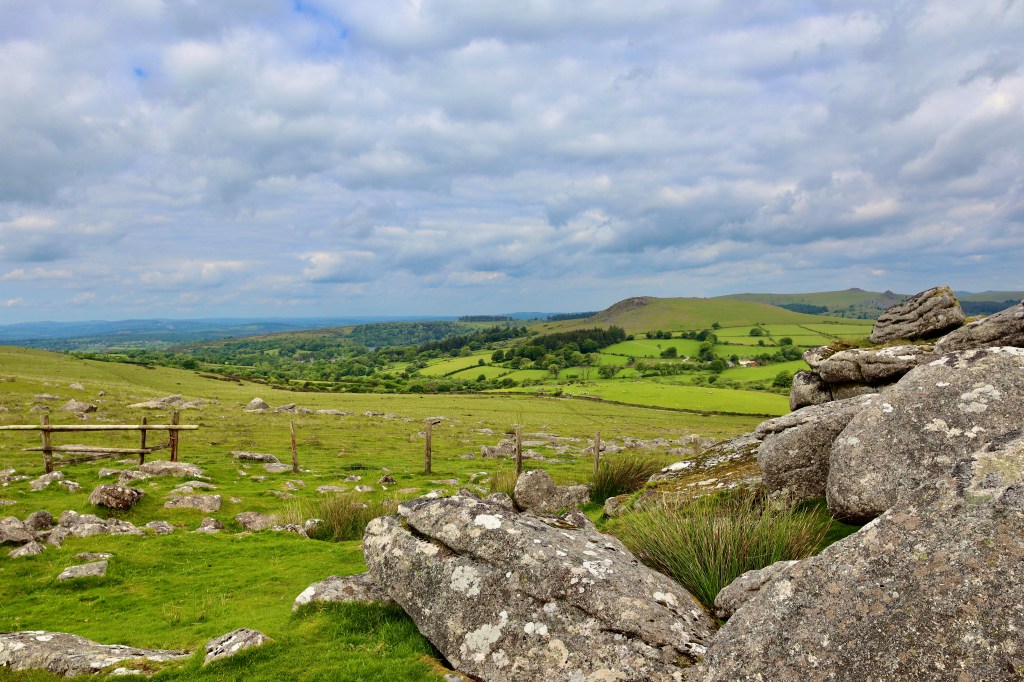
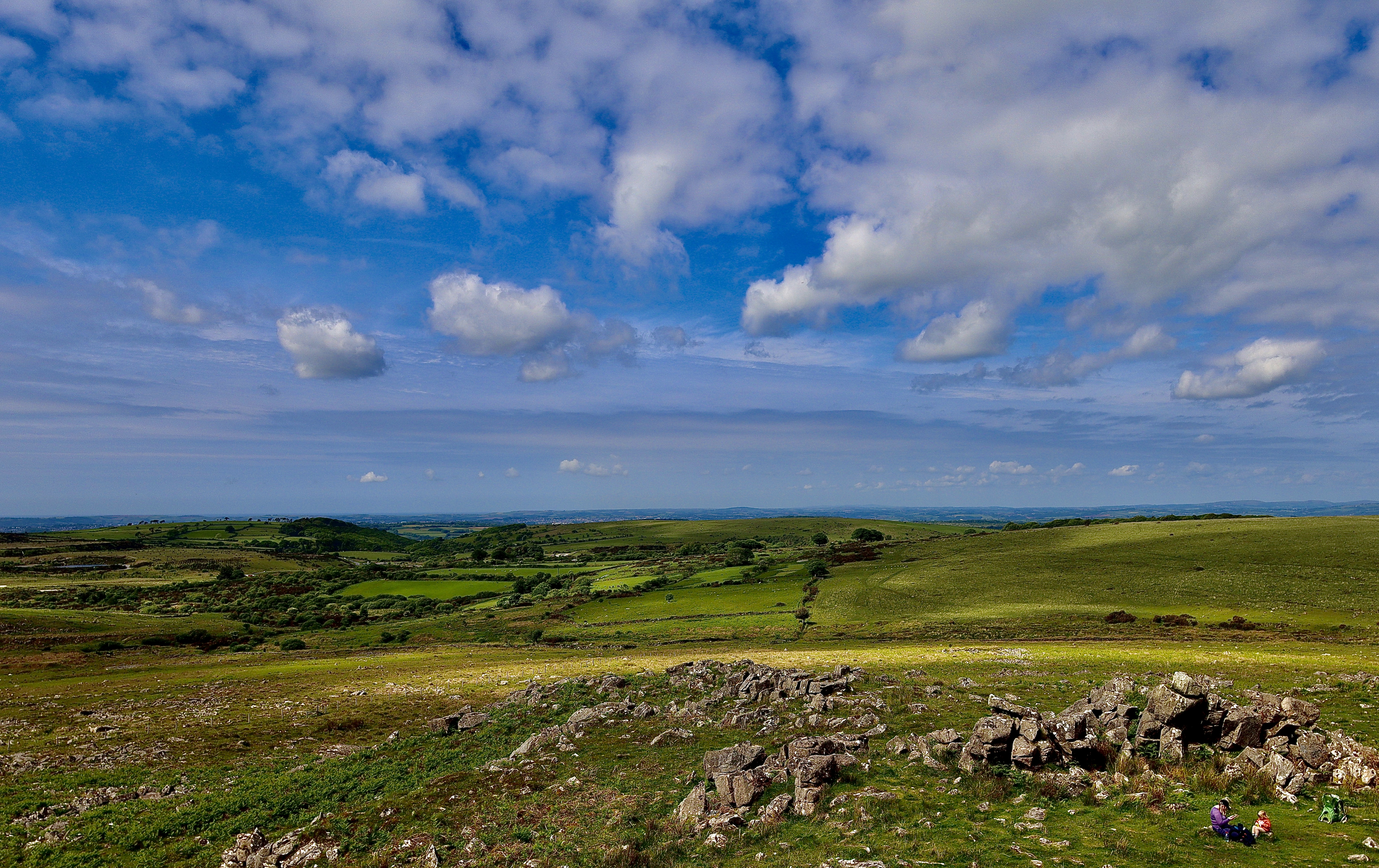
Whilst the Tor undoubtedly offers a spot to rest weary legs and refresh, it is far too early into the walk to do this, so we continue the 200m or so in a South-westerly direction from the tor up to the Trig Point. The top of Ringmoor down offers views for miles around (when the day is clear like it was for us). Most striking of these views is that of Sheepstor, which stands commandingly over Burrator reservoir, supported by its Lieutenants in Leather Tor and Sharpitor. Reluctantly turning our back to this view, to the southwest of the trig point is our next destination – Legis Tor.
The route from the Trig point to Legis tor is about 1.25km and easily found. Standing between us and the Tor however are two threats. The first is Legis Mire which is easily avoided by following the clearly marked, boot-worn path. The second however is more stubborn. A herd of cows looking after their calves stoically stand their ground blocking the path (it is their home so fair enough). We look to walk around; this does bring the previous threat of Legis Mire more into play but we manage to navigate both and get to the Tor.


Legis Tor is small but beautiful (to my mind anyway). It once stood tall overlooking the Plym from its riverside base, but the passages of time have caused the stacks to collapse so that now, it lies as a pile of broken rock, acting as a reminder of once what was. The Tor offers views over Shaugh Prior and Lee Moor, which are broken rather spectacularly by the brilliant white edges caused from the Lee Moor China Clay Works. For some, the sight of the clay works is an ugly scar on the otherwise unbroken horizon of gently rolling hills. For me though, I think this adds to intrigue reminding us of the industrial, working nature of the landscape in which we play.
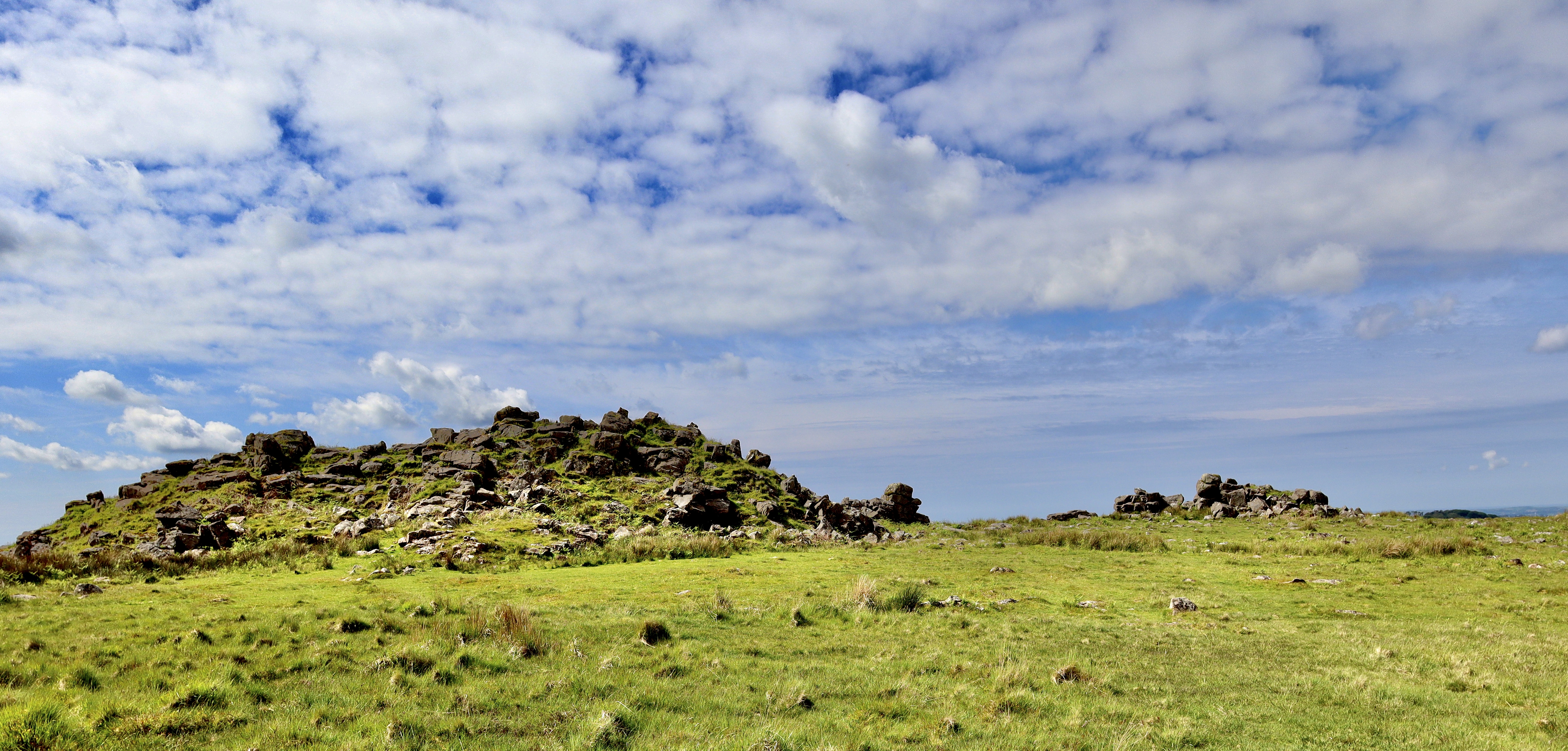
Having paused for a drink and a few hill snacks, we continue on our journey by heading south, off the back of the Tor and towards the river Plym. This route takes us through a gate post which has been ingeniously (if not a little disgustingly) held together by an old, abandoned, mouldy jumper. The path here takes us through two interesting features.
The first are “pillow mounds”. In the 14th and 15th centuries, Legis Tor represented the heart of the rabbit warren business that flourished on Dartmoor. During the medieval and post medieval periods rabbits were used as a source of meat and fur. The meat in particular was considered a delicacy and as such, the number of rabbit warrens across the moor grew steadily during the late 1300s and early 1400s. Now it may be obvious to say, but granite is not an easy material for a rabbit to burrow through, and as such, pillow mounds were made to house the rabbits. These were long banks of stone covered with soil and turf and these intriguing features can be found across the moors, but are particularly clustered around Legis Tor and the Plym valley (with reports of up to 86 mounds in this area, out of around 700 on Dartmoor as a whole).
The second feature is possibly related to the first and is a cluster of prehistoric settlements and round houses. The correlation between rabbit warrens and these sites is not obvious and the explanations are purely speculative (and I only found it whilst researching pillow mounds, having stumbled across one a few years ago and having absolutely no idea what it was). The location requirements for a pillow mound are for well drained ground, near to water and receiving a lot of sun – the same requirements needed for human settlement. The second reason may be more pragmatic, which is that Rabbit Warrens needed to be away from crops, as did human settlements and the third, more practical which is that the stones of the settlement were “recycled” for the pillow mounds (and to be honest, this is the one I think most likely). In any case, the settlements and pillow mounds appear intrinsically linked and the path for this walk takes you through both like a pre-planned tour of Dartmoor’s long-standing history.
Just short of the river Plym, on its northern banks, a clear path opens up in the grass. We take this path north-westerly, following the course of the river. This path offers picturesque views of the river and Trowlesworthy Tors and continues taking us through the enclosures and homesteads of our ancestors, invoking feelings of serenity as we reflect on the history we are standing in and the link to our distant past. Continuing along this path for 1.5km, from this angle, you can see why Gutter Tor gets its name as a large, square shaped cutting seems to have been removed from the rock which stands like a distant beacon to which we aim.
The path takes us past Ditsworthy Warren House, which provided the location for the filming of Steven Spielburg’s 2011 adaptation of Michael Morpurgo’s wonderful book (and now great film), War Horse. The derelict Grade 2 listed house is evocative of the bleak farmhouse set isolatingly deep into the unyielding moors that often forms the basis of a Dartmoor story and was a superb choice of location for the film. At this point, our path ends and instead we head “off road” for 300m through an area of the moor that appears to have been “cut out” of the ground (I suspect this is related to the pillow mounds but can find no confirmation of this) which takes us onto a well-maintained, separate gravel path. Turning North up this path, takes us around the base of Gutter Tor, to the west of Gutter Mire and bring us back to the starting point of our walk, which also serves as the end.

Tors, history, intrigue and rivers. This walk may be relatively short and easy but is no less for this.
| Difficulty | Distance | Navigation Required? |
| Easy | 5km | No – paths the whole way |
| Grid Reference | Safety | Footwear |
| Start and Finish at SX 578 673 | General Dartmoor Considerations | B0 |

 Moorland Ramblings
Leave a comment