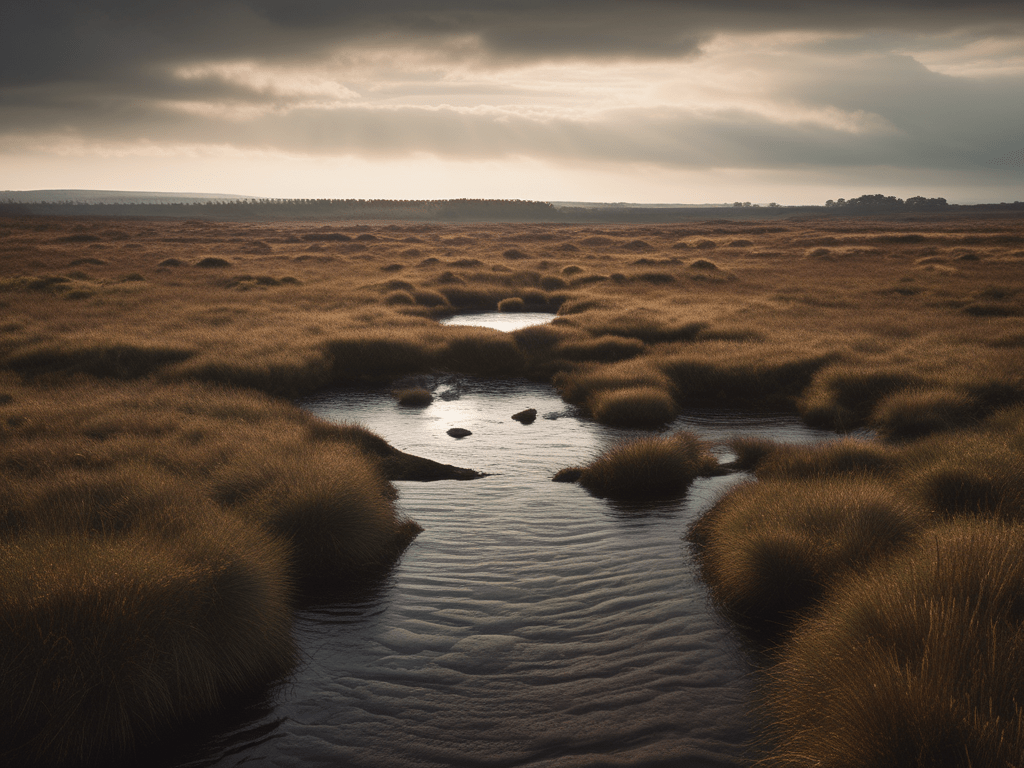
Peat is the very matter that makes up much of the moor. It is incredibly important, perilously endangered and more interesting than you’d think. I will try to cover the key aspects in this post but if you want more information, a quick google brings up an abundance of great information – be warned through – it does take you down some strange rabbit holes.
Peat Formation
So, what is Peat? It isn’t one of the locals as I was so sincerely told by a friend when we spoke about it (things can get a bit weird when a few pints in at a pub), it is in fact layer upon layer of dead and partially decaying vegetation.
Peat formation is the result of the partial decomposition of the remains of vegetation growing in waterlogged conditions. In order to form, peat requires some relatively specific but common conditions, which are the aforementioned waterlogging (useful given the propensity for rain on the moors), low pH (acidity), low nutrient availability, low oxygen supply, and a reduced decomposition rate.
As a result of the above process, called the Hydrosere, the partially decomposed remains add up and become compacted, forming peat that changes the substrate chemical and physical properties, supporting the growth of more plant communities and therefore beginning the cycle of peat formation again – it’s clever stuff.
Peat Usage
Peat isn’t only useful for forming a spongy layer for us to walk on. Its utility comes from a variety of areas:
- Carbon Storage
- Peat stores huge quantities of carbon. A healthy peatland therefore supports the removal of Carbon from the atmosphere, a dying peatland however releases it.
- Horticulture and Habitat Formation
- Peatland form a precious habitat for nature and is the foundation for much of the flora (including sphagnum mosses, cotton grasses and carnivorous sundews) and fauna (including birds, frogs, beetles and dragonflies) we love on the moors
- Peat can also be used by keen gardeners as a soil improver and for growing garden pants.
- Archaeology
- Peat contains an invaluable historic archive. Pollen, micro-organisms, and artefacts are preserved in the layers of peat going back tens of thousands of years. Analysis of these fragments tells the story of how humans have used Dartmoor through the ages and how the natural environment has changed.
- Heat and Power
- Peat has been used for centuries as a fuel source for heating homes, cooking and flavouring whisky
- Industry
- Peat can be used as a raw material for chemistry (wax, dye and activated carbon), as bedding for animals, as a filter and for absorbing oil spills. It can even be made into paper.
- Fun
- Finally, it is hilarious watching someone end up stepping up to their knees in an unexpected peat bog (the government and South West Peatland Partnership may not agree that this is an aspect that needs preserving but this is truly a rite of passage for all those regularly hike on the moors).
Peat Destruction
It is the usefulness of the peat which has led to it’s destruction however. Over time, sheep and cattle grazing, large populations of wild deer, active drainage (to support forestry and agriculture), burning (swaling), heavy military exercises and the commercial mining of the of this (non-renewable given the length of time peat takes to form) fuel source has led to severe degradation of habitat and erosion of peat soil. As at the time of writing this post (March 2024), The University of Exeter estimates that just 1% of Dartmoor’s deep peat area is healthy, peat-forming bog, whilst the majority has been severely damaged by drainage, cutting, drying and erosion.
The impact of peat degradation isn’t just the destruction of moorland views. It is much farther reaching and more serious. Peat bog store a huge amount of carbon. Their degradation then leads to this being released into the atmosphere, contributing to worsening climate change. In the UK, 10million tonnes of CO2 is release through degrading peat bogs annually.
Bare peat also provides a smooth(er) surface over which water can flow. This quick water flow carries material with it including peat (obviously) and heavy metals. This then pollutes our water sources, impacting local wildlife but also requiring extensive treatment before it reaches our homes.
Finally, disappearing peat bogs means wildlife habitats also disappear. Numerous plants (as noted above) rely on a peatland habitat to grow and these subsequently provide a habitat in which birds, insects, beetles etc can shelter, feed and breed. A declining peatland therefore leads to a lower diversity of plants and animals living on the moors.
It is clear therefore that protection and restoration of our peatlands is crucial. Thankfully, the powers that be see this also and a peatland restoration project in underway across the UK.
Peat Restoration
Restoring our peatland provides an invaluable opportunity to increase the peatland’s resilience to climate change (by reducing emissions and increasing carbon storage), to safeguard water supplies, to reduce downstream flood risks, to restore ecosystems and improves wildlife habitat and to help people better enjoy, understand and appreciate (and protect) our peatlands.
Within the Southwest, this is being managed and overseen by the South West Peatland Partnership, who are funded until 2025 and is aiming to restore 2,600 hectares of degraded peatland across the South West of England, on Dartmoor, Exmoor, Bodmin Moor and West Penwith. If you want more information on this vital project, please visit https://southwestpeatlandpartnership.co.uk/.

 Moorland Ramblings
Leave a comment