Usually, I over plan. I like to think through a route the night before, plot it out on my OS Maps App and then make sure I know it on paper. I mark out trigger points, major features and know the distance and time it will take. I look over weather reports to an alarming degree and then pack my bag the night before so in the morning I can head out without thought.
That (possibly overzealous) routine did not happen this time. Instead, I woke up on a Thursday morning without a plan, without motivation and un-prepared. As I sat drinking my morning coffee, I messaged my wife asking her what I should do, hoping more than anything that she gave me an excuse to not go out. Really, in that moment all I wanted to do was stay on my comfy sofa in my warm house and watch BBC breakfast. The response I got about a minute later was “Just don’t do a run”.
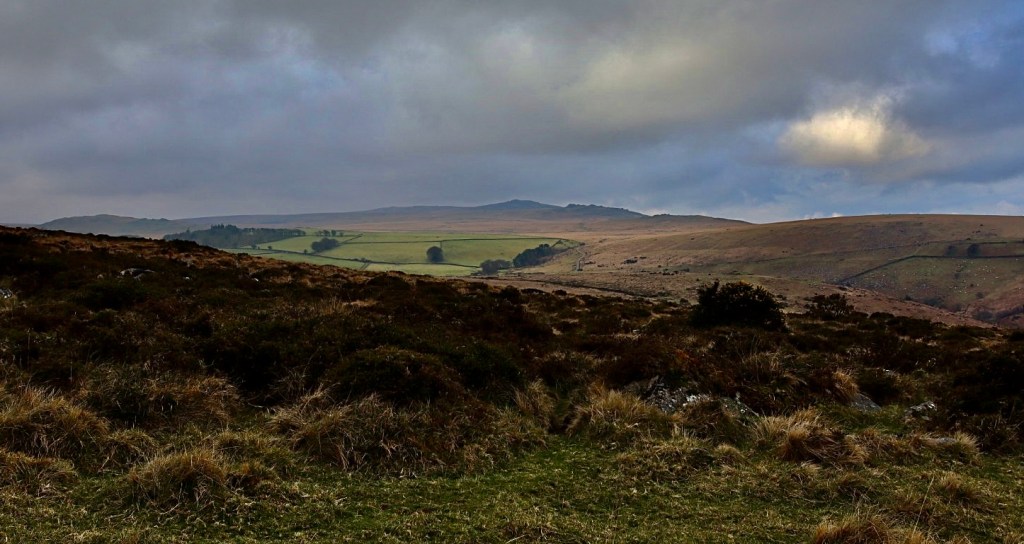
Just don’t do a run, an answer to a question I didn’t ask, but it also didn’t give me an excuse so I said “screw it” I’ll go a route I know and hope I get a few nice photos. All I knew for certain was that I’d want a hot chocolate at some point. So I packed up my bag with nothing but some water, my camera and Jetboil and set out. My plan was to start in Okehampton (as I live there and therefore didn’t need to go in my car), go through Tramline Woods onto the moors at Belstone Common and see the Nine Maidens. I would also go over Belstone and Higher Tors before returning to the start point. So there it was, I had a plan, and at about 0930 at Okehampton Train Station I was starting out walking through the gate into Tramline woods.
Tramline Woods
Tramlines is a long, ancient woodlands overlooking Okehampton and its entrance for my walk was about 50m from Okehampton Station. The wood is a great example of a temperate rainforest and is home to a number of rare species including various lichens, willow tits and pied flycatchers. It couldn’t be easier to find and access so was a perfect start for this temporarily reluctant hiker.
As with much of the surrounds of Okehampton, the wood has its origins with the De Courtenay family and Okehampton Castle, forming part of the Okehampton Deer Park established in the late 13th century.
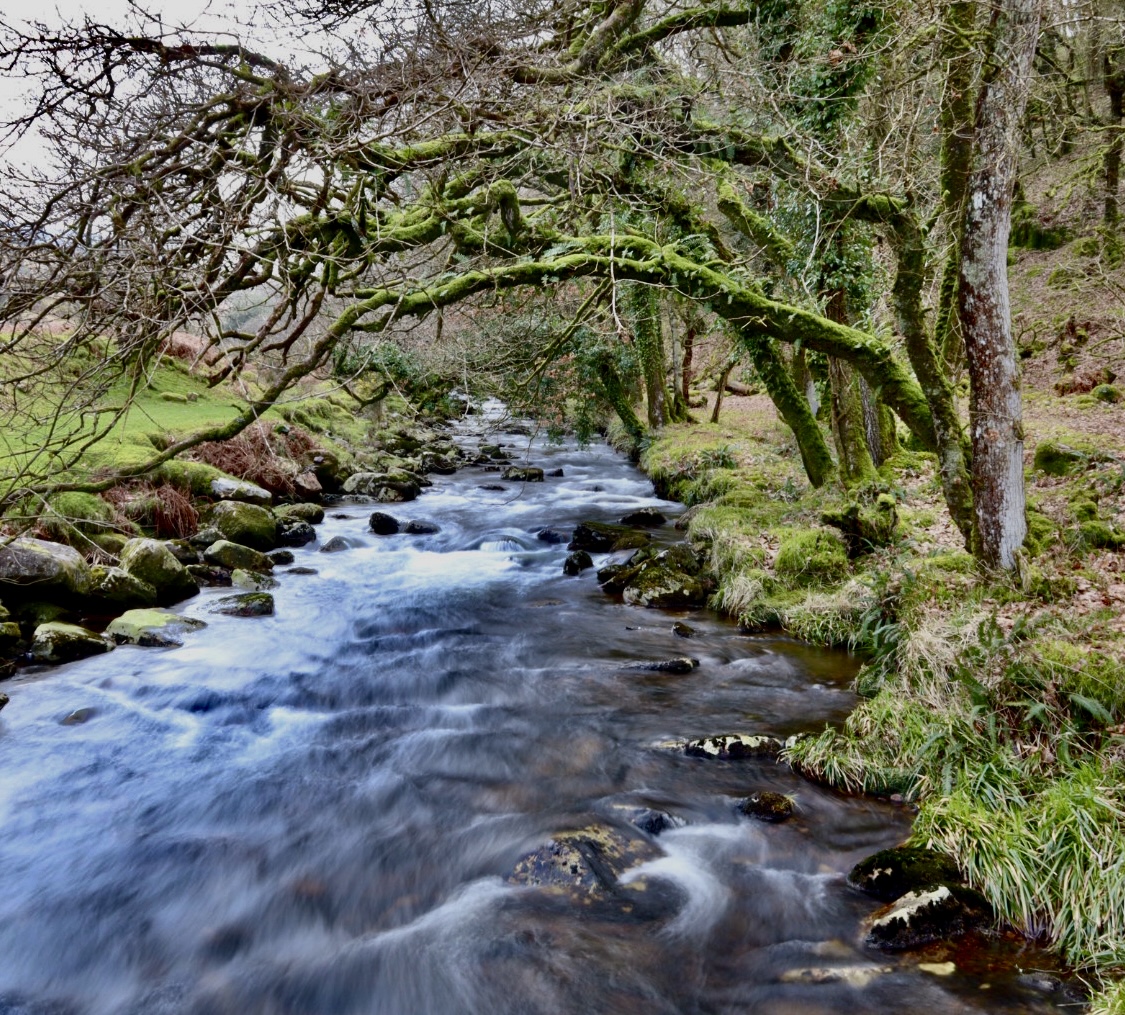
Alongside the thick twisting oaks, thin bending hazels and the spiny, unforgiving holly, the predominant feature of the woods is the winding, tumbling and ever flowing East Okement River. The never-ending growl of the river punctuates the otherwise (unexpected given its proximity to the A30) silent wood and its presence solidifies the calming peace of the environment.
The mental benefits of being near water is well known. I’m not someone who carries a lot with them psychologically, but I do notice that being near the river surrounded by woodland and knowing the beauty of the moors lays a few KMs ahead, brings a serenity over me where I can forget the stresses and pressures in my life for those reassuring moments. The literature is speculative on the causes of these acknowledged mental health benefits; for me it’s the knowledge that I fit into a larger picture. A picture where we are unconfined by the complexities of modern life, where my role in the world is contextualised and the stressors of work, money and Arsenal Football Club seem superfluous.
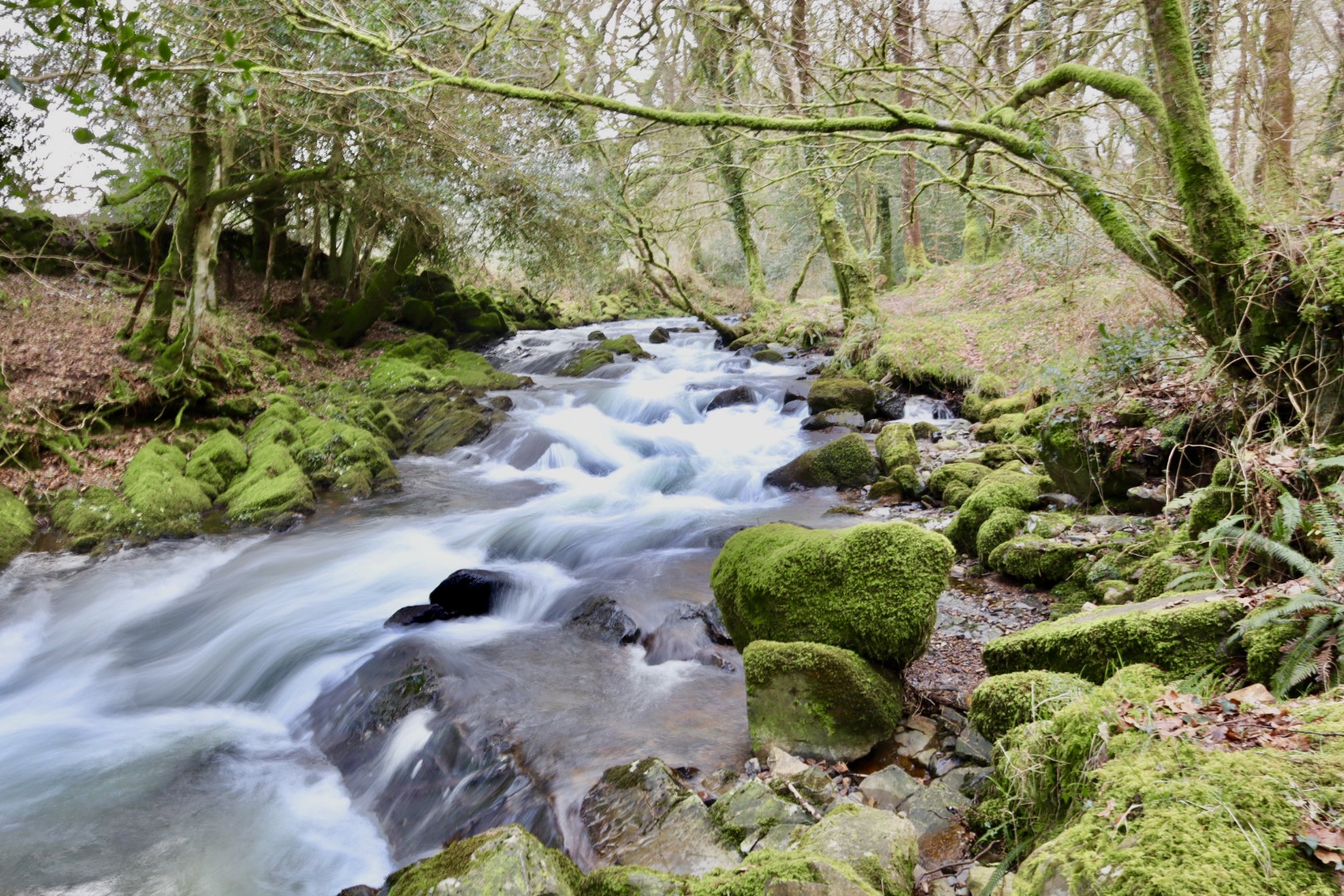
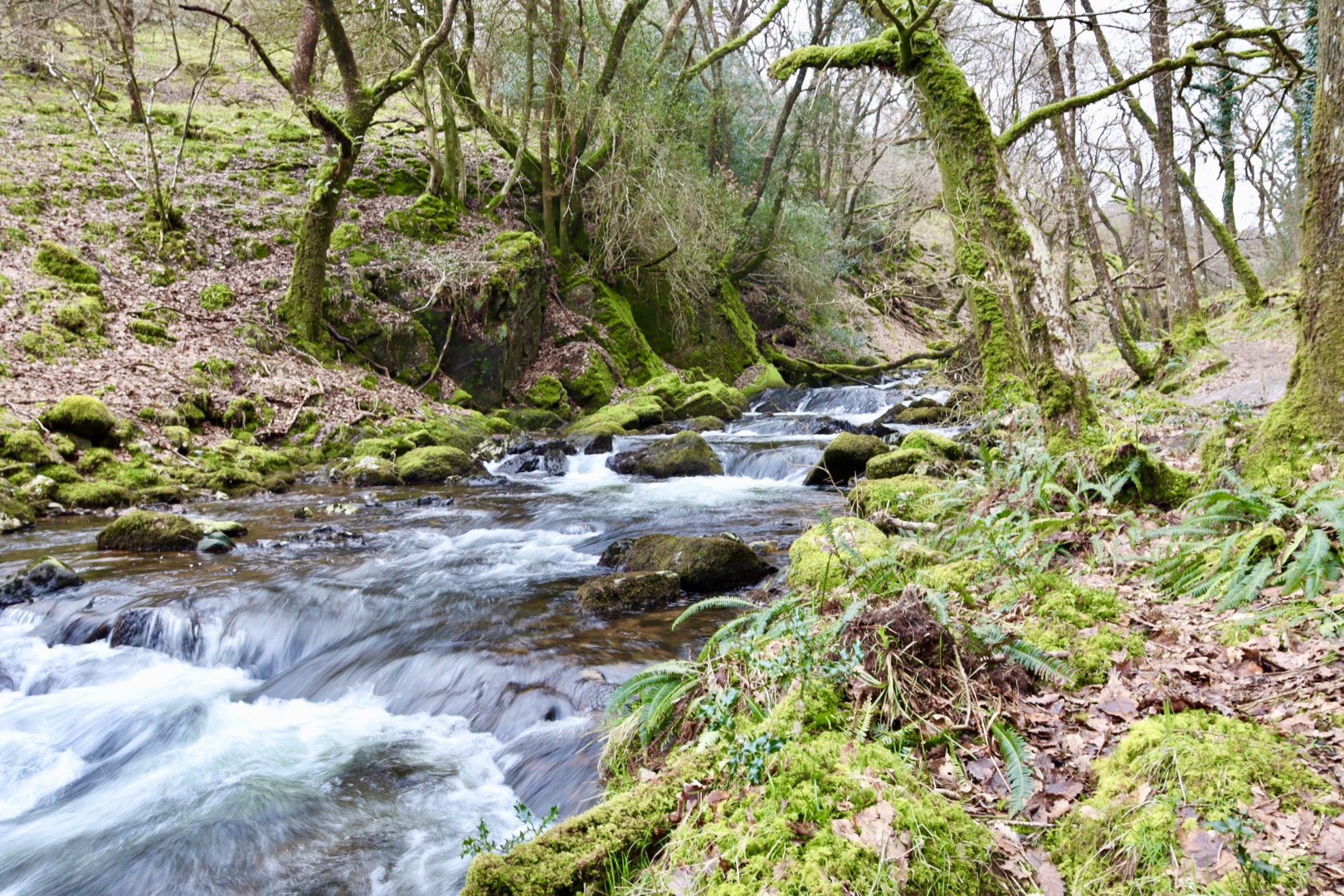

As I walk alongside the river, following the forest path that leads to huge granite stepping stones, I reflect on my own journey that has brought me to this place. Only a few years ago I was living in London surrounded by high rise buildings and a football stadium yet here I was, a few hundred yards from my house surrounded by nature in all its revelry. Using the river as a metaphor, I found myself reflecting on how grateful I am for the twists and turns of my life.
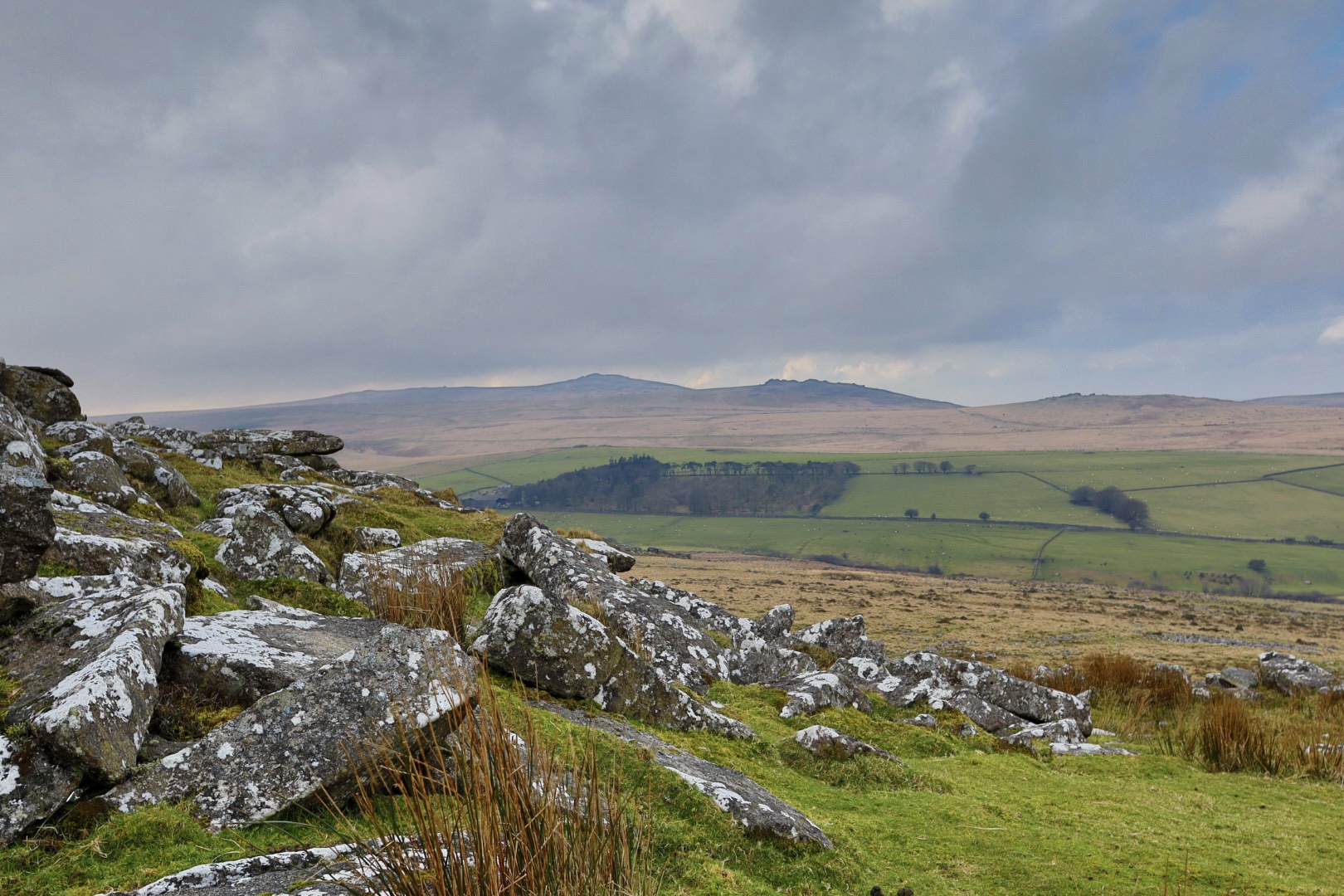
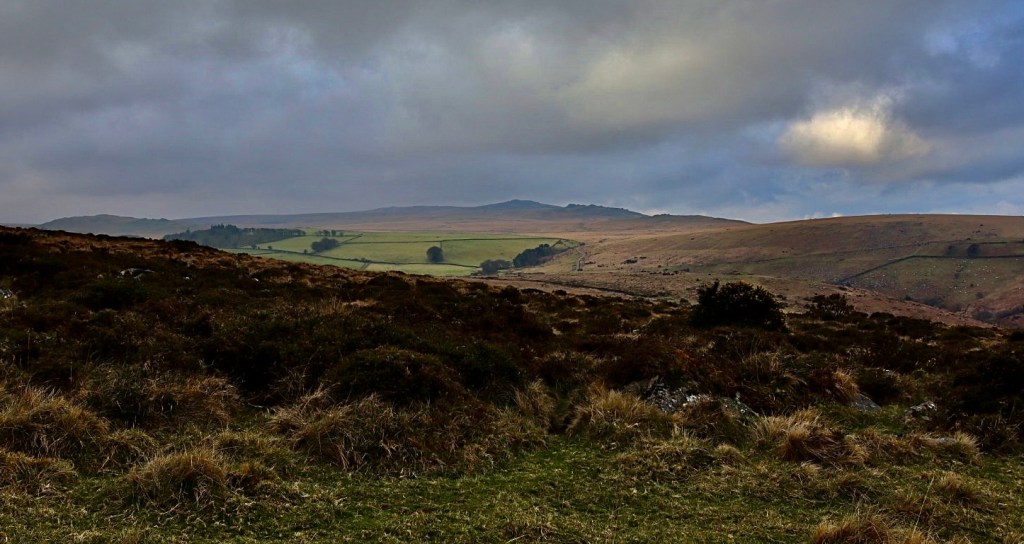
As you continue along the path of the East Okement, passing the waterfalls, eddies and interlocking spurs, you emerge through the treeline onto the steep slopes of West Cleave and it is here that you get your first view of the sprawling, untamed landscape of Belstone and Okehampton Commons. Your eye is drawn through the bracken strewn valley to inexorably land on the tors lying enticingly ahead awaiting conquering. It truly is a view that leaves you wanting more, that leaves you craving more and motivates you to tackle the short but steep climb that lies ahead to get to the nine maidens.
Nine Maidens
As you emerge from Tramlines Wood, cross the bridge over the East Okement and climb the slope of West Cleave. Follow the well-trodden path south and the true majesty of the landscape in which you are walking starts to emerge. The rolling landscape is disrupted by the jagged outcrop of the various Tors that lie across the Belstone and Okehampton Commons, framing the luscious green of East Okement farm.
Follow this path for about a Kilometre when a grassy path emerges on the left that will take you directly up the slope of Watchet Hill. Take this path up the hill, and you will encounter the nine maidens.
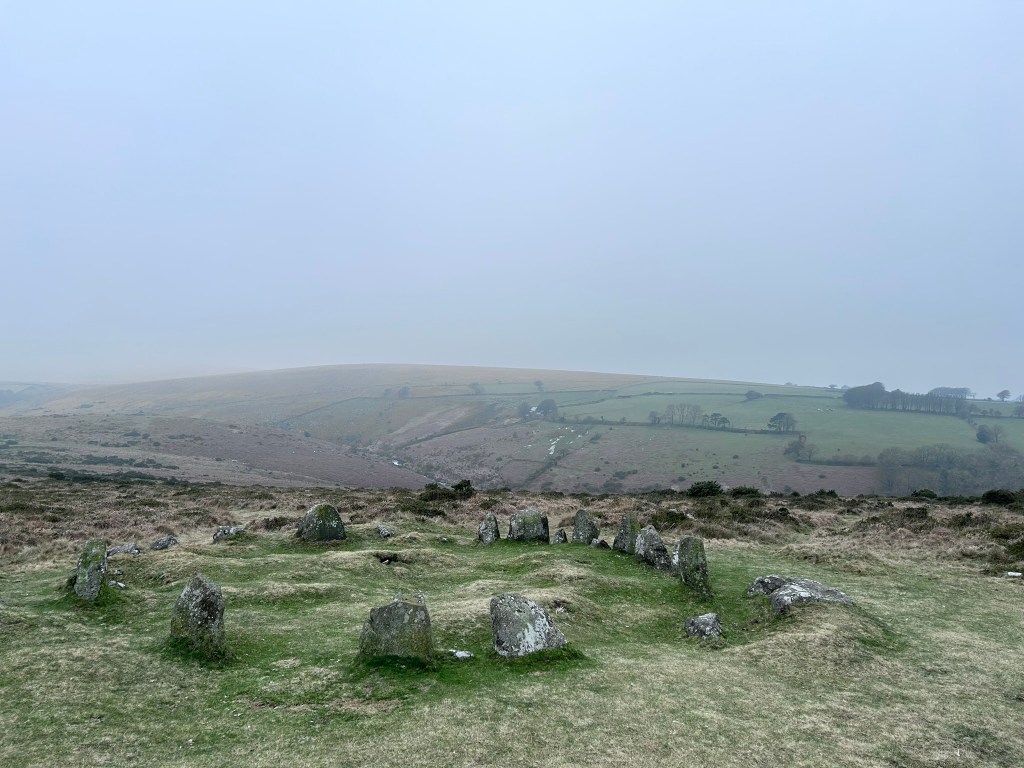
The nine maidens (confusingly also called the 17 brothers) is a bronze age stone circle. Just to add to the discordance of counting, there are actually 16 standing stones which emerge in a clearing of the gorse, grass and clitter as you climb Watchet Hill towards Belstone Tor. We know today that the stone circle was a part of a bronze age burial site, with the circle functioning as a retaining wall for a cairn (which has been looted to nothing) and a kistvaen (bronze aged burial tomb) which has since been destroyed. Local legend however gives a different story to the origins and purpose of the Nine Maidens, and they stand as warning to any who would break the sabbath.
The best known of the stories of the nine maidens tells us that the circle was formerly a group of young maidens who dared to dance on a Sunday and as punishment, were immediately turned to stone, as was their musician, a local piper, who now rests a few meters away. Not content with turning the girls to stone, to add to the punishment, they are compelled to dance at noon everyday for the rest of eternity. Now, due to a failure of planning on my part I was passing the circle at about 1100 but it is said that if you pass by the stones at midday when the mists are swirling, or on the day of a Blood moon, the stones can be seen rhythmically moving along to their perpetual tune. It is this movement, locals say, that makes counting the stones so difficult and with written records noting numbers from 9 up to 20 (with most sensibly saying 16 or 17) – I counted 16 so this is the number I’ll stick to.
Belstone Tor
From the Nine Maidens, the Rocky Outcrop of Belstone Tor is clear. On days when visibility may cause a challenge, there is a clear path from the stone circle up to the Tor. As I make my way up at the base of Tors End Tor, I pass a sheep skull that has formed part of a lunch, possibly for the buzzard that is circling high above. It is a stark reminder of the brutality of Dartmoor and contrasts strikingly with the beauty of the surroundings. As I pass by the bones that have been picked clean by the many scavengers that call Dartmoor home, I climb over Tors End Tor and enter into the field of granite that has been shed from Belstone Tor.
The Tor is magnificent, standing proud amongst its clitter, keeping watch over the village of Belstone and from its base, offering panoramic views across the northern moor, where the rugged moors meet the tamed fields of north Devon. Being blessed with a gloriously clear day, I can even see out as far as the North Devon coast. I don’t think it unfair to say that views north from Belstone Tor are unrivalled across Devon.
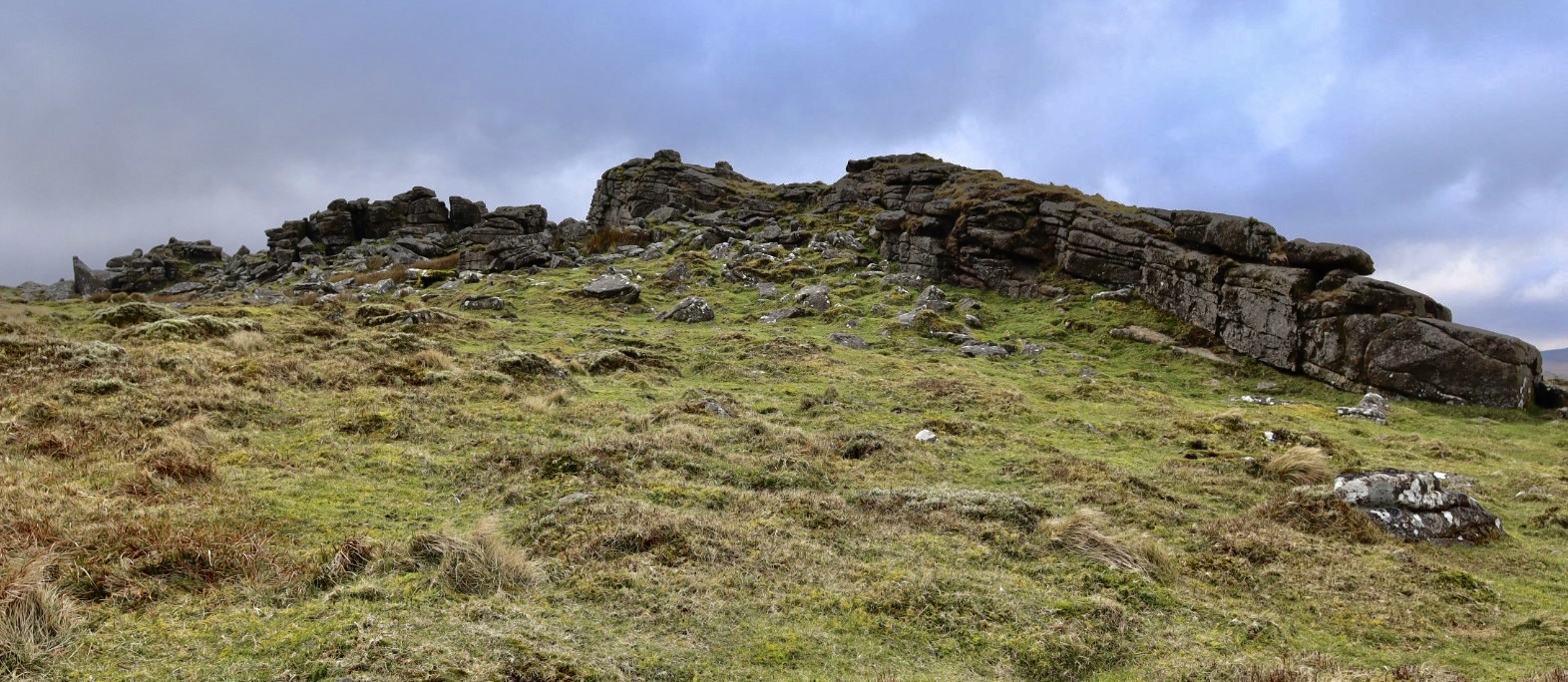
The Tor is made from two parts, bisected by a wall. As you head south across Belstone Tor, following the path the directs hikers towards Higher Tor, you will cross this wall.
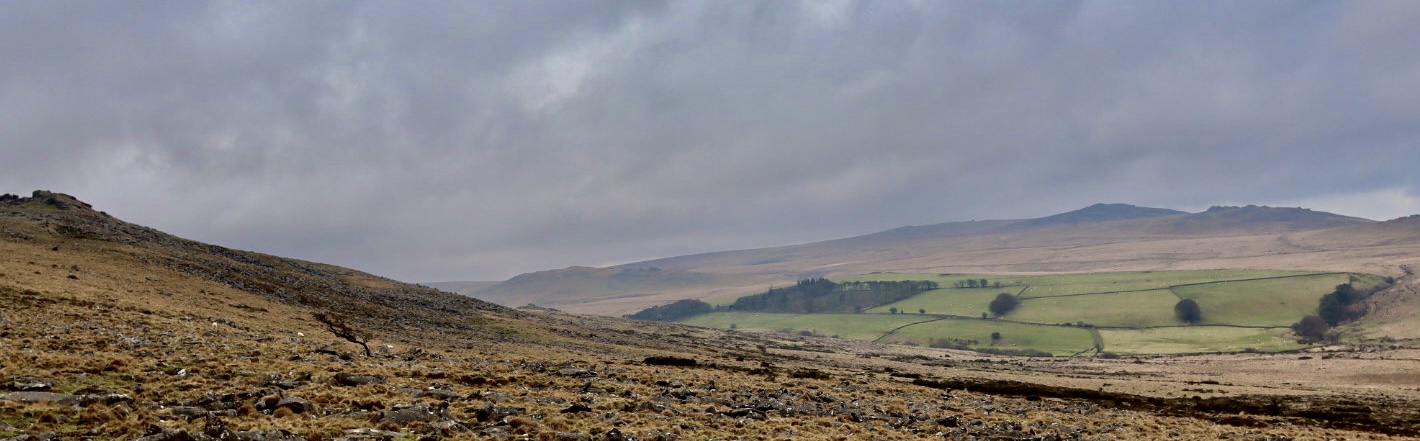

Irishman’s Wall
This wall, marked as Irishman’s Wall on the OS map, is the remnants of an ambitious project started by a land speculator, in which they looked to enclose a 5km square area of the moors between Belstone Tor, Steeperton Gorge, Black-a-Ven Brook and Taw Marsh.
The origin of the walls name and the subsequent destruction is put much more eloquently by the much loved William Crossing who stated “According to an account which I gathered in the locality many years ago, those employed in the building of it (the wall), who were all from the sister isle (Ireland), astonished the people of the moor by their utter contempt for boots and stockings. But they in their turn were probably astonished when one day they found a great part of their work destroyed. The men of Belstone and Okehampton had no notion of having their commons enclosed so they threw the wall down. What became of the Irishmen my informant did not know, but he expressed the opinion that their own country was a much more suitable place for them than Dartmoor.”.
As you cross the remnants of Irishman’s Wall, reflecting on the victory of the common man in preventing those with money from stealing what isn’t there (Alexander Darwall take note) the distinct granite mass of Higher Tor appears.
Higher Tor
It is at Higher Tor, with it’s views out over Oke Tor and Steeperton Hill that I pause and conjure up that long awaited hot chocolate. Whilst the skies are clear, the wind is blowing hard and with the wind chill, it is bitterly cold on the exposed Tor. I shelter in an outcrop (which I know to offer a good wild camping spot) to sip my hot chocolate and eat some wine gums whilst watching the shadows make their way across ground that I’m yet to cover. My route home starts here where I follow the path from Higher Tor, to the right and come to Winter Tor.
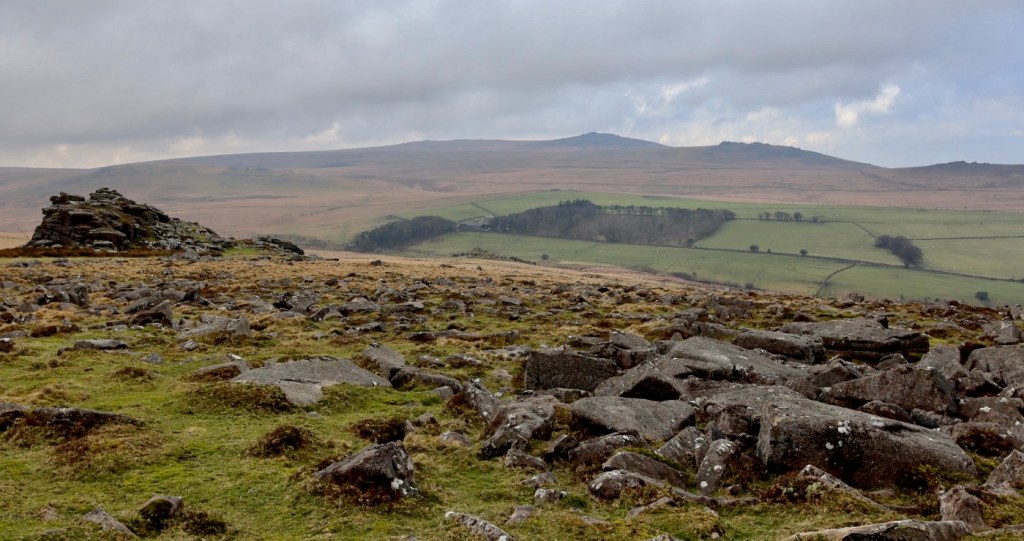
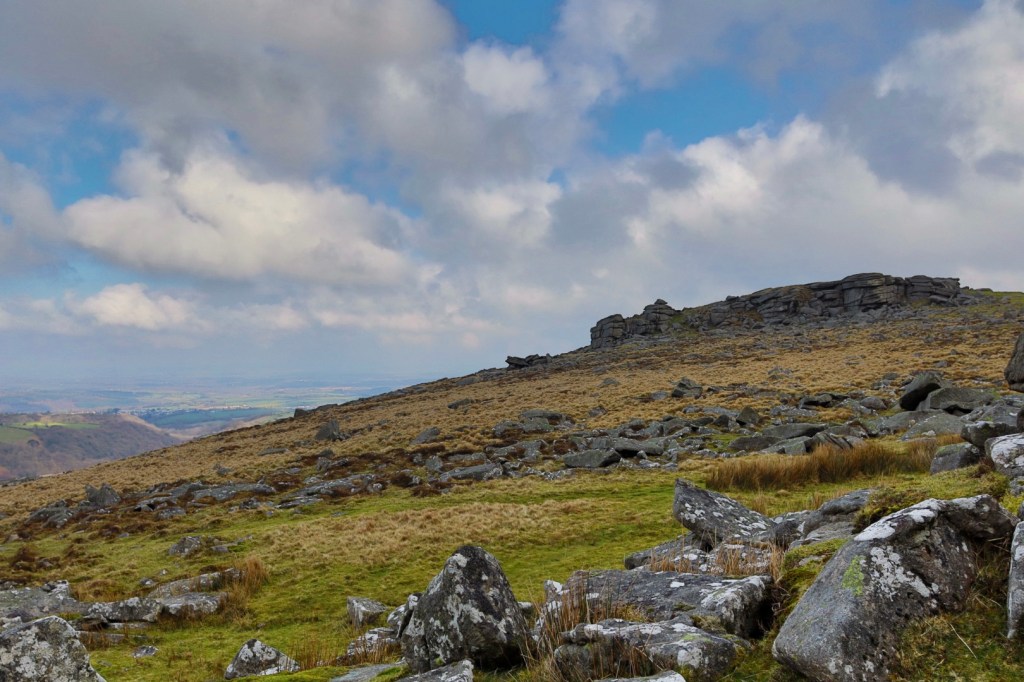
Winter Tor
Where Higher and Belstone Tors, and the other Tors surrounding (Yes, West & East Mill, Row, Steeperton and Oke Tors) command the skyline, Winter Tor sits below the ridgeline and for the most part, is overlooked. However, it retains a character and charm that I think it neighbours can’t quite match. It would be easy to by-pass this cluster of rock, but that would be a mistake. I climb to it’s summit (I’ve made that sound much grander then the reality of reaching slightly above my head and grunting my way onto the top) and take in the breathtaking landscape westwards to Yes Tor, West Mill Tor and Rowtor, with the East Okement meandering it’s way to Cullever’s Steps and beyond below me.
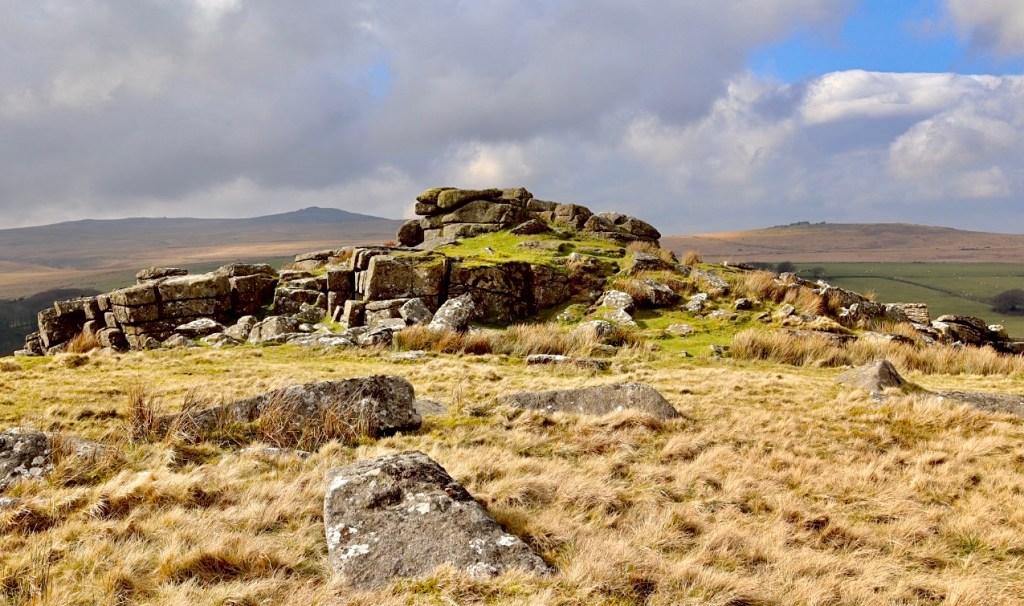
Heading Home
It is to Cullever’s Steps and beyond that I head to next, with a brief pause to sit next to the water once more, at the plunge pool that is frequented by wild swimmers in the shadow of Scarey Tor. I briefly thought about jumping in but immediately dismissed that as a stupid idea not least as I had no towel but mainly because it looked perishingly cold. I instead took a few photos and ate an apple.
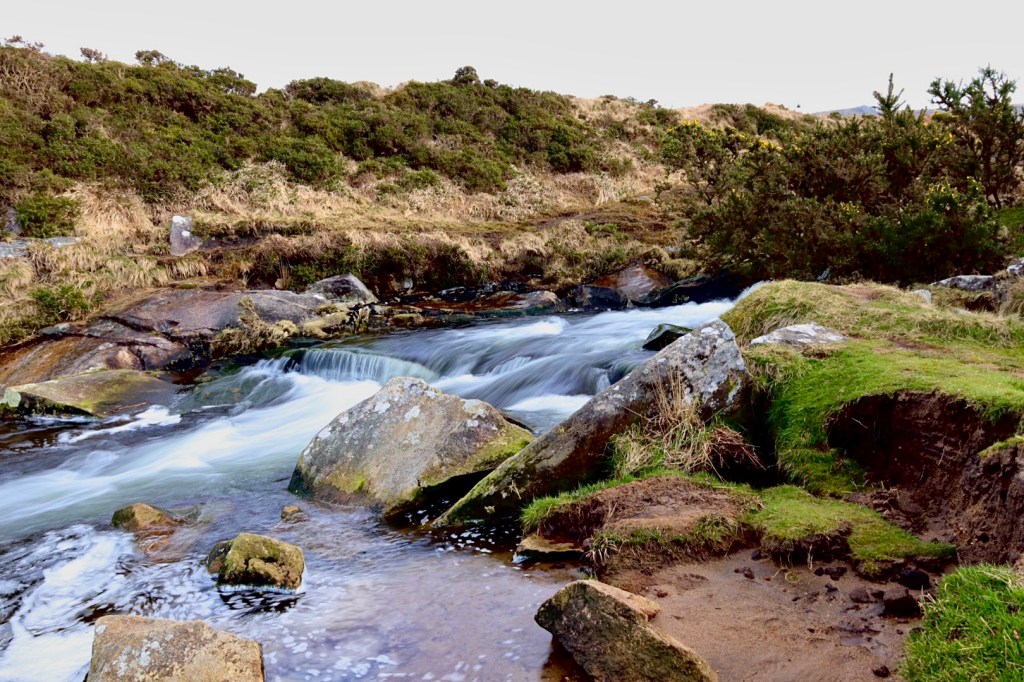
From here, I take the path to Higher Halstock and descend past the farm into Lower Halstock. Somewhere along this route, the path becomes road which takes you up and over East Hill to Klondyke corner and from there, it’s a progressive downhill walk back to the train station and onto home.
So in summary, an ancient woodland, tumbling river, five tors, a wall and swimming pool – what more could want from a walk?
| Difficulty | Distance | Navigation Required? |
| Moderate – Requires average fitness with some steep parts and areas those less mobile will struggle with | 13kms | Yes |
| Grid Reference | Safety | Footwear |
| Start and Finish SX 592 944 | River Crossing Uneven Terrain Firing Range General Dartmoor Considerations | Walking Boots |

 Moorland Ramblings
Leave a comment